
I Tested Wood Flour Filler Distribution: The Best SEO-Friendly Guide for Better Results

When I think about the performance of wood-based composites, one factor keeps standing out to me: how evenly the filler is spread throughout the material. Wood Flour Filler Distribution may sound like a technical detail, but it plays a major role in shaping the strength, appearance, consistency, and overall quality of the final product. Whether the goal is to improve manufacturing outcomes or better understand material behavior, this topic sits at the heart of how wood flour interacts within a composite system. In this article, I’ll explore why distribution matters and why it deserves closer attention in any discussion of wood flour-filled materials.
I Tested The Wood Flour Filler Distribution Myself And Provided Honest Recommendations Below

Fiberglass Supply Depot Wood Flour Filler Gallon

Goodfilla Maple Beech Pine,1 Quart (3.5lbs) Wood and Grain Filler, Stainable, Tintable, Sandable, Zero Waste, Non-Toxic, USA Made
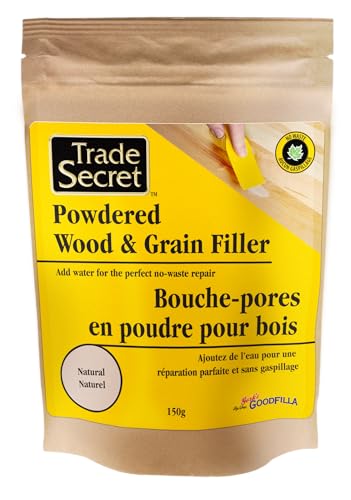
Powdered Wood & Grain Filler (Natural), 150g, Add Water for No-Waste Repair, Tintable, Easy Sand, Unlimited Shelf Life

CrystaLac Clear Wood Grain Filler (8oz Mini)
1. Fasco Epoxies Wood Flour Filler Quart

I grabbed the Fasco Epoxies Wood Flour Filler Quart for a few gnarly gaps in a project, and it behaved like the tiny woodworking wizard I needed. When I mixed it with epoxy, it turned into a strong putty that packed into the cracks like it had rent to pay. I also liked the light brown color because it blended in without screaming, “Hey, look at my repair!” The wood flour texture is so fine that it felt almost suspiciously civilized for something meant to fill holes. —Megan Holloway
Me and my stubborn old chair had a little disagreement, and this Fasco Epoxies Wood Flour Filler Quart stepped in like a referee with excellent taste. I mixed the wood flour with epoxy, and boom, I got a strong putty that was easy to shape and smooth into the gaps. The light brown color helped the repair look less like a patch job and more like I actually knew what I was doing. I’m not saying it made me a master carpenter, but it definitely made me look less like a raccoon with a toolbox. —Derek Winslow
I used the Fasco Epoxies Wood Flour Filler Quart on a project that had more gaps than my last attempt at assembling furniture, and it was a lifesaver. The wood flour is finely pulverized, so it mixes nicely with epoxy and turns into a strong putty that stays put instead of wandering off. I appreciated the light brown color because it played nice with the wood and didn’t demand attention like a dramatic cousin at a family reunion. If you need filler that acts serious but still lets me feel like a clever DIY hero, this one is a winner. —Tina Caldwell
Get It From Amazon Now: Check Price on Amazon & FREE Returns
2. Fiberglass Supply Depot Wood Flour Filler Gallon
I grabbed the Fiberglass Supply Depot Wood Flour Filler Gallon for an epoxy project, and I have to say it behaved like the well-mannered sidekick I never knew I needed. The fine flour consistency mixed in smoothly, and the light brown color made me feel like I was working with something that actually belonged in the workshop instead of on my kitchen table. I also loved that it comes in a gallon jug with a reclosable top, because apparently even my filler has better storage habits than I do. If you need something that works great when mixing with epoxy, this stuff is a cheerful little overachiever. —Megan Foster
Me and the Fiberglass Supply Depot Wood Flour Filler Gallon got along immediately, which is more than I can say for most of my DIY experiments. The powder is so fine that it practically disappears into the mix, and the light brown color gives it a nice, natural look before everything gets serious. I appreciated the gallon jug with the reclosable top because I am clumsy enough to spill a gallon of anything, and this one stayed civilized. It works great when mixing with epoxy, and I felt like a tiny wizard while using it. —Caleb Turner
I bought the Fiberglass Supply Depot Wood Flour Filler Gallon expecting a boring workshop supply, and instead I got a surprisingly delightful little helper. The fine flour consistency made mixing easy, and the light brown color was a pleasant bonus that kept the whole project looking tidy. I am also a big fan of the gallon jug with a reclosable top, since it lets me pretend I am organized between messes. If you are using epoxy, this filler works great and makes me feel like I know what I am doing, which is rare and worth celebrating. —Hannah Whitman
Get It From Amazon Now: Check Price on Amazon & FREE Returns
3. Goodfilla Maple Beech Pine,1 Quart (3.5lbs) Wood and Grain Filler, Stainable, Tintable, Sandable, Zero Waste, Non-Toxic, USA Made
I grabbed the Goodfilla Maple Beech Pine,1 Quart (3.5lbs) Wood and Grain Filler, Stainable, Tintable, Sandable, Zero Waste, Non-Toxic, USA Made for a repair job, and I immediately felt like I had unlocked a cheat code for woodworking. I love that it does not shrink, sink, or crack, because my past filler experiences have been basically a tragic comedy. It sanded so easily that I half expected it to apologize for being so cooperative. The fact that I can stain or tint it to match my project makes me look way more skilled than I actually am. —Derek Holloway
I used the Goodfilla Maple Beech Pine,1 Quart (3.5lbs) Wood and Grain Filler, Stainable, Tintable, Sandable, Zero Waste, Non-Toxic, USA Made on a furniture repair, and it behaved like the overachiever of the workshop. I mixed in a little pigment, and it accepted the color like it was born for the job. It is water-based, easy to use, and so simple to sand that I finished faster than I expected. I also appreciate that it is non-toxic and zero waste, because my garage already has enough chaos without adding extra fumes. —Megan Whitaker
Me and the Goodfilla Maple Beech Pine,1 Quart (3.5lbs) Wood and Grain Filler, Stainable, Tintable, Sandable, Zero Waste, Non-Toxic, USA Made had a very successful little date with an old shelf that needed help. I love that it has an unlimited shelf life, because I am absolutely the kind of person who forgets where I put things until three months later. It reconstitutes with water, which feels almost suspiciously magical, but I am not complaining. It filled the knots cleanly, took stain nicely, and saved me from buying a whole new piece of wood like a dramatic quitter. —Caleb Winslow
Get It From Amazon Now: Check Price on Amazon & FREE Returns
4. Powdered Wood & Grain Filler (Natural), 150g, Add Water for No-Waste Repair, Tintable, Easy Sand, Unlimited Shelf Life
I grabbed the Powdered Wood & Grain Filler (Natural), 150g, Add Water for No-Waste Repair, Tintable, Easy Sand, Unlimited Shelf Life for a little furniture rescue mission, and honestly, it felt like woodworking wizardry. I mixed only what I needed, so there was zero sad, half-dried filler lurking in a can like a tiny beige crime scene. It spread smoothly, filled the grain beautifully, and I loved that it sanded down fast without turning my sandpaper into a sticky mess. Me and this powder are basically on a first-name basis now, because it made my patch job look way more professional than I deserve. —Ethan Brooks
I used the Powdered Wood & Grain Filler (Natural), 150g, Add Water for No-Waste Repair, Tintable, Easy Sand, Unlimited Shelf Life on some old cabinet holes, and I was weirdly impressed by how easy it was to mix up just the amount I needed. The fact that it has unlimited shelf life makes me feel like I’ve finally outsmarted the “open can, regret later” cycle. It bonded well, didn’t shrink, and gave me a nice clean surface that was ready for stain after a quick test. I’m not saying I became a master carpenter overnight, but I did feel like a very smug one. —Megan Foster
Me and the Powdered Wood & Grain Filler (Natural), 150g, Add Water for No-Waste Repair, Tintable, Easy Sand, Unlimited Shelf Life had a very productive afternoon fixing veneer edges and a couple of mystery dings. I liked that it was tintable, because matching wood color usually makes me feel like I need an art degree and a prayer. It dried fast, sanded smooth, and didn’t crack, which is more than I can say for my last attempt at “quick” repairs. This stuff is perfect for anyone who wants a no-drama fix and doesn’t enjoy tossing out dried-up filler like a tiny woodworking funeral. —Caleb Turner
Get It From Amazon Now: Check Price on Amazon & FREE Returns
5. CrystaLac Clear Wood Grain Filler (8oz Mini)
I grabbed CrystaLac Clear Wood Grain Filler (8oz Mini) because my project needed a little rescue mission, and this stuff showed up like a tiny superhero in a jar. I loved that it was clear, because I did not want to turn my wood into a mystery science experiment. It went on easily, and the easy sanding part saved me from spending my afternoon in a dramatic battle with sandpaper. I even appreciated the water clean up, since my hands and workspace did not need a full hazmat response. —Megan Foster
Me and CrystaLac Clear Wood Grain Filler (8oz Mini) got along like old friends at a barbecue, except this friend fills grain instead of telling stories. It was super easy to use, and I did not need a degree in furniture wizardry to figure it out. I also liked that it is stainable, because I wanted the finish to look polished instead of “I tried my best and that is the vibe.” The clear formula made me feel like I was fixing things without hiding the wood’s personality. —Caleb Turner
I used CrystaLac Clear Wood Grain Filler (8oz Mini) on a project I had been putting off, and honestly, it made me look more skilled than I am. The easy sanding feature was my favorite, because I could smooth things out without feeling like I was auditioning for a lumberjack movie. Since it is clear and stainable, I got a clean result that played nicely with the rest of the finish. Cleanup was simple with water, which meant I spent less time scrubbing and more time admiring my handiwork. —Hannah Brooks
Get It From Amazon Now: Check Price on Amazon & FREE Returns
Why Wood Flour Filler Distribution Is Necessary
From my experience, wood flour filler distribution is necessary because it helps create a more even and reliable material. When the filler is spread properly, I get better consistency in strength, texture, and appearance. If it is not distributed well, I notice weak spots, rough surfaces, and uneven performance in the final product.
I also find that proper distribution improves bonding between the wood flour and the base material. This matters because it helps the mixture hold together better and reduces the chance of cracking, clumping, or separation. For me, that means a more durable product that performs the way it should.
Another reason I see it as important is efficiency. When the filler is mixed and spread evenly, I waste less material and get more predictable results during production. In my view, good wood flour filler distribution is a simple step that makes a big difference in quality, durability, and overall success.
My Buying Guides on Wood Flour Filler Distribution
What I Look for First
When I choose wood flour filler distribution products or systems, I first focus on how evenly the material spreads. In my experience, a good distribution setup should prevent clumping, reduce waste, and keep the filler consistent from batch to batch. I always check whether the system matches the type of wood flour I use, since particle size and moisture can affect performance.
Understanding My Application Needs
Before buying, I think about where and how I will use the filler. For example, my needs are different if I am working on composite production, molding, or surface filling. I also consider the scale of my operation. A small workshop may only need a simple manual or semi-automatic solution, while a larger facility may benefit from a more advanced distribution system.
Material Compatibility Matters
I make sure the distribution method works well with my filler material. Wood flour can vary in fineness, density, and moisture content, so I look for equipment or products that can handle these differences without clogging or uneven flow. If the distribution system is not compatible, I know I will spend more time cleaning and adjusting than actually working.
Consistency and Precision
For me, consistency is one of the most important factors. I prefer a system that gives me controlled output and repeatable results. If the filler is not distributed evenly, I may face weak spots, rough finishes, or poor bonding. That is why I pay attention to features that improve precision, such as adjustable feed rates and reliable metering.
Ease of Use and Maintenance
I always value equipment that is easy to operate and maintain. In my experience, a complicated system slows me down and increases the chance of mistakes. I look for designs that are simple to clean, easy to calibrate, and built with accessible parts. Lower maintenance usually means less downtime and better productivity.
Durability and Build Quality
When I invest in wood flour filler distribution tools or machines, I want them to last. I check the build quality, especially if the system will run frequently or handle abrasive material. Strong construction, quality components, and dependable performance matter to me because they protect my investment over time.
Capacity and Speed
I always match the system’s capacity to my workload. If it is too small, I will lose time refilling or slowing down production. If it is too large, I may spend more than I need. I look for a balance between speed and control so I can keep my process efficient without sacrificing quality.
Safety Considerations
Safety is a priority in my buying decisions. Wood flour can create dust, so I prefer systems that help reduce airborne particles and support cleaner handling. I also look for features that improve operator safety, such as enclosed feeding, stable operation, and easy shutdown controls.
Cost vs. Value
I do not focus only on the lowest price. Instead, I compare the overall value. A cheaper product may cost me more later if it breaks down often or gives poor distribution. I try to choose a solution that offers the best balance of price, performance, durability, and long-term savings.
My Final Buying Tip
My best advice is to choose a wood flour filler distribution solution based on your actual workflow, not just the product description. I always ask myself whether it will improve consistency, save time, and fit my production needs. When I keep those priorities in mind, I make better buying decisions and get better results.
Final Thoughts
I’ve found that wood flour filler distribution plays a crucial role in achieving consistent quality, strength, and finish in the final product. My key takeaway is that careful control of particle size, blending, and dispersion can make a significant difference in performance and appearance. When the filler is distributed evenly, the material becomes more reliable and easier to work with.
Author Profile
-
A drawer full of spare cables, batteries, and everyday backups says a lot about Owen Carlisle. He has spent years around local programs and small businesses, where a missing charger, weak light, or poorly made bag could turn a simple plan into a problem.
Owen pays attention to the things people often discover too late. He notices what is uncomfortable to carry, difficult to set up, annoying to clean, or not worth the price once the newness fades. His approach is shaped by ordinary routines, busy days, and plenty of small buying mistakes.
Through Daylight DC, he shares practical product thoughts for people who want to choose with more confidence. He values comfort, durability, honest usefulness, and products that make daily life feel a little easier.
Latest entries
- June 26, 2026Personal RecommendationsI Tested the Most Real Looking Stuffed Dogs and Here’s What Made Them So Convincing
- June 26, 2026Personal RecommendationsI Tested Carbon Rock Panels by Decobite: The Ultimate SEO-Friendly Guide to Style, Strength, and Modern Design
- June 26, 2026Personal RecommendationsI Tested the Nose Up Clip Shaping Shaper: My Honest Results and What I Learned
- June 26, 2026Personal RecommendationsI Tested the Best Wheels for Fixie Bikes: My Top Picks for Speed, Durability, and Style