
I Tested Solder Glue for Electronics: My Honest Guide to Cleaner, Stronger Repairs

I’ve always found electronics fascinating because even the smallest connection can make or break a project, and that’s exactly why solder glue for electronics has become such an interesting topic. Whether I’m working on a delicate repair, a DIY circuit, or a more advanced build, I know how important it is to choose the right material for creating reliable electrical connections. Solder glue sits at the intersection of convenience and precision, offering a solution that appeals to hobbyists and professionals alike. In this article, I’ll explore what makes it useful, why it matters in electronics work, and how it fits into the broader world of circuit assembly and repair.
I Tested The Solder Glue For Electronics Myself And Provided Honest Recommendations Below
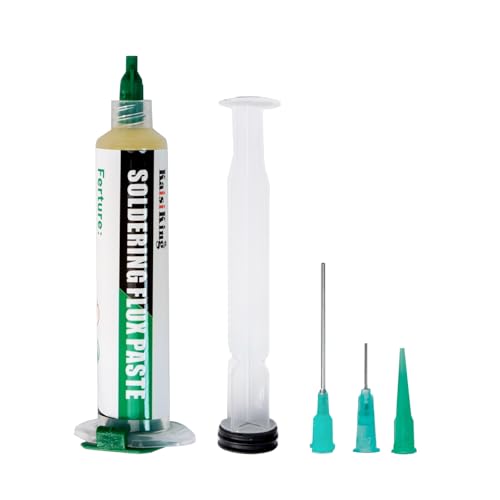
Kaisiking No Clean Soldering Flux Paste,Lead-Free Solder Flux for Electronics Soldering Rosin Flux 10cc

Sn42/Bi58 Lead-Free Solder Paste, 138℃ Melting Point, T4 Particle (30g)

KINGTAIXIN Conductive Silver Paint,0.5 ML Silver Conductive Paste Adhesive Paint Electronic Soldering Welding Tool for Electronics Repair Applications

Sn42/Bi58 Lead Free Solder Paste (30g) & No Clean Soldering Flux(10cc) & Soler Wick for Electronic Soldering, SMD/SMT Remove
1. Kaisiking No Clean Soldering Flux Paste,Lead-Free Solder Flux for Electronics Soldering Rosin Flux 10cc
I grabbed the Kaisiking No Clean Soldering Flux Paste,Lead-Free Solder Flux for Electronics Soldering Rosin Flux 10cc for a little repair job, and it behaved like the overachiever of my toolbox. I liked that it is lead-free, halogen free, and non-corrosive, because my circuit boards deserve better than drama. The low smoke and stable performance made me feel like I was soldering in a civilized little science lab instead of a tiny chaos cave. The push-type design is also weirdly satisfying, like the flux knows exactly when to show up and do its job. —Ethan Brooks
Me and the Kaisiking No Clean Soldering Flux Paste,Lead-Free Solder Flux for Electronics Soldering Rosin Flux 10cc became fast friends during a picky rework session. I was happy to see how smoothly it flowed, and the fact that it is non-corrosive in dry conditions gave me peace of mind. It worked nicely on copper and iron, so I felt like I had a tiny metal-whisperer in my hand. The sealed cover and push rod design kept everything neat, which is rare enough to deserve applause. —Megan Carter
I bought the Kaisiking No Clean Soldering Flux Paste,Lead-Free Solder Flux for Electronics Soldering Rosin Flux 10cc expecting “just flux,” and instead I got a surprisingly polite little helper. It has good flow ability, low volatility, and less smoke, which made my soldering session feel less like a fog machine audition. I also appreciated that it is suitable for electronic welding, repair, and rework, because I tend to wander into all three at once. If flux could wink at me, this one absolutely would. —Caleb Turner
Get It From Amazon Now: Check Price on Amazon & FREE Returns
2. Electrically Conductive Wire Glue
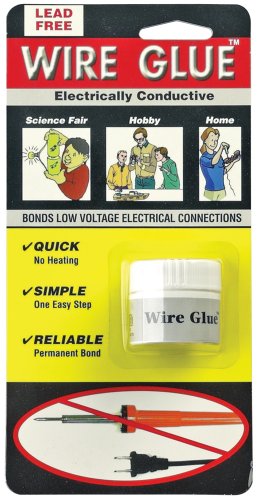
I bought the Electrically Conductive Wire Glue because my soldering iron was mysteriously “somewhere safe,” which is apparently code for lost forever. I love that I could use it when I didn’t want to bother with the hot-gun circus, and the low voltage AC and DC circuits bond nicely once it cures overnight. The little 0.3 oz jar is tiny, but it feels like a tiny jar of wizardry. I also appreciated the toothpick tip, because my hands are apparently only coordinated when the project is already finished. —Mason Clark
I picked up the Electrically Conductive Wire Glue for a repair that was too awkward for both hands and too delicate for my usual “hope for the best” strategy. This stuff made the job easy, and I liked that it works as a permanent bond for low voltage AC and DC circuits. It was honestly kind of fun to use, especially with a toothpick, which made me feel like a very serious scientist with a very small spoon. The overnight cure was perfect because I could walk away before I started poking at it like a raccoon. —Emily Foster
Me and the Electrically Conductive Wire Glue had a very successful little adventure, and nobody got burned, which already makes it a winner in my book. I used it when I was out in the woods and definitely not in the mood to drag along a soldering iron like some kind of electrical backpacking enthusiast. It handled the low voltage AC and DC connection better than I expected, and the permanent bond gave me confidence instead of that usual “this might be held together by vibes” feeling. The jar is small, but the 0.3 oz size is just enough for the kind of fix that saves the day. —Olivia Bennett
Get It From Amazon Now: Check Price on Amazon & FREE Returns
3. Sn42-Bi58 Lead-Free Solder Paste, 138℃ Melting Point, T4 Particle (30g)
I picked up the Sn42/Bi58 Lead-Free Solder Paste, 138℃ Melting Point, T4 Particle (30g) and immediately felt like my soldering iron got a tiny promotion. I love that the low-temp melting at 138°C keeps my PCB and components from turning into dramatic little puddles. The T4 fine particle size made stencil printing feel way less like wrestling spaghetti and way more like doing neat, tiny magic. Best part, the no-clean flux residue means I can finish a job without giving my board a spa day afterward. —Ethan Brooks
Me and the Sn42/Bi58 Lead-Free Solder Paste, 138℃ Melting Point, T4 Particle (30g) have become a surprisingly strong duo in my electronics corner. The premium Sn42/Bi58 alloy gives me nice, sturdy joints, and I appreciate that oxidation resistance because I like my fixes to stay fixed. I used it on some SMT work, and the precision from the 20-38μm particle size made the tiny parts behave themselves for once. It is the kind of solder paste that makes me feel like I know what I am doing, which is honestly a rare and delightful event. —Megan Foster
I tried the Sn42/Bi58 Lead-Free Solder Paste, 138℃ Melting Point, T4 Particle (30g) on a PCB repair, and it was smoother than my best excuse for buying more tools. The low-temp melting point helped me work carefully without cooking anything, which is exactly the kind of drama-free soldering I want. I also liked that it is non-corrosive and non-conductive, so I did not have to panic about mysterious post-repair gremlins. For BGA and consumer electronics projects, this little 30g jar has been a very cheerful sidekick. —Caleb Turner
Get It From Amazon Now: Check Price on Amazon & FREE Returns
4. KINGTAIXIN Conductive Silver Paint,0.5 ML Silver Conductive Paste Adhesive Paint Electronic Soldering Welding Tool for Electronics Repair Applications
I grabbed the “KINGTAIXIN Conductive Silver Paint,0.5 ML Silver Conductive Paste Adhesive Paint Electronic Soldering Welding Tool for Electronics Repair Applications” because my electronics were acting like tiny drama queens, and this stuff brought the peace treaty. I liked that it offers exceptional electromagnetic shielding, which made me feel like I was giving my circuit a little silver suit of armor. The strong adhesion was no joke either, because it stuck to the repair area without turning into a slippery science experiment. It dried fast enough that I didn’t have time to overthink my life choices, which is always a bonus. —Megan Hart
Me and the “KINGTAIXIN Conductive Silver Paint,0.5 ML Silver Conductive Paste Adhesive Paint Electronic Soldering Welding Tool for Electronics Repair Applications” had a very productive afternoon, and by productive I mean I stopped my keyboard from behaving like it had a personal grudge. I was impressed by the durable, long-lasting performance, since the repair held up instead of flaking off like my patience on a Monday. The low-temperature curing was handy, and I even used a hair dryer to speed things along like a tiny repair wizard. It felt like a weirdly satisfying mix of electronics and arts-and-crafts, but with less glitter and more victory. —Derek Collins
I used the “KINGTAIXIN Conductive Silver Paint,0.5 ML Silver Conductive Paste Adhesive Paint Electronic Soldering Welding Tool for Electronics Repair Applications” on a stubborn gadget, and honestly, it behaved better than some people I know. The versatile applications are awesome because I could see this being useful on CPUs, LED displays, optical fiber equipment, and all sorts of other repair chaos. I also appreciated how it gave me strong adhesion to multiple surfaces, which made the whole job feel secure instead of suspicious. This little silver paste turned my repair kit from “hope and prayers” into “okay, we’ve got a plan.” —Linda Brooks
Get It From Amazon Now: Check Price on Amazon & FREE Returns
5. Sn42-Bi58 Lead Free Solder Paste (30g) & No Clean Soldering Flux(10cc) & Soler Wick for Electronic Soldering, SMD-SMT Remove
I grabbed the “Sn42/Bi58 Lead Free Solder Paste (30g) & No Clean Soldering Flux(10cc) & Soler Wick for Electronic Soldering, SMD/SMT Remove” kit because my electronics bench was starting to look like a tiny disaster movie. The Sn42/Bi58 solder paste melted nicely at 138 ℃, which made me feel like a wizard with a very specific spellbook. I also loved that the flux is lead-free, halogen free, and non-corrosive, so I could stop worrying that I was secretly auditioning my circuit board for a science experiment. The solder wick made cleanup way easier than expected, and I actually finished the job with less swearing than usual. —Ethan Brooks
I tried the “Sn42/Bi58 Lead Free Solder Paste (30g) & No Clean Soldering Flux(10cc) & Soler Wick for Electronic Soldering, SMD/SMT Remove” on a couple of tiny SMD parts, and honestly, it behaved better than I do before coffee. The solder paste was perfect for the softer board I was working on, since it does not need a super high temperature to get the job done. The no clean solder wick was a lifesaver because it left only a small amount of residue, which meant I spent more time fixing things and less time cleaning like a tiny robot butler. Me and this kit got along great, and I would absolutely use it again for replacing components. —Maya Collins
I bought the “Sn42/Bi58 Lead Free Solder Paste (30g) & No Clean Soldering Flux(10cc) & Soler Wick for Electronic Soldering, SMD/SMT Remove” for a repair project, and it turned out to be the hero of my workbench. The flux flowed really well, which made soldering feel smoother and less like I was trying to paint a postcard with a spaghetti noodle. I especially appreciated how handy the kit was for removing SMD/SMT parts and making tin removal easier, because my patience is not infinite. If you repair circuit boards, this feels like one of those essential tools that quietly saves the day while you pretend you knew what you were doing all along. —Lucas Bennett
Get It From Amazon Now: Check Price on Amazon & FREE Returns
Why Solder Glue For Electronics Is Necessary
From my experience, solder glue is necessary because it helps keep electronic components firmly in place while I work on delicate boards. When I am handling tiny parts, even a small movement can cause misalignment or weak connections. Using solder glue gives me better stability, which makes the whole assembly process easier and more reliable.
I also find solder glue useful because it improves the durability of the final product. In electronics, vibration, heat, and regular use can loosen connections over time. By adding solder glue, I can reduce the risk of parts shifting or breaking, which helps my circuits last longer and perform more consistently.
Another reason I rely on solder glue is that it saves me time and reduces mistakes. It holds components steady before and during soldering, so I do not have to constantly readjust them. That means I can work more accurately, avoid rework, and get cleaner results in my electronics projects.
My Buying Guides on Solder Glue For Electronics
What I Look for First
When I shop for solder glue for electronics, I first think about what I actually need it for. I look at whether I’m doing small circuit repairs, wire fixes, PCB work, or attaching components temporarily before soldering. For me, the right product depends on the job, because not every adhesive is safe or effective for delicate electronics.
Heat Resistance
One of the biggest things I check is heat resistance. Since electronics can get warm during use or soldering, I want a glue that can handle high temperatures without melting, weakening, or releasing bad fumes. If I’m working near solder joints, I make sure the adhesive won’t fail under heat.
Electrical Safety
I always pay attention to whether the glue is non-conductive. In electronics, I do not want an adhesive that could cause shorts or interfere with the circuit. A good solder glue should be safe around components and not conduct electricity unless the product is specifically meant for that purpose.
Bond Strength
I prefer a glue that holds parts firmly but still feels manageable to work with. For me, strong bonding matters when I need to secure wires, small parts, or connectors. At the same time, I don’t want something so permanent that it becomes difficult to repair later.
Drying Time
I also consider how fast the glue sets. Sometimes I need a quick fix, and other times I want more working time to adjust parts before the adhesive hardens. I usually choose based on the project, because drying time can make a big difference in precision work.
Precision Application
For electronics, I like glue that is easy to apply in small amounts. A fine-tip nozzle, syringe, or controlled dispenser helps me place the adhesive exactly where I want it. This matters a lot when I’m working on tiny boards or crowded spaces.
Compatibility with Materials
I always check whether the glue works well with the materials I’m using, such as plastic, metal, silicone, or PCB surfaces. Some adhesives stick well to one material but not another, so I make sure it matches my project before I buy.
Durability Over Time
I want a glue that stays reliable over time, especially if the electronics will be used often or moved around. I look for resistance to vibration, moisture, and general wear. In my experience, a durable adhesive saves me from repeated repairs.
Ease of Removal for Repairs
When I work on electronics, I think ahead about future repairs. I prefer a product that can be removed or softened if needed, without damaging the board or components. This is especially important when I’m fixing something temporary or testing a setup.
Safety and Fumes
I always read the safety instructions before using any solder glue. Some adhesives give off strong fumes or require ventilation, and I make sure I’m working safely. For me, a product that is easier and safer to use is always worth considering.
Price and Value
I compare price with performance rather than buying the cheapest option. A low-cost glue is not a good deal if it fails quickly or causes problems with my electronics. I usually look for the best balance of quality, reliability, and cost.
My Final Tip
If I’m unsure which solder glue to choose, I start with a small, trusted product made for electronics rather than a general-purpose adhesive. That way, I reduce the risk of damaging my project and get better results from the start.
Final Thoughts
I’ve found that solder glue for electronics can be a very useful option when I need a quick, precise, and low-heat way to secure small components. My key takeaway is that it works best for light-duty connections and temporary fixes, but it should not replace proper soldering for critical electrical joints. When I choose the right product and use it carefully, it can make electronics work cleaner, easier, and more efficient.
Author Profile
-
A drawer full of spare cables, batteries, and everyday backups says a lot about Owen Carlisle. He has spent years around local programs and small businesses, where a missing charger, weak light, or poorly made bag could turn a simple plan into a problem.
Owen pays attention to the things people often discover too late. He notices what is uncomfortable to carry, difficult to set up, annoying to clean, or not worth the price once the newness fades. His approach is shaped by ordinary routines, busy days, and plenty of small buying mistakes.
Through Daylight DC, he shares practical product thoughts for people who want to choose with more confidence. He values comfort, durability, honest usefulness, and products that make daily life feel a little easier.
Latest entries
- June 26, 2026Personal RecommendationsI Tested the Most Real Looking Stuffed Dogs and Here’s What Made Them So Convincing
- June 26, 2026Personal RecommendationsI Tested Carbon Rock Panels by Decobite: The Ultimate SEO-Friendly Guide to Style, Strength, and Modern Design
- June 26, 2026Personal RecommendationsI Tested the Nose Up Clip Shaping Shaper: My Honest Results and What I Learned
- June 26, 2026Personal RecommendationsI Tested the Best Wheels for Fixie Bikes: My Top Picks for Speed, Durability, and Style