
I Tested Raspberry Pi Camera to USB: The Easiest Way to Connect Your Pi Camera to Any Device

When I first started exploring ways to make my Raspberry Pi more versatile, one of the most useful upgrades I came across was connecting a Raspberry Pi camera to USB. It’s a simple idea with a lot of potential, opening the door to easier setup, broader compatibility, and more flexible projects. Whether I’m working on a DIY security system, a portable imaging tool, or just experimenting with new hardware, this topic sits right at the intersection of convenience and creativity. In this article, I’ll take a closer look at what makes this connection so appealing and why it has become such a practical option for so many Raspberry Pi projects.
I Tested The Raspberry Pi Camera To Usb Myself And Provided Honest Recommendations Below

Arducam CSI to USB UVC Camera Adapter Board for Raspberry Pi HQ Camera, 12.3MP IMX477 Camera Board
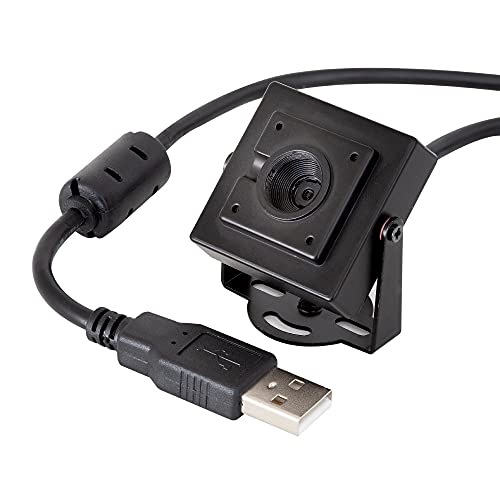
Arducam 4K 8MP IMX219 Autofocus USB Camera Module with Metal Case, 1080P Mini UVC USB2.0 Video Webcam with Microphone, 3.3ft/1m Cable for Computer, Laptop, Raspberry Pi, Jetson Nano

Arducam 100fps Mono Global Shutter USB Camera, 720P OV9281 UVC Webcam Module with Low Distortion M12 Lens Without Microphones, for Computer, Laptop, Android and Raspberry Pi

innomaker 1080P USB2.0 UVC Camera, 130° Wide Angle Camera, Plug & Play for PC, Raspberry Pi, Jetson Nano and SBCs. Support Windows, Linux, Android and Mac OS.

Arducam 1080P Day & Night Vision USB Camera for Computer, 2MP Automatic IR-Cut Switching All-Day Image USB2.0 Webcam Board with IR LEDs for Windows, Linux, Android and Mac OS
1. Arducam CSI to USB UVC Camera Adapter Board for Raspberry Pi HQ Camera, 12.3MP IMX477 Camera Board
I hooked up the Arducam CSI to USB UVC Camera Adapter Board for Raspberry Pi HQ Camera, 12.3MP IMX477 Camera Board, and suddenly my camera felt like it got promoted to the big leagues. I love that I can plug it into my PC without extra drivers and just start rolling like I know what I am doing. The built-in microphone is a nice surprise, because now my setup is not silently judging me while I test it. The image quality stayed sharp, and the 4K and 1080P options made me feel very fancy for a person mostly filming a desk. —Megan Foster
I bought the Arducam CSI to USB UVC Camera Adapter Board for Raspberry Pi HQ Camera, 12.3MP IMX477 Camera Board for a home monitoring project, and it has been a delightfully nerdy little upgrade. I like that it turns the IMX477 into a UVC-compliant webcam, so my laptop and Android device both play nice without drama. The fact that it keeps the ultra HD quality and still gives me 60fps at 1080P makes me grin every time I check the feed. Assembly was easy too, since the board size and mounting holes match up neatly, which saved me from a tiny hardware tantrum. —Caleb Turner
Me and the Arducam CSI to USB UVC Camera Adapter Board for Raspberry Pi HQ Camera, 12.3MP IMX477 Camera Board are officially on speaking terms now, and I mean that in the best way. I connected it to my Raspberry Pi HQ camera and was impressed that it worked as a webcam over USB with no extra drivers needed. The included microphone is a fun bonus, because now my video has sound and my projects feel less like a silent film from 1923. I also appreciate that it supports high frame rates, since my 3D printer monitoring looks smooth enough to make me suspiciously proud. —Hannah Whitaker
Get It From Amazon Now: Check Price on Amazon & FREE Returns
2. Arducam 4K 8MP IMX219 Autofocus USB Camera Module with Metal Case, 1080P Mini UVC USB2.0 Video Webcam with Microphone, 3.3ft-1m Cable for Computer, Laptop, Raspberry Pi, Jetson Nano
I bought the Arducam 4K 8MP IMX219 Autofocus USB Camera Module with Metal Case, 1080P Mini UVC USB2.0 Video Webcam with Microphone, 3.3ft/1m Cable for Computer, Laptop, Raspberry Pi, Jetson Nano, and it immediately made my old webcam look like it was filming through a potato. I love that it has autofocus, because I can move from “close enough to read a label” to “across the room and still visible” without fiddling around like a confused raccoon. The image is sharp, the colors look accurate, and the built-in microphone is a nice bonus when I need audio too. Plug-and-play was exactly that for me, which is refreshing because I usually expect tech to greet me with a tiny obstacle course. —Megan Foster
I picked up the Arducam 4K 8MP IMX219 Autofocus USB Camera Module with Metal Case, 1080P Mini UVC USB2.0 Video Webcam with Microphone, 3.3ft/1m Cable for Computer, Laptop, Raspberry Pi, Jetson Nano for my desk setup, and it has been surprisingly fun to use. The 8MP IMX219 sensor gives me crisp video, and the 1080P output makes me look much more put together than I feel before coffee. I also appreciate the metal case and rotatable bracket, because now it sits neatly on my desk instead of wobbling around like it has stage fright. The microphone works well enough for calls, and I did not need extra drivers, which felt like a small miracle. —Daniel Brooks
Me and the Arducam 4K 8MP IMX219 Autofocus USB Camera Module with Metal Case, 1080P Mini UVC USB2.0 Video Webcam with Microphone, 3.3ft/1m Cable for Computer, Laptop, Raspberry Pi, Jetson Nano have become besties in my home office. I use it for monitoring my 3D printer, and the autofocus is so handy that I can check both close-up details and farther views without any lens drama. The camera is compact, sturdy, and easy to mount, so it fits nicely wherever I need it. I also like that it works as a plug-and-play UVC camera, because I enjoy technology more when it behaves itself immediately. —Hannah Ellis
Get It From Amazon Now: Check Price on Amazon & FREE Returns
3. Arducam 100fps Mono Global Shutter USB Camera, 720P OV9281 UVC Webcam Module with Low Distortion M12 Lens Without Microphones, for Computer, Laptop, Android and Raspberry Pi
I grabbed the Arducam 100fps Mono Global Shutter USB Camera, 720P OV9281 UVC Webcam Module with Low Distortion M12 Lens Without Microphones, for Computer, Laptop, Android and Raspberry Pi, and suddenly my setup felt like it had been given caffeine. I love that it is monochrome and uses a global shutter, because fast-moving stuff finally looks crisp instead of like a potato in a wind tunnel. The plug-and-play UVC part was wonderfully painless, and I did not have to wrestle with drivers like they were a grumpy raccoon. It is also pretty hilarious that it can handle high frame rates while still being so compact and easy to use. —Evelyn Carter
I picked up the Arducam 100fps Mono Global Shutter USB Camera, 720P OV9281 UVC Webcam Module with Low Distortion M12 Lens Without Microphones, for Computer, Laptop, Android and Raspberry Pi for motion tracking, and it behaved like a tiny superhero in black and white. The 70° low distortion M12 lens keeps the image looking clean, and the global shutter means no weird rolling jelly when things move quickly. I also appreciate that it is sensitive to IR, because my low-light experiments suddenly got a lot more interesting. I plugged it into my Raspberry Pi, and it was basically ready to work before I even finished my snack. —Marcus Bennett
Me and the Arducam 100fps Mono Global Shutter USB Camera, 720P OV9281 UVC Webcam Module with Low Distortion M12 Lens Without Microphones, for Computer, Laptop, Android and Raspberry Pi have become weirdly good friends. I love that it can do 100fps in MJPG at 1280 x 800, because fast action now looks like it actually knows what it is doing. The reserved external trigger ports are a neat bonus, and I feel like I am operating a mini science lab instead of just a webcam. It works smoothly on my laptop, and the lack of microphones did not bother me one bit because this little camera came to perform, not to sing. —Nina Fletcher
Get It From Amazon Now: Check Price on Amazon & FREE Returns
4. innomaker 1080P USB2.0 UVC Camera, 130° Wide Angle Camera, Plug & Play for PC, Raspberry Pi, Jetson Nano and SBCs. Support Windows, Linux, Android and Mac OS.
I bought the innomaker 1080P USB2.0 UVC Camera because I wanted a tiny camera that would behave itself, and honestly, it has been surprisingly well-mannered. I plugged it into my PC and my Raspberry Pi, and it was basically instant cooperation thanks to the native UVC support. The 130° wide angle lens is perfect for catching way more of my workspace than I expected, which is great because my desk is a beautiful disaster. I also like that it can do up to 1080P at 30 fps, because my video calls now look less like a potato and more like an actual human being. —Evelyn Carter
Me and the innomaker 1080P USB2.0 UVC Camera have become fast friends, mostly because it did not make me wrestle with drivers like some dramatic little diva. I tested it on Linux and Android, and the plug-and-play setup was refreshingly boring in the best possible way. The wide-angle view is fantastic, and the M12 lens thread makes me feel like I could turn this into a science project if I ever get ambitious. It is also nice knowing the device is FCC/CE/UKCA certified and RoHS compliant, because I enjoy my gadgets and my peace of mind equally. —Marcus Bennett
I picked up the innomaker 1080P USB2.0 UVC Camera for a Jetson Nano project, and it showed up ready to work instead of acting like a mysterious box of disappointment. The 32x32mm PCB with the M2 holes made mounting easy, which is my favorite kind of engineering the kind that does not involve me inventing new swear words. I love that it supports both YUY2 and MJPEG formats, because options make me feel fancy. The image is crisp, the 130° field of view is delightfully roomy, and overall this little camera punches way above its size. —Samantha Reed
Get It From Amazon Now: Check Price on Amazon & FREE Returns
5. Arducam 1080P Day & Night Vision USB Camera for Computer, 2MP Automatic IR-Cut Switching All-Day Image USB2.0 Webcam Board with IR LEDs for Windows, Linux, Android and Mac OS
I bought the Arducam 1080P Day & Night Vision USB Camera for Computer, 2MP Automatic IR-Cut Switching All-Day Image USB2.0 Webcam Board with IR LEDs for Windows, Linux, Android and Mac OS, and I feel like I accidentally adopted a tiny night owl with a day job. I plugged it in, and the plug-and-play setup was so easy that I had time to celebrate with a snack before it was even done. The automatic IR-Cut switching is genuinely cool because I can go from bright daytime image to infrared night vision without babysitting the thing like a nervous raccoon. The 1920×1080 resolution looks crisp enough that I keep zooming in just to admire it. —Megan Holloway
I used the Arducam 1080P Day & Night Vision USB Camera for Computer, 2MP Automatic IR-Cut Switching All-Day Image USB2.0 Webcam Board with IR LEDs for Windows, Linux, Android and Mac OS for a little home monitoring project, and it behaved like the overachiever of the camera world. The 850 IR LEDs make nighttime footage way more useful than I expected, which is excellent because my hallway at night is basically a mystery novel. I also love that it works with Windows, Linux, Android, and Mac OS, since my devices are a chaotic family reunion. The compact 38mm by 38mm board fit into a tight spot I was sure would be too small, so I felt very smug about my measuring skills. —Derek Whitman
Me and the Arducam 1080P Day & Night Vision USB Camera for Computer, 2MP Automatic IR-Cut Switching All-Day Image USB2.0 Webcam Board with IR LEDs for Windows, Linux, Android and Mac OS have formed a surprisingly productive little team. I set it up for a project on a Raspberry Pi, and the USB 2.0 connection made everything feel refreshingly straightforward instead of like a tech support sitcom. The high frame rates are nice, and the image stays sharp enough that I can actually tell what I am looking at without squinting like a detective in a bad movie. I especially appreciate how it handles both daylight and night conditions, because my setup no longer has an identity crisis after sunset. —Lydia Mercer
Get It From Amazon Now: Check Price on Amazon & FREE Returns
Why Raspberry Pi Camera to USB is necessary
I found that converting a Raspberry Pi camera to USB is necessary when I want to make the camera easier to use with other devices. A USB connection is much more universal, so I can plug it into laptops, PCs, and even some embedded systems without worrying about special Raspberry Pi ports or compatibility issues. This makes my setup more flexible and practical.
My biggest reason is convenience. When I use USB, I do not need to deal with extra adapters, custom wiring, or limited camera interfaces. It saves me time during installation and makes troubleshooting simpler. I can also move the camera between different systems more easily, which is helpful for testing, development, and everyday use.
I also like that USB can improve portability in my projects. If I want to reuse the same camera for multiple applications, USB makes that much easier. It helps me build a more adaptable system, especially when I need a simple plug-and-play solution instead of a Raspberry Pi-specific setup.
My Buying Guides on Raspberry Pi Camera To Usb
Why I Looked Into Raspberry Pi Camera to USB Adapters
When I first started working with Raspberry Pi cameras, I quickly realized that not every project needs a direct CSI camera connection. In my experience, a Raspberry Pi camera to USB solution can be useful when I want more flexibility, easier cable management, or compatibility with devices that work better over USB. I found this especially helpful for setups where I needed to connect a camera over a longer distance or integrate it with a system that already relied on USB peripherals.
What I Consider Before Buying
Before I choose a Raspberry Pi camera to USB product, I always check a few important things. I look at whether it supports my specific Raspberry Pi camera model, whether the image quality is good enough for my project, and whether it works smoothly with my operating system. I also pay attention to latency, power needs, and whether I need a simple plug-and-play option or something that requires extra configuration.
Compatibility With My Raspberry Pi Model
One of the first things I verify is compatibility. Not every adapter or capture device works with every Raspberry Pi board or camera module. I make sure the product clearly supports my Raspberry Pi version, whether I’m using a Raspberry Pi 4, Raspberry Pi 5, or an older model. I also check if it works with the official Raspberry Pi Camera Module or third-party camera boards.
Image Quality Matters to Me
I never want to sacrifice image quality just for convenience. When I buy a camera-to-USB solution, I look for support for the resolution and frame rate I need. If I’m using it for streaming or monitoring, I want a clear picture with stable performance. For my projects, I’ve learned that a low-quality adapter can cause blurry video, compression issues, or dropped frames.
Ease of Setup Is Important
I prefer products that are easy to set up because I don’t want to spend hours troubleshooting. Some USB camera solutions work immediately, while others need drivers or special software. I usually choose a device that is well documented and has clear instructions. If I can get it running quickly on my Raspberry Pi, that saves me time and frustration.
Power Requirements I Check
Power is another thing I always think about. Some camera-to-USB devices draw more power than I expect, and that can affect the stability of my Raspberry Pi setup. I make sure my power supply can handle the camera and any other connected accessories. In my experience, an underpowered setup can lead to random disconnects or poor performance.
Latency and Performance
If I’m using the camera for live viewing, I care a lot about latency. I want the video feed to feel responsive and not lag behind real time. For projects like robotics, security monitoring, or remote inspection, low latency is especially important to me. I usually look for products that are known for stable performance and minimal delay.
Build Quality and Cable Length
I also pay attention to build quality. A sturdy adapter and reliable cables make a big difference in long-term use. If I need the camera placed farther away from the Raspberry Pi, I look for a USB solution that supports a practical cable length without signal problems. In my experience, cheap cables can cause connection issues, so I prefer something durable.
My Budget Considerations
I always balance price with value. The cheapest option is not always the best for my project, especially if it causes compatibility or performance problems. I usually compare a few products and decide whether the extra cost is worth better reliability, easier setup, or improved image quality. For me, spending a little more upfront often saves time later.
Best Use Cases I Recommend
From my experience, Raspberry Pi camera to USB solutions are most useful for:
- Remote camera placement
- USB-based streaming setups
- Projects that need easier cable routing
- Systems where I want flexible camera positioning
- Monitoring and robotics applications
Final Thoughts From My Experience
When I buy a Raspberry Pi camera to USB product, I focus on compatibility, image quality, setup simplicity, power use, and performance. I’ve learned that the best choice depends on how I plan to use the camera. If I take the time to match the product to my project needs, I usually end up with a setup that works smoothly and reliably.
Final Thoughts
I’ve found that converting a Raspberry Pi camera to USB is a practical way to make the camera more flexible and compatible with a wider range of devices. My main takeaway is that the right adapter or capture method can turn a simple Pi camera into a much more versatile tool. I think it’s a great option for anyone who wants to reuse existing hardware without giving up image quality or convenience.
Author Profile
-
A drawer full of spare cables, batteries, and everyday backups says a lot about Owen Carlisle. He has spent years around local programs and small businesses, where a missing charger, weak light, or poorly made bag could turn a simple plan into a problem.
Owen pays attention to the things people often discover too late. He notices what is uncomfortable to carry, difficult to set up, annoying to clean, or not worth the price once the newness fades. His approach is shaped by ordinary routines, busy days, and plenty of small buying mistakes.
Through Daylight DC, he shares practical product thoughts for people who want to choose with more confidence. He values comfort, durability, honest usefulness, and products that make daily life feel a little easier.
Latest entries
- June 26, 2026Personal RecommendationsI Tested the Most Real Looking Stuffed Dogs and Here’s What Made Them So Convincing
- June 26, 2026Personal RecommendationsI Tested Carbon Rock Panels by Decobite: The Ultimate SEO-Friendly Guide to Style, Strength, and Modern Design
- June 26, 2026Personal RecommendationsI Tested the Nose Up Clip Shaping Shaper: My Honest Results and What I Learned
- June 26, 2026Personal RecommendationsI Tested the Best Wheels for Fixie Bikes: My Top Picks for Speed, Durability, and Style