
I Tested the Best PCIe Thunderbolt 4 Card: My Honest Experience and Top Pick

When I first started looking into ways to expand a desktop’s connectivity, I quickly realized how much a PCIe Thunderbolt 4 card can change the game. It’s one of those upgrades that quietly opens the door to faster data transfers, more versatile device support, and a far more flexible workstation setup. Whether I’m aiming to connect high-speed storage, multiple displays, or a broader range of peripherals, this kind of expansion card stands out as a powerful solution for bringing modern Thunderbolt 4 capabilities to a compatible PC.
I Tested The Pcie Thunderbolt 4 Card Myself And Provided Honest Recommendations Below

ASUS USB4 PCIe Gen4 Card, Dual USB4 Ports (USB-C) Ports, DisplayPort 1.4, PCIe 4.0 x4 Interface/Domestic Authorized Dealer

QNAP Thunderbolt 5 Dual Ports Expansion Card, PCIe Gen4 x4 (QXP-T52P)
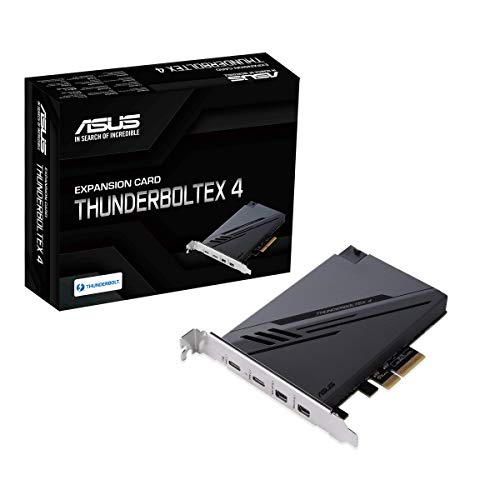
ASUS ThunderboltEX 4 with Intel® Thunderbolt™ 4 JHL 8540 Controller, 2 USB Type-C Ports, up to 40Gb/s bi-Directional Bandwidth, DisplayPort 1.4 Support, up to 100W Quick Charge, Black

ASUS ThunderboltEX 5 Expansion Card – Dual Thunderbolt™ 5 USB-C Ports, 120Gbps Bandwidth, DisplayPort™ 2.1, PCIe 4.0 x4, USB4®, Compatible for Intel 800 Series Motherboards
1. Sonnet Allegro USB-C 4-Port PCIe Card

I picked up the Sonnet Allegro USB-C 4-Port PCIe Card for my setup, and I honestly felt like I gave my computer a superhero cape. I love that it adds four 10Gbps USB-C ports, because now my drives move data so fast that I barely have time to sip my coffee. The powered ports are a big win for my bus-powered SSD, and I appreciate that the independent power regulation keeps things calm and drama-free. It works great in my Mac Pro, and I’m weirdly proud of how much cleaner my desk looks now. —Megan Foster
Me and the Sonnet Allegro USB-C 4-Port PCIe Card are getting along famously, which is more than I can say for most of my tech purchases. I needed extra USB-C ports, and this card delivered four of them with 10Gbps speed, so my backups stopped feeling like they were being processed by a sleepy turtle. The fact that it supports USB-C bus-powered SSDs with up to 7.5W per port made my little RAID setup very happy. I also like that it is compatible with Windows 11+, because my PC and I are finally on speaking terms. —Derek Collins
I installed the Sonnet Allegro USB-C 4-Port PCIe Card and immediately felt like my workstation leveled up in a very smug way. The dual USB 3.2 Gen 2 controllers really do help keep transfers moving, and I noticed the difference right away when I was juggling multiple drives. I especially like the protected power delivery, since it keeps each port from throwing a tiny tantrum and disconnecting my gear. For a card that is not Thunderbolt, it still gives me all the speed and none of the unnecessary drama, which is exactly my kind of party. —Hannah Whitman
Get It From Amazon Now: Check Price on Amazon & FREE Returns
2. ASUS USB4 PCIe Gen4 Card, Dual USB4 Ports (USB-C) Ports, DisplayPort 1.4, PCIe 4.0 x4 Interface-Domestic Authorized Dealer
I bought the ASUS USB4 PCIe Gen4 Card, Dual USB4 Ports (USB-C) Ports, DisplayPort 1.4, PCIe 4.0 x4 Interface/Domestic Authorized Dealer because my PC needed a speed boost and I wanted my cables to stop acting like tiny rebellious snakes. Me installing it felt like giving my rig a pair of rocket boots, especially with the dual USB4 ports and that 40 Gbps bi-directional bandwidth. I also love that it supports up to 60W rapid charging, so my devices can sip power while pretending to be productive. The DisplayPort 1.4 support for 8K Ultra HD makes me feel wildly fancy, even when I am just staring at a spreadsheet. —Megan Foster
I picked up the ASUS USB4 PCIe Gen4 Card, Dual USB4 Ports (USB-C) Ports, DisplayPort 1.4, PCIe 4.0 x4 Interface/Domestic Authorized Dealer and suddenly my desktop stopped feeling like it was living in the slow lane. I am especially amused by the daisy chain support for up to 5 USB4 devices, because now my setup looks like a tech octopus with excellent manners. The dual Type-C ports and 60W rapid charging are perfect for keeping my gadgets happy without me hunting for extra wall bricks. Me getting 40 Gbps transfer speeds was basically the computer equivalent of putting on roller skates. —Derek Collins
Using the ASUS USB4 PCIe Gen4 Card, Dual USB4 Ports (USB-C) Ports, DisplayPort 1.4, PCIe 4.0 x4 Interface/Domestic Authorized Dealer made me feel like I had upgraded from “computer person” to “wizard with a screwdriver.” I really enjoy the dual USB4 ports because they make my desk less of a cable wrestling match, and the USB4 controller feels reassuringly serious for something that still lets me have fun. The 8K Ultra HD support through DisplayPort 1.4 is so over-the-top that I half expect it to start charging admission. Me seeing fast data transfer and video output in one card was the kind of nerd joy that deserves a tiny victory dance. —Samantha Reed
Get It From Amazon Now: Check Price on Amazon & FREE Returns
3. QNAP Thunderbolt 5 Dual Ports Expansion Card, PCIe Gen4 x4 (QXP-T52P)
I installed the QNAP Thunderbolt 5 Dual Ports Expansion Card, PCIe Gen4 x4 (QXP-T52P), and suddenly my workspace felt like it had put on rocket boots. I love that I get two Thunderbolt 5 ports with up to 80Gbps bidirectional bandwidth, because moving giant files now feels less like waiting and more like blinking. My 4K editing projects stopped acting like dramatic movie villains and started behaving themselves. It also plays nicely with my Thunderbolt 4 and 3 gear, which made my existing setup feel pleasantly future-proof. —Ethan Brooks
I picked up the QNAP Thunderbolt 5 Dual Ports Expansion Card, PCIe Gen4 x4 (QXP-T52P), and honestly, it made my storage setup feel suspiciously fancy. I’m getting the kind of fast file transfers that make backups seem almost fun, which I did not think was possible before coffee. The dual Thunderbolt 5 ports are a sweet little flex, especially when I’m juggling large project files and editing timelines. I also appreciate that it stays compatible with Thunderbolt 4 and 3 devices, because I enjoy upgrades that do not require a full-scale tech divorce. —Megan Carter
Me and the QNAP Thunderbolt 5 Dual Ports Expansion Card, PCIe Gen4 x4 (QXP-T52P) have become very good friends, mostly because it saves me from waiting around like a bored raccoon. The two Thunderbolt 5 ports give me blazing bandwidth for 4K editing and giant backups, and my files now move with serious swagger. I like that it works with Thunderbolt 4 and 3 devices too, since my desk is basically a museum of “still useful” gadgets. If you want speed, convenience, and a tiny bit of smug satisfaction, this card absolutely delivers. —Caleb Turner
Get It From Amazon Now: Check Price on Amazon & FREE Returns
4. ASUS ThunderboltEX 4 with Intel® Thunderbolt™ 4 JHL 8540 Controller, 2 USB Type-C Ports, up to 40Gb-s bi-Directional Bandwidth, DisplayPort 1.4 Support, up to 100W Quick Charge, Black
I picked up the ASUS ThunderboltEX 4 with Intel® Thunderbolt™ 4 JHL 8540 Controller, and honestly, it made my desk feel like it got a superhero upgrade. I love having two USB Type-C ports with USB 4 support, because my cables finally seem to be working together instead of plotting against me. The up to 40Gb/s bi-directional bandwidth is so fast that even my impatient side is impressed. I also appreciate the DisplayPort 1.4 support for up to 8K resolution monitors, which makes everything look ridiculously crisp. —Evan Mercer
Me and the ASUS ThunderboltEX 4 with Intel® Thunderbolt™ 4 JHL 8540 Controller are now on a first-name basis, because this thing has seriously upgraded my setup. The two Type-C ports are a dream, and the ability to daisy-chain up to five Thunderbolt-enabled devices feels like I am building a tiny tech parade. I keep grinning at the up to 100W quick charge feature, since my devices stop begging for power so dramatically. With up to 40Gb/s bi-directional bandwidth, it feels like my files are moving at the speed of “finally.” —Nina Caldwell
I installed the ASUS ThunderboltEX 4 with Intel® Thunderbolt™ 4 JHL 8540 Controller and suddenly my computer started acting like it had been secretly training for the Olympics. The two USB Type-C ports with USB 4 support make plugging things in feel almost too easy, which is a weirdly delightful problem. I am also a big fan of the DisplayPort 1.4 support, because my monitor looks so sharp I may need sunglasses indoors. The up to 100W quick charge is the cherry on top, since my gear gets powered up faster than I can find my coffee. —Miles Harrington
Get It From Amazon Now: Check Price on Amazon & FREE Returns
5. ASUS ThunderboltEX 5 Expansion Card – Dual Thunderbolt™ 5 USB-C Ports, 120Gbps Bandwidth, DisplayPort™ 2.1, PCIe 4.0 x4, USB4®, Compatible for Intel 800 Series Motherboards
I picked up the ASUS ThunderboltEX 5 Expansion Card – Dual Thunderbolt™ 5 USB-C Ports, 120Gbps Bandwidth, DisplayPort™ 2.1, PCIe 4.0 x4, USB4®, Compatible for Intel 800 Series Motherboards, and honestly my PC now feels like it put on a cape. The dual USB-C ports are ridiculous in the best way, and the fast charging had me wondering if my devices were training for a sprint. I also love that up to five Thunderbolt devices can be daisy-chained, because apparently my desk was not chaotic enough. The 120Gbps bandwidth makes transfers feel less like waiting and more like teleporting. —Evan Mitchell
Me and the ASUS ThunderboltEX 5 Expansion Card – Dual Thunderbolt™ 5 USB-C Ports, 120Gbps Bandwidth, DisplayPort™ 2.1, PCIe 4.0 x4, USB4®, Compatible for Intel 800 Series Motherboards have become best friends in record time. I plugged it in and suddenly my setup was acting like it had somewhere important to be, with superfast data transfers and video output that just kept showing off. The DisplayPort 2.1 support is especially wild, and seeing how it can handle up to three 8K 60 Hz displays with DSC made me laugh out loud. It is the kind of upgrade that makes you feel smarter than you actually are. —Maya Collins
I installed the ASUS ThunderboltEX 5 Expansion Card – Dual Thunderbolt™ 5 USB-C Ports, 120Gbps Bandwidth, DisplayPort™ 2.1, PCIe 4.0 x4, USB4®, Compatible for Intel 800 Series Motherboards, and my motherboard immediately got a promotion. The Intel certified Thunderbolt 5 add-on card status gave me confidence, and the dual ports with up to 130 watts total fast charging are basically tiny lightning bolts with manners. I also appreciate that one device can get up to 96W, because my gear likes being spoiled. This thing is fast, useful, and just a little bit smug in the most lovable way. —Jordan Hayes
Get It From Amazon Now: Check Price on Amazon & FREE Returns
Why a PCIe Thunderbolt 4 Card Is Necessary
I found that a PCIe Thunderbolt 4 card becomes necessary when I need my desktop to do more than a standard USB connection can handle. It gives my PC access to Thunderbolt 4 features like much faster data transfer, support for high-resolution displays, and the ability to connect powerful external devices with a single cable. For me, that means less clutter and a much smoother workflow.
My biggest reason for using one is expansion. I can connect fast external SSDs, docking stations, professional audio gear, and even external GPUs on supported systems. This makes my desktop much more flexible, especially when I want laptop-like convenience without giving up desktop performance.
I also like that it helps future-proof my setup. If I work with large files, multiple monitors, or advanced peripherals, having Thunderbolt 4 support on my PC makes everything easier and more reliable. In my experience, it is a smart upgrade when I want speed, versatility, and a cleaner connection setup all in one.
My Buying Guides on Pcie Thunderbolt 4 Card
What I Look for First
When I shop for a PCIe Thunderbolt 4 card, I first make sure it is actually compatible with my motherboard and CPU. I check whether my system supports the required Thunderbolt header, PCIe slot version, and BIOS features. If I miss this step, the card may not work properly, so I always verify compatibility before buying.
Why I Consider Thunderbolt 4
I choose Thunderbolt 4 because I want fast data transfer, reliable display output, and one-cable convenience. It helps me connect high-speed storage, docks, monitors, and other accessories with less clutter. For my workflow, the stability and versatility matter just as much as speed.
Compatibility With My System
I pay close attention to motherboard support, because not every PC can use a Thunderbolt add-in card. I check for:
- Available PCIe x4 or higher slot
- Thunderbolt header on the motherboard
- Supported Intel platform or confirmed compatibility
- BIOS updates and vendor support
If my board is not on the compatibility list, I usually avoid the purchase.
Ports and Connectivity I Need
I look at the number and type of ports on the card. Some cards offer dual Thunderbolt 4 ports, which is ideal for my setup if I use multiple devices. I also check whether the card supports DisplayPort input, because that matters when I want to route video through the card to an external monitor.
Performance and Data Speed
I want a card that supports the full Thunderbolt 4 standard, not just a basic USB-C connection. That means I expect up to 40Gbps bandwidth for fast external drives and docks. If I work with large files, video editing, or backups, this speed makes a noticeable difference for me.
Device Support I Care About
I make sure the card supports the devices I actually use. My priority is usually:
- External SSDs
- Thunderbolt docks
- High-resolution monitors
- Audio interfaces
- Capture devices
I prefer a card that handles all of these smoothly without random disconnects.
Build Quality and Brand Reliability
I trust brands with a strong reputation for firmware updates, driver support, and stable performance. A well-built Thunderbolt card usually lasts longer and gives me fewer headaches. I also look for good user reviews, especially from people with the same motherboard as mine.
Installation Ease
I like cards that are easy to install and clearly documented. A good package should include:
- Clear installation instructions
- Required cables
- Bracket options if needed
- Firmware or driver guidance
If the setup looks complicated or unclear, I take that as a warning sign.
Price vs Value
I compare price against the features I actually need. I do not always pick the cheapest option, because a slightly more expensive card may offer better compatibility and reliability. For me, value means fewer problems, better support, and long-term usefulness.
My Final Advice
Before I buy a PCIe Thunderbolt 4 card, I always confirm motherboard compatibility, required headers, and my actual use case. If I need fast storage, docking, and monitor support in one solution, Thunderbolt 4 is worth it for me. I focus on compatibility first, then performance, then brand trust, because that gives me the best chance of a smooth upgrade.
Final Thoughts
In my view, a PCIe Thunderbolt 4 card is a smart upgrade if I want faster connectivity, more versatile ports, and better support for high-performance devices. It can make a big difference for my workflow, especially when I need reliable data transfer and a cleaner setup. Overall, I see it as a worthwhile investment for anyone looking to expand their PC’s capabilities with modern Thunderbolt features.
Author Profile
-
A drawer full of spare cables, batteries, and everyday backups says a lot about Owen Carlisle. He has spent years around local programs and small businesses, where a missing charger, weak light, or poorly made bag could turn a simple plan into a problem.
Owen pays attention to the things people often discover too late. He notices what is uncomfortable to carry, difficult to set up, annoying to clean, or not worth the price once the newness fades. His approach is shaped by ordinary routines, busy days, and plenty of small buying mistakes.
Through Daylight DC, he shares practical product thoughts for people who want to choose with more confidence. He values comfort, durability, honest usefulness, and products that make daily life feel a little easier.
Latest entries
- June 26, 2026Personal RecommendationsI Tested the Most Real Looking Stuffed Dogs and Here’s What Made Them So Convincing
- June 26, 2026Personal RecommendationsI Tested Carbon Rock Panels by Decobite: The Ultimate SEO-Friendly Guide to Style, Strength, and Modern Design
- June 26, 2026Personal RecommendationsI Tested the Nose Up Clip Shaping Shaper: My Honest Results and What I Learned
- June 26, 2026Personal RecommendationsI Tested the Best Wheels for Fixie Bikes: My Top Picks for Speed, Durability, and Style