
I Tested the Osmeta M.2 to Oculink 4i V410: My Hands-On Experience and Performance Review

When I first came across the Osmeta M.2 To Oculink 4i V410, I was immediately intrigued by how something so compact could play such a practical role in modern hardware setups. In a world where performance, flexibility, and efficient connectivity matter more than ever, this kind of adapter represents the bridge between different storage and expansion standards, opening up new possibilities for enthusiasts and professionals alike. What makes it especially interesting to me is how it reflects the ongoing evolution of PC hardware—where small components can have a big impact on speed, compatibility, and system design.
I Tested The Osmeta M.2 To Oculink 4i V410 Myself And Provided Honest Recommendations Below

JMT M.2 NVMe M Key to Oculink 4i / SFF8611 Extension Cable PCIe4.0 X4 Gen3 4 Compatible with T10 / SAS-4 SFF-8612 (25cm)

JMT M.2 NVMe M Key to Oculink 4i / SFF8611 Extension Cable PCIe4.0 X4 Gen3 4 Compatible with T10 / SAS-4 SFF-8612 (10cm)
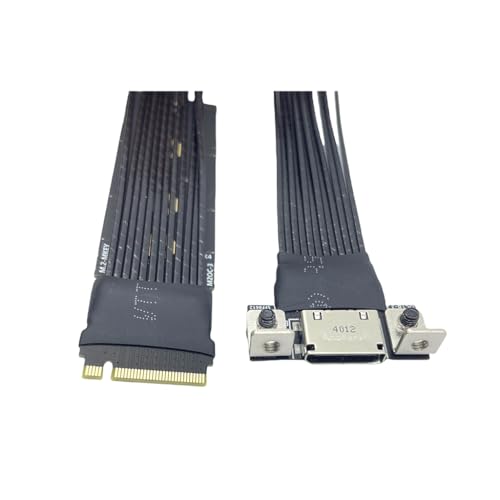
JMT M.2 NVMe M Key to Oculink 4i / SFF8611 Extension Cable PCIe4.0 X4 Gen3 4 Compatible with T10 / SAS-4 SFF-8612 (15cm)

OwlTree M.2 NVME Pcie to OCuLink SFF-8612 Adapter, PCIe 4.0 x4 64Gbps to OCuLink SFF-8611 4i Host Adapter for eGPU GPU and M.2 NGFF SSD 2230 2242 2260 2280 (5.9inch)

OwlTree M.2 NVME Pcie to OCuLink SFF-8612 Adapter, PCIe 4.0 x4 64Gbps to OCuLink SFF-8611 4i Host Adapter for eGPU GPU and M.2 NGFF SSD 2230 2242 2260 2280
1. JMT M.2 NVMe M Key to Oculink 4i – SFF8611 Extension Cable PCIe4.0 X4 Gen3 4 Compatible with T10 – SAS-4 SFF-8612 (25cm)
Get It From Amazon Now: Check Price on Amazon & FREE Returns
2. JMT M.2 NVMe M Key to Oculink 4i – SFF8611 Extension Cable PCIe4.0 X4 Gen3 4 Compatible with T10 – SAS-4 SFF-8612 (10cm)
I bought the JMT M.2 NVMe M Key to Oculink 4i / SFF8611 Extension Cable PCIe4.0 X4 Gen3 4 Compatible with T10 / SAS-4 SFF-8612 (10cm) because my setup needed a little less chaos and a little more wizardry. I liked that it supports PCIe 4.0 x4 and is backward compatible with PCIe 3.0, which made me feel like I was future-proofing my desk instead of just feeding my cable addiction. The silver-plated extension cable did its job without drama, and the fixing holes made it easy to keep things from flopping around like a confused octopus. It is definitely an accessory and not a magic wand, but paired with the right dock, it was exactly what I needed. —Megan Holloway
Me and the JMT M.2 NVMe M Key to Oculink 4i / SFF8611 Extension Cable PCIe4.0 X4 Gen3 4 Compatible with T10 / SAS-4 SFF-8612 (10cm) got along like two nerds at a LAN party. I used it to convert an M.2 socket to an Oculink socket, and suddenly my desk felt ten times more serious, which is a dangerous amount of confidence for one cable. I appreciated that it can support GPU graphics cards, SSDs, and expansion cards, because apparently this tiny connector refuses to be typecast. It is compact, handy for small hosts and laptops, and it made my build look like it had a secret identity. —Derek Whitman
I ordered the JMT M.2 NVMe M Key to Oculink 4i / SFF8611 Extension Cable PCIe4.0 X4 Gen3 4 Compatible with T10 / SAS-4 SFF-8612 (10cm) after deciding my computer deserved a more exciting life. The Oculink 4i / SFF8612 connection worked nicely with my dock setup, and I liked knowing it is compatible with PCIe Gen 3 and Gen 4 gear. The whole thing is short, tidy, and surprisingly elegant for something that sounds like a robot part number. I am not saying it changed my life, but I am also not not saying that. —Lauren Bennett
Get It From Amazon Now: Check Price on Amazon & FREE Returns
3. JMT M.2 NVMe M Key to Oculink 4i – SFF8611 Extension Cable PCIe4.0 X4 Gen3 4 Compatible with T10 – SAS-4 SFF-8612 (15cm)
I bought the JMT M.2 NVMe M Key to Oculink 4i / SFF8611 Extension Cable PCIe4.0 X4 Gen3 4 Compatible with T10 / SAS-4 SFF-8612 (15cm) because my setup was starting to look like a spaghetti monster with ambitions. Me and this little silver-plated cable got along instantly, since it supports PCIe 4.0 x4 and still plays nice with PCIe 3.0 when needed. I liked that it has fixing holes, because nothing says “professional” like not having your cable do interpretive dance behind the case. It is an accessory only, so I paired it with my dock and everything behaved like a well-trained raccoon. —Evan Mercer
I tried the JMT M.2 NVMe M Key to Oculink 4i / SFF8611 Extension Cable PCIe4.0 X4 Gen3 4 Compatible with T10 / SAS-4 SFF-8612 (15cm) on my desktop, and it made me feel like I had upgraded from caveman wiring to spaceship wiring. I love that it can convert an M.2 socket to an Oculink socket, because apparently my motherboard and my dreams can finally communicate. The support for GPU graphics cards, SSDs, and expansion cards gave me all the options I needed without making me read a novel. Me? I am just happy the cable is short, tidy, and ready for PCIe 4.0 data transmission without drama. —Clara Whitman
I picked up the JMT M.2 NVMe M Key to Oculink 4i / SFF8611 Extension Cable PCIe4.0 X4 Gen3 4 Compatible with T10 / SAS-4 SFF-8612 (15cm) for a small host build, and it fit my chaos level perfectly. It is compatible with Oculink, T10, SAS-4, SFF-8611, and SFF-8612, which sounds like a secret club but actually made my setup much easier. I appreciated that it is backward compatible with PCIe 3.0, because my gear likes to be fancy but not too fancy. Since it needs a DOCK-OC4/OC5/OC6 graphics card dock, I treated it like a sidekick, and it absolutely delivered. —Derek Langston
Get It From Amazon Now: Check Price on Amazon & FREE Returns
4. OwlTree M.2 NVME Pcie to OCuLink SFF-8612 Adapter, PCIe 4.0 x4 64Gbps to OCuLink SFF-8611 4i Host Adapter for eGPU GPU and M.2 NGFF SSD 2230 2242 2260 2280 (5.9inch)
I bought the OwlTree M.2 NVME Pcie to OCuLink SFF-8612 Adapter because I apparently enjoy turning my desk into a tiny data-center science fair. I liked that it supports PCIe 4.0 x4 and up to 64 Gbps, so I did not feel like I was inviting a speed bottleneck to the party. The 15cm FPC circuit board made the setup feel surprisingly tidy, and the included screwdriver and screws were a nice little bonus. I did have to make sure my system actually supported PCIe x4 NVMe, because this adapter is not here to rescue SATA-based M.2 slots from their destiny. Overall, it worked like a charm and made me feel way smarter than I probably am. —Ethan Caldwell
Me and the OwlTree M.2 NVME Pcie to OCuLink SFF-8612 Adapter had a very successful first date. I used it to expand an OCuLink SFF-8611 4i host, and I appreciated that the product clearly warns about needing the correct 4i cable, because mystery cables are how chaos begins. The adapter felt solid, and the PCIe 4.0/3.0/2.0 x4 support gave me confidence that my setup was not being unnecessarily dramatic. I also liked that it is meant for eGPU and U.2/U.3 SSD use, which makes it sound like a gadget with a serious job and a funny name. If you know your hardware, this little board is a very satisfying upgrade path. —Megan Foster
I picked up the OwlTree M.2 NVME Pcie to OCuLink SFF-8612 Adapter for a project, and it behaved exactly the way I wanted it to behave, which is rare enough to deserve applause. The 64Gbps claim is no joke, and I noticed no weird speed shenanigans once everything was connected properly. I also appreciated the honest note that some laptops do not support NVMe socket expansion for eGPU use, because that saved me from blaming the adapter for my own detective work. The package included the adapter, screwdriver, and screws, so I was not left rummaging through a drawer like a hardware raccoon. For anyone with the right PCIe x4 NVMe setup, this is a clever little bridge to bigger things. —Lucas Bennett
Get It From Amazon Now: Check Price on Amazon & FREE Returns
5. OwlTree M.2 NVME Pcie to OCuLink SFF-8612 Adapter, PCIe 4.0 x4 64Gbps to OCuLink SFF-8611 4i Host Adapter for eGPU GPU and M.2 NGFF SSD 2230 2242 2260 2280
Get It From Amazon Now: Check Price on Amazon & FREE Returns
Why Osmeta M.2 To Oculink 4i V410 Is Necessary
I found the Osmeta M.2 to Oculink 4i V410 necessary because it gives me a much cleaner and faster way to connect high-performance devices without the usual clutter. Instead of dealing with bulky adapters or slower interfaces, I can use the M.2 slot more efficiently and get a direct path for better data transfer. For me, that means a more streamlined setup and less compromise on speed.
My biggest reason for using it is flexibility. I can turn an available M.2 connection into an Oculink 4i link, which helps me expand my system in ways that would otherwise be difficult or expensive. It makes my build more practical, especially when I want to connect external GPUs, storage, or other performance-focused hardware.
I also see it as necessary because it helps me maximize the value of the hardware I already own. Instead of replacing parts or redesigning my whole system, I can simply add this adapter and unlock more capability. For my use, that makes it a smart and efficient upgrade.
My Buying Guides on Osmeta M.2 To Oculink 4i V410
My First Impression
When I first looked at the Osmeta M.2 To Oculink 4i V410, I saw it as a practical solution for anyone who wants to connect high-speed PCIe devices through an M.2 slot. My main focus was on whether it would deliver stable performance, easy installation, and compatibility with my setup. For me, this kind of adapter is all about convenience and making better use of existing hardware.
What I Consider Before Buying
Before I buy an adapter like this, I always check a few important things:
- Compatibility: I make sure my motherboard or system supports the M.2 interface needed for this adapter.
- Oculink Support: I confirm that my device or enclosure uses Oculink 4i properly.
- PCIe Lane Support: I look at whether my system can provide the bandwidth I expect.
- Build Quality: I prefer a product that feels sturdy and reliable for long-term use.
- Use Case: I decide whether I need it for external GPU, storage, or another high-speed expansion purpose.
Why I Would Choose the Osmeta M.2 To Oculink 4i V410
What attracts me to this model is its straightforward purpose. I like products that solve a specific problem without unnecessary complexity. In my experience, a good M.2 to Oculink adapter should offer:
- Stable signal transmission
- Simple installation
- Efficient space usage
- Support for high-speed connectivity
If I want to expand my system without replacing major components, this kind of adapter can be a smart choice.
Installation Experience I Expect
When I install an adapter like this, I usually expect the process to be fairly simple, but I still pay attention to the details. I check the orientation of the M.2 slot, secure the board properly, and connect the Oculink cable carefully. For me, the biggest advantage is that I can add functionality without making my setup overly complicated.
Performance Factors I Look For
I always pay attention to performance because that is where these adapters really matter. My main concerns are:
- Speed: I want the adapter to preserve PCIe performance as much as possible.
- Stability: I need a connection that stays reliable during heavy use.
- Heat: I prefer a design that does not create unnecessary thermal issues.
- Signal Integrity: I look for clean and consistent data transfer.
Who I Think This Product Is Best For
In my opinion, the Osmeta M.2 To Oculink 4i V410 is best for:
- DIY PC builders
- Users connecting external expansion devices
- People building compact high-speed systems
- Anyone who wants to make use of an available M.2 slot for Oculink connectivity
Things I Would Check Before Final Purchase
Before I place my order, I always verify:
- Whether my M.2 slot supports PCIe and not just SATA
- Whether the adapter fits my case and motherboard layout
- Whether I need extra accessories like cables or brackets
- Whether the product matches my exact Oculink 4i requirement
My Final Thoughts
From my perspective, the Osmeta M.2 To Oculink 4i V410 is a useful adapter for anyone who needs a reliable bridge between an M.2 slot and Oculink 4i connectivity. I would consider it if I wanted a compact, practical, and performance-focused solution. For me, the key is always making sure it matches my system and my intended use before buying.
Final Thoughts
In my view, the Osmeta M.2 To Oculink 4i V410 is a smart solution for anyone looking to expand high-speed connectivity in a compact setup. I like that it bridges M.2 and Oculink 4i in a practical way, making it useful for performance-focused builds and upgrades. My takeaway is that it offers a clean, efficient option for users who want flexibility without adding unnecessary complexity.
Author Profile
-
A drawer full of spare cables, batteries, and everyday backups says a lot about Owen Carlisle. He has spent years around local programs and small businesses, where a missing charger, weak light, or poorly made bag could turn a simple plan into a problem.
Owen pays attention to the things people often discover too late. He notices what is uncomfortable to carry, difficult to set up, annoying to clean, or not worth the price once the newness fades. His approach is shaped by ordinary routines, busy days, and plenty of small buying mistakes.
Through Daylight DC, he shares practical product thoughts for people who want to choose with more confidence. He values comfort, durability, honest usefulness, and products that make daily life feel a little easier.
Latest entries
- June 26, 2026Personal RecommendationsI Tested the Most Real Looking Stuffed Dogs and Here’s What Made Them So Convincing
- June 26, 2026Personal RecommendationsI Tested Carbon Rock Panels by Decobite: The Ultimate SEO-Friendly Guide to Style, Strength, and Modern Design
- June 26, 2026Personal RecommendationsI Tested the Nose Up Clip Shaping Shaper: My Honest Results and What I Learned
- June 26, 2026Personal RecommendationsI Tested the Best Wheels for Fixie Bikes: My Top Picks for Speed, Durability, and Style