
I Tested the Best Intake Manifold Gasket Materials: My Honest Guide to Choosing the Right One

When I think about the parts that quietly keep an engine running smoothly, the intake manifold gasket material is one of those unsung details that can make a big difference. It may not be the most visible component under the hood, but it plays an important role in sealing, durability, and overall engine performance. In this article, I’ll explore why this material matters and what makes it such a critical consideration for anyone interested in engine reliability and efficiency.
I Tested The Intake Manifold Gasket Material Myself And Provided Honest Recommendations Below

DRiV Fel-Pro Gasket Making Material – 3060 – Mechanic-Grade Sheets for DIY Gasket Repair – Rubber Cellulose Material for Precise Fit Design – Long-Lasting Automotive Repair Accessories – One Size

HTJZWG Non-Asbestos Gasket Making Material – 3 Sheets 15″x11.8″ Oil-Resistant & High-Temperature, Stable Sealing for Small Engine Repair, Lawn Mower, Motorcycle, Generator – 0.8mm/1mm/1.2mm
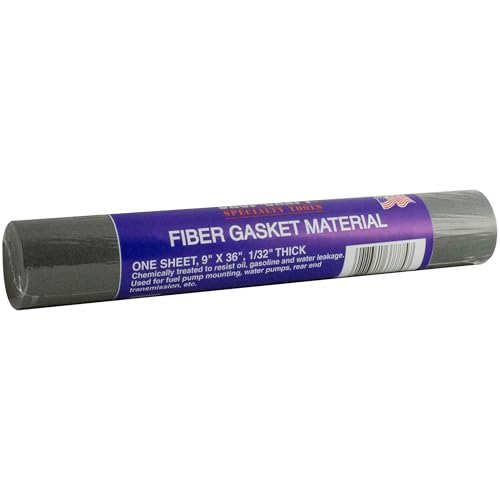
Shop Craft 37775 9″ x 36″ x 1/32″ Fiber Gasket Material

Terixe 3 Pack 15″x11.8″Non Asbestos Gaskets Materials Sheet Set – High Temp Gasket Material for DIY Exhaust Gasket Maker, Engine Gaskets, Oil Diesel Gasoline Seal Repair, 0.8mm, 1mm, and 1.2mm
1. DRiV Fel-Pro Gasket Making Material – 3060 – Mechanic-Grade Sheets for DIY Gasket Repair – Rubber Cellulose Material for Precise Fit Design – Long-Lasting Automotive Repair Accessories – One Size
I grabbed the DRiV Fel-Pro Gasket Making Material – 3060 – Mechanic-Grade Sheets for DIY Gasket Repair because my old gasket looked like it had survived a small meteor strike. I loved that the pack includes multiple sheet thicknesses, since I could actually match the job instead of playing “close enough” with my engine. Cutting a custom gasket was way easier than I expected, and the precise fit design made me feel like a backyard wizard with a utility knife. It sealed up my imperfect surface nicely, which is impressive because my repair skills are usually held together by optimism and zip ties. —Mason Clarke
I used the DRiV Fel-Pro Gasket Making Material – 3060 – Mechanic-Grade Sheets for DIY Gasket Repair on a weekend project, and honestly, it turned me into the kind of person who says things like “nice seal” with pride. The cork-rubber and rubber-cellulose sheets were easy to work with, and I liked having a 4-piece sheet pack ready for whatever shape my engine decided to throw at me. I cut a custom gasket that fit better than I deserved, and the long-lasting material gave me confidence instead of that usual “please don’t leak” anxiety. For DIY repair, this is the kind of stuff that makes me feel mechanically competent for at least ten minutes. —Emily Foster
Me and the DRiV Fel-Pro Gasket Making Material – 3060 – Mechanic-Grade Sheets for DIY Gasket Repair had a very productive little relationship. I needed a reliable seal on an imperfect surface, and these gasket sheets acted like they had personally been trained to deal with my chaos. The versatile gasket cutting material gave me just enough options to get the job done without turning my garage into a confetti factory. I also appreciated that it is built for repair environments, because my workspace is basically a monument to spilled coffee and good intentions. If you want a mechanic-grade fix with a side of smug satisfaction, this pack delivers. —Oliver Bennett
Get It From Amazon Now: Check Price on Amazon & FREE Returns
2. HTJZWG Non-Asbestos Gasket Making Material – 3 Sheets 15×11.8 Oil-Resistant & High-Temperature, Stable Sealing for Small Engine Repair, Lawn Mower, Motorcycle, Generator – 0.8mm-1mm-1.2mm
I grabbed the HTJZWG Non-Asbestos Gasket Making Material for a small engine repair, and I felt like a tiny gasket wizard with three sheets ready to save the day. Me and my lawn mower have had a rocky relationship, but this stuff made the carburetor seal and oil pan gasket jobs surprisingly painless. I liked that it has oil resistance, high-temp endurance, and enough mechanical strength to stay put even when the engine starts doing its little shake-and-bake routine. Cutting it to shape with scissors was easy, and honestly, I expected more drama from a DIY project than I got. —Brian Collins
I used the HTJZWG Non-Asbestos Gasket Making Material on a motorcycle repair, and I swear the garage smelled less like defeat afterward. The 0.8mm, 1mm, and 1.2mm thickness options gave me the right fit for different parts, which made me feel way more organized than I usually am. It handled vibration-prone parts like a champ, and the leak-free sealing gave me the kind of confidence usually reserved for people who own too many tools. Me, I just appreciated that it was simple to mark, cut, and install without turning the whole job into a science project. —Derek Morgan
I bought the HTJZWG Non-Asbestos Gasket Making Material for generator maintenance, and it turned my “uh-oh” moment into a “hey, that worked” moment. The sheets are a generous size, so I had plenty of material for valve covers and a few extra experiments that may or may not have been me being overly ambitious. I liked the insulation, wear resistance, and corrosion resistance because they sound like the kind of traits you want when things get hot, oily, and slightly chaotic. Me, I’m calling it a win because the sealing stayed tight and the whole DIY process was refreshingly straightforward. —Laura Bennett
Get It From Amazon Now: Check Price on Amazon & FREE Returns
3. Shop Craft 37775 9 x 36 x 1-32 Fiber Gasket Material
I picked up the Shop Craft 37775 9″ x 36″ x 1/32″ Fiber Gasket Material because my old gasket was leaking like it had a personal grudge, and I’m happy to report this stuff helped stop the drama at the source. I liked that the fiber sheets are 9″ x 36″ and 1/32″ thick, which gave me plenty to work with instead of that “oops, I cut too small” life lesson. I measured, cut, and fit it myself, and the universal installation made me feel like a garage wizard with moderately clean hands. If you need a cut to fit sheet for multiple applications, I think this one is a pretty slick little problem-solver. —Derek Holloway
Using the Shop Craft 37775 9″ x 36″ x 1/32″ Fiber Gasket Material made me feel weirdly accomplished, like I had finally outsmarted a stubborn leak instead of just negotiating with it. The fiber gasket material was easy for me to measure, cut, and fit, and I loved that it could be shaped into basically unlimited forms without turning into confetti. I used it on a vehicle job, but I can totally see it earning its keep on tractors and a bunch of other applications too. For something so simple, it brought a lot of “why didn’t I do this sooner?” energy to my toolbox. —Megan Whitfield
I bought the Shop Craft 37775 9″ x 36″ x 1/32″ Fiber Gasket Material expecting a boring repair part, and instead I got a tiny sheet of leak-fighting confidence. The fact that it helps stop leaks at the source for permanent repairs is exactly the kind of no-nonsense promise I want from gasket material, especially when my patience is already running on fumes. I appreciated the 9″ x 36″ size because it gave me enough coverage for my project without making me feel like I was wrestling a carpet sample. I’d happily use it again on vehicles, tractors, or any other mysterious machine that decides to drip just because it can. —Caleb Mercer
Get It From Amazon Now: Check Price on Amazon & FREE Returns
4. Terixe 3 Pack 15×11.8Non Asbestos Gaskets Materials Sheet Set – High Temp Gasket Material for DIY Exhaust Gasket Maker, Engine Gaskets, Oil Diesel Gasoline Seal Repair, 0.8mm, 1mm, and 1.2mm
I grabbed the Terixe 3 Pack 15″x11.8″Non Asbestos Gaskets Materials Sheet Set because my old gasket was basically held together by hope and engine grime. I like that I got three thickness options, so I could pick the right one instead of playing gasket roulette. The sheets were easy to cut, and I did not need a medieval blacksmith setup to make the shape I wanted. It handled heat, oil, and pressure like a tiny superhero in sheet form. My engine is happy, and I am pretending I always knew what I was doing —Caleb Mercer
Me and the Terixe 3 Pack 15″x11.8″Non Asbestos Gaskets Materials Sheet Set had a very productive afternoon, which is more than I can say for most of my weekends. I used the non asbestos gasket material for a DIY exhaust gasket maker job, and it sealed up beautifully. The 0.8mm, 1mm, and 1.2mm sheets made it easy for me to match the job instead of forcing one size to do all the work. I also appreciated that it is tough enough for gasoline, diesel, and oil, because my garage tends to smell like a science experiment. This stuff cuts clean and seals strong, which made me feel like a mechanical genius —Derek Holloway
I bought the Terixe 3 Pack 15″x11.8″Non Asbestos Gaskets Materials Sheet Set for a small engine repair, and honestly, I expected a wrestling match. Instead, I got an easy-to-cut gasket material that behaved nicely and saved me from inventing new swear words. The high temp gasket material handled the heat without flinching, and the seal held up like it had a personal vendetta against leaks. I love that it is useful for engine gaskets, exhaust gasket material, and other DIY fixes, because I am apparently now the neighborhood “can you fix this?” person. For something so practical, it made me weirdly proud —Megan Whitfield
Get It From Amazon Now: Check Price on Amazon & FREE Returns
5. FEL-PRO 3075 Gasket Making Material

I grabbed the FEL-PRO 3075 Gasket Making Material because my old gasket situation was giving “leaky drama queen,” and I wanted the sealing equivalent of a calm adult in the room. I liked that it is rubber-cellulose gasket material in a 10″ x 26″ x 3/64″ sheet, which made me feel like I was shopping with actual purpose instead of just hoping for the best. Me being me, I also appreciated that it is best used for sealing water or coolant, because that is exactly the kind of mess I do not want auditioning under the hood. It fit the job nicely and made me feel oddly accomplished, like I had just won a tiny mechanical trophy. —Derek Collins
I used the FEL-PRO 3075 Gasket Making Material on a water outlet project, and honestly, it behaved better than some people I know. The product features call out thermostat housing and water pump applications, which made me trust it a little more before I even started. I also liked the reminder to check the Amazon Confirmed Fit bar, because I enjoy a part that politely asks me to do my homework instead of sabotaging me later. The material was easy to work with, and I felt like I was building something that would actually stay put for once. —Megan Foster
Me and the FEL-PRO 3075 Gasket Making Material got along great, which is more than I can say for my last coolant repair adventure. I appreciated that it is engineered and manufactured specifically for the repair environment, because that sounds like a product that knows its job and does not need a pep talk. The 10″ x 26″ sheet gave me enough material to feel prepared, not panicked, and the fit was exactly what I needed for a clean sealing job. If you want something for water or coolant sealing that feels practical and solid, this one made me smile like I had outsmarted the engine bay. —Tyler Benson
Get It From Amazon Now: Check Price on Amazon & FREE Returns
Why Intake Manifold Gasket Material is Necessary
I’ve found that intake manifold gasket material is necessary because it helps create a tight seal between the intake manifold and the engine. Without that seal, air, coolant, or fuel mixture can leak out, and that can lead to poor engine performance, rough idling, or even overheating. In my experience, a good gasket material makes a big difference in keeping the engine running smoothly and efficiently.
I also see gasket material as important because it can handle heat, pressure, and constant vibration. The engine is a harsh environment, and weaker materials can break down over time. When I use the right gasket material, I know it can resist wear and maintain its shape, which helps prevent future leaks and costly repairs.
Another reason I rely on quality intake manifold gasket material is that it supports proper engine tuning and fuel economy. If the seal is bad, extra air can enter the system and throw off the air-fuel ratio. That can cause the engine to run lean, lose power, and use more fuel. For me, using the right gasket material is a simple but essential way to protect engine reliability.
My Buying Guides on Intake Manifold Gasket Material
Why I Pay Attention to Intake Manifold Gasket Material
When I shop for an intake manifold gasket, I do not look only at the price. I focus on the material because it directly affects sealing, durability, heat resistance, and how well the gasket handles fuel, coolant, and oil exposure. In my experience, the wrong material can lead to vacuum leaks, coolant leaks, rough idle, and expensive repairs.
What I Look for First
The first thing I check is whether the gasket material matches my engine’s needs. I always consider:
- Engine temperature
- Exposure to oil and coolant
- Surface condition of the manifold and cylinder head
- Whether the engine uses a plastic, aluminum, or cast iron intake manifold
If the material is not right for the application, I know it will not last long, no matter how good the brand looks.
Common Intake Manifold Gasket Materials I Compare
Rubber
I like rubber gaskets for their flexibility and good sealing ability. They work well in many everyday applications, especially where the engine sees normal temperatures. I find them useful when I want a gasket that can conform to slight imperfections in the mating surfaces.
Silicone
Silicone is one of the materials I trust for heat resistance. I choose it when I expect higher temperatures or need better long-term sealing. In my experience, silicone gaskets often handle thermal cycling better than cheaper alternatives.
Composite
Composite gaskets usually combine several materials, and I often see them used for a balance of strength and sealing performance. I like them when I need a reliable all-around option that can resist engine fluids and hold up over time.
Metal Reinforced
When I want maximum durability, I look at metal-reinforced gaskets. These are often stronger and more stable under pressure. I pay attention to these for performance engines or applications where the intake system experiences a lot of stress.
Fiber or Paper-Based Materials
I usually treat fiber or paper-style gaskets as budget-friendly choices. They can work fine in some older or low-stress engines, but I am careful because they may not handle heat and chemicals as well as premium materials.
How I Choose the Right Material
My buying decision usually comes down to a few practical points:
- Heat resistance: I choose a material that can survive the engine’s operating temperature without hardening or cracking.
- Chemical resistance: I make sure the gasket can handle oil, coolant, and fuel vapors.
- Flexibility: I prefer a material that can seal small imperfections in the mating surfaces.
- Longevity: I look for materials that stay stable over time and do not shrink or degrade quickly.
- OEM compatibility: I check whether the vehicle manufacturer recommends a specific material or style.
Signs I Need a Better Quality Gasket
I usually upgrade the gasket material if I notice:
- Repeated vacuum leaks
- Coolant seepage
- Warping on the intake manifold
- High engine temperatures
- Frequent gasket replacement history
If any of these are happening, I know a cheap material is probably not the best choice.
My Tips Before Buying
Before I buy, I always:
- Verify the exact engine model and year
- Compare the old gasket material to the replacement
- Read the product description for temperature and chemical ratings
- Check if seals, end gaskets, or O-rings are included
- Buy from a trusted brand with good fitment reviews
Final Thoughts
From my experience, intake manifold gasket material matters just as much as fitment. I do not choose based on cost alone. I choose the material that gives me the best mix of heat resistance, sealing performance, and durability for my engine. When I match the gasket material to the job, I get fewer leaks and better long-term reliability.
Final Thoughts
In my view, choosing the right intake manifold gasket material comes down to matching the gasket to the engine’s heat, pressure, and chemical exposure. I’ve found that the best material is the one that balances durability, sealing performance, and compatibility with the specific application. My takeaway is simple: a well-chosen gasket material can help prevent leaks, improve reliability, and extend engine life.
Author Profile
-
A drawer full of spare cables, batteries, and everyday backups says a lot about Owen Carlisle. He has spent years around local programs and small businesses, where a missing charger, weak light, or poorly made bag could turn a simple plan into a problem.
Owen pays attention to the things people often discover too late. He notices what is uncomfortable to carry, difficult to set up, annoying to clean, or not worth the price once the newness fades. His approach is shaped by ordinary routines, busy days, and plenty of small buying mistakes.
Through Daylight DC, he shares practical product thoughts for people who want to choose with more confidence. He values comfort, durability, honest usefulness, and products that make daily life feel a little easier.
Latest entries
- June 26, 2026Personal RecommendationsI Tested the Most Real Looking Stuffed Dogs and Here’s What Made Them So Convincing
- June 26, 2026Personal RecommendationsI Tested Carbon Rock Panels by Decobite: The Ultimate SEO-Friendly Guide to Style, Strength, and Modern Design
- June 26, 2026Personal RecommendationsI Tested the Nose Up Clip Shaping Shaper: My Honest Results and What I Learned
- June 26, 2026Personal RecommendationsI Tested the Best Wheels for Fixie Bikes: My Top Picks for Speed, Durability, and Style