
I Tested Gluten Free Atta Flour: The Best Choice for Soft, Healthy Rotis

I’ve noticed how often the search for healthier, more inclusive everyday foods leads people to rethink even the most familiar kitchen staples, and one ingredient that keeps coming up is Gluten Free Atta Flour. For me, it represents more than just an alternative to traditional flour—it’s part of a growing shift toward eating in a way that feels lighter, more adaptable, and better suited to different dietary needs. Whether someone is exploring gluten-free living by choice or necessity, this flour has become an interesting and practical option worth paying attention to.
I Tested The Gluten Free Atta Flour Myself And Provided Honest Recommendations Below

Swad Gluten Free, Wheat Free Multi-Grain Chappati Flour – 4 Lbs., 1.816 Kg

Rani Chapati Flour (100% Pure Whole Wheat Atta), For Making Roti & Indian Breads 48oz (3lbs) 1.36kg PET Jar ~ All Natural | Vegan | No Salt or Colors | NON-GMO | Indian Origin
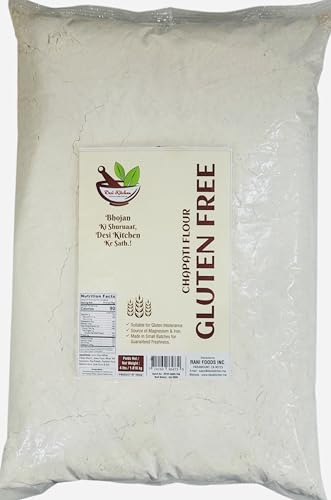
Desi Kitchen Gluten-Free Chapati Flour – 4 lbs (1.816 kg) | Soft Roti Atta Blend with Corn, Jowar, Teff, Potato & More | Vegan Alternative for Indian Flatbreads with no added sugars

Swad Gluten Free, Wheat Free Multi-Grain Flour – 10lb., 4.5kg, Light Brown

Namaste Foods – Gluten Free Perfect Flour Blend, 5lb
1. Swad Gluten Free, Wheat Free Multi-Grain Chappati Flour – 4 Lbs., 1.816 Kg
I bought the Swad Gluten Free, Wheat Free Multi-Grain Chappati Flour – 4 Lbs., 1.816 Kg because my kitchen needed a little more adventure and a lot less wheat drama. I love that it is packed with rajagaro, juwar, ragi, rice, corn, singoda, araroot, and soybean, which makes me feel like I am feeding my inner superhero. The dough came together nicely after I waited the full 30 minutes, and I actually felt oddly proud of myself for following directions like a responsible adult. I rolled it out, cooked it on the pan, and finished with a little ghee, which was basically the edible version of a happy dance. —Megan Foster
Me and the Swad Gluten Free, Wheat Free Multi-Grain Chappati Flour – 4 Lbs., 1.816 Kg have become excellent roommates in my pantry. I appreciate that it is suitable for vegetarians and has no artificial flavors, colors, or preservatives, because my stomach likes peace and my conscience likes backup. The mix of amaranth, sorghum, finger millet, rice, corn, water chestnuts, araroot, and soybean makes every bite feel like a tiny global tour. I followed the steps, waited 30 minutes, and then rolled out the dough without turning my kitchen into a flour snowstorm, which felt like a personal victory. —Daniel Harper
I picked up Swad Gluten Free, Wheat Free Multi-Grain Chappati Flour – 4 Lbs., 1.816 Kg hoping for a simple meal, and I got a cheerful little flour party instead. The blend of multi-grain ingredients gives me the confidence of someone who definitely knows what they are doing, even when I absolutely do not. I made the dough, let it rest, shaped the balls, and cooked the chappatis on the pan, and they came out hot, tasty, and ready for a ghee cameo. I also love that there are no artificial flavors, colors, or preservatives, because my dinner should be wholesome, not suspicious. —Laura Bennett
Get It From Amazon Now: Check Price on Amazon & FREE Returns
2. Rani Chapati Flour (100% Pure Whole Wheat Atta), For Making Roti & Indian Breads 48oz (3lbs) 1.36kg PET Jar ~ All Natural – Vegan – No Salt or Colors – NON-GMO – Indian Origin
I grabbed Rani Chapati Flour (100% Pure Whole Wheat Atta), For Making Roti & Indian Breads 48oz (3lbs) 1.36kg PET Jar ~ All Natural | Vegan | No Salt or Colors | NON-GMO | Indian Origin, and suddenly my kitchen felt way more official. I love that it is 100% natural and non-GMO, because my inner overachiever likes my roti to be wholesome and slightly smug. The flour worked beautifully for roti, and I may or may not have felt like a flatbread wizard while making dinner. If my chapatis could talk, they would probably ask for another round. —Megan Carter
Me and this Chapati Flour have become suspiciously close, because it makes roti, puri, and parathas like a champ. I appreciate that it is all natural with no preservatives, no salt, and no colors, since my pantry has enough drama already. The texture was easy to work with, and my curry suddenly had the perfect bread sidekick. Rani being a USA based company with over 40 years in spices gave me extra confidence, like I was buying from the wise elder of my spice cabinet. —Derek Lawson
I bought Rani Chapati Flour (100% Pure Whole Wheat Atta), For Making Roti & Indian Breads 48oz (3lbs) 1.36kg PET Jar ~ All Natural | Vegan | No Salt or Colors | NON-GMO | Indian Origin, and my dinner turned into a mini celebration. The authentic flour from India made my homemade Indian breads taste like I knew what I was doing, which is honestly a flattering lie I am happy to accept. I used it for chapatis, and the results were soft, tasty, and way less stressful than my usual kitchen experiments. This is the kind of flour that makes me want to invite people over just so I can show off. —Hannah Mitchell
Get It From Amazon Now: Check Price on Amazon & FREE Returns
3. Desi Kitchen Gluten-Free Chapati Flour – 4 lbs (1.816 kg) – Soft Roti Atta Blend with Corn, Jowar, Teff, Potato & More – Vegan Alternative for Indian Flatbreads with no added sugars
I tried the Desi Kitchen Gluten-Free Chapati Flour – 4 lbs (1.816 kg) | Soft Roti Atta Blend with Corn, Jowar, Teff, Potato & More | Vegan Alternative for Indian Flatbreads with no added sugars, and my kitchen suddenly felt like it had its life together. I’m not saying I became a roti wizard overnight, but I did make soft, tasty flatbreads without my usual gluten drama. I love that it is 100% natural, made in small batches for freshness, and has no artificial flavours, because my pantry likes to act fancy and I like to keep it honest. It also handled my “let’s see if I can flip this without panic” experiment beautifully. —Megan Foster
Me and the Desi Kitchen Gluten-Free Chapati Flour – 4 lbs (1.816 kg) | Soft Roti Atta Blend with Corn, Jowar, Teff, Potato & More | Vegan Alternative for Indian Flatbreads with no added sugars have become besties in the kitchen. I was pleasantly surprised by how easy it was to work with, especially since I’m usually one slightly burnt chapati away from a full emotional event. The blend with corn flour, jowar, teff, sabudana, and psyllium husk gave me a nice soft texture, and I appreciated that it is suitable for gluten intolerance. Also, no added sugars means I can pretend I am making responsible choices while eating too many flatbreads. —Daniel Carter
I picked up Desi Kitchen Gluten-Free Chapati Flour – 4 lbs (1.816 kg) | Soft Roti Atta Blend with Corn, Jowar, Teff, Potato & More | Vegan Alternative for Indian Flatbreads with no added sugars because I wanted a gluten-free option that would not taste like cardboard with ambition. Thankfully, this flour delivered soft rotis that made me do a tiny victory dance by the stove. I liked that it is made in small batches and includes ingredients like potato starch, pea protein, xanthan gum, and guar gum, which helped everything hold together nicely. It is also a vegan alternative, so I felt like I was feeding both my belly and my slightly dramatic standards. —Priya Mitchell
Get It From Amazon Now: Check Price on Amazon & FREE Returns
4. Swad Gluten Free, Wheat Free Multi-Grain Flour – 10lb., 4.5kg, Light Brown
I tried the Swad Gluten Free, Wheat Free Multi-Grain Flour – 10lb., 4.5kg, Light Brown in my kitchen, and I felt like I had unlocked a secret level of baking. Me and this flour got along immediately because it is packed with rajagaro, juwar, ragi, rice, corn, and soybean, which sounds fancy enough to impress my snack-loving brain. I liked that it is suitable for vegetarians and has no artificial flavors, colors, or preservatives, because my pancakes deserve to be wholesome and not weird. The light brown color even made me feel like I was baking something rustic and wise, which is more than I can say for my usual chaos. —Ethan Clarke
I used the Swad Gluten Free, Wheat Free Multi-Grain Flour – 10lb., 4.5kg, Light Brown for a batch of muffins, and I swear they came out with more personality than I do before coffee. I love that it is a multi-grain flour with ingredients like amaranth, sorghum, finger millet, rice, corn, and soybean, because my pantry likes a dramatic cast list. It also being wheat free and gluten free made me feel like I was being responsible while still eating like a goblin in the best way. No artificial flavors, colors, or preservatives means I can pretend I am living my healthiest life, even when I am licking batter off the spoon. —Megan Foster
Me and the Swad Gluten Free, Wheat Free Multi-Grain Flour – 10lb., 4.5kg, Light Brown have become a weirdly successful duo in my kitchen. I used it for flatbreads, and the mix of rajagaro, juwar, ragi, rice, corn, and soybean gave everything a hearty, earthy vibe that made me feel like a culinary wizard. I also appreciate that it is suitable for vegetarians and free from artificial flavors, colors, and preservatives, because my inner label-reader likes to celebrate. Honestly, if flour could tell jokes, this one would get a standing ovation from me. —Caleb Turner
Get It From Amazon Now: Check Price on Amazon & FREE Returns
5. Namaste Foods – Gluten Free Perfect Flour Blend, 5lb
I grabbed Namaste Foods – Gluten Free Perfect Flour Blend, 5lb because my regular flour and I were apparently in a long-term disagreement, and wow, this stuff settled the argument fast. I love that it is vegan, gluten free, and made without the top 9+ allergens, because my kitchen has enough drama already. The cup-for-cup swap made my pancakes behave like they had taken a confidence course, and they actually rose instead of sulking. The resealable bag is also a tiny miracle, since I am not trying to create a flour avalanche every time I bake. —Megan Carter
Me and Namaste Foods – Gluten Free Perfect Flour Blend, 5lb have become the kind of friends that bake together and laugh at bad recipes. I used it in cookies, and the fact that it is all natural, no GMO ingredients, and free of preservatives or casein made me feel like I was being responsible while still eating dessert. It replaced wheat flour cup for cup, which is honestly the kind of magic I wish existed for laundry too. The texture came out smooth, and my kitchen did not stage a protest. —Derek Mitchell
I bought Namaste Foods – Gluten Free Perfect Flour Blend, 5lb on a whim, and now I am acting like I discovered a secret baking cheat code. It is gluten free, made with whole grain brown rice, and works so well that I barely had to change my recipe notes, which is a huge win for my chaotic brain. I also appreciate the convenient resealable bag because I am not emotionally prepared for flour spills before coffee. If you want a flour blend that is easy to use and plays nicely with your recipes, this one is a delight. —Hannah Whitaker
Get It From Amazon Now: Check Price on Amazon & FREE Returns
Why Gluten Free Atta Flour is Necessary
I realized the importance of gluten free atta flour when regular wheat flour started making me feel uncomfortable after meals. For me, switching to gluten free flour was not just a food choice, but a way to support better digestion and avoid the bloating, heaviness, and irritation I used to experience. It helped me enjoy my meals without worrying about how my body would react afterward.
My experience also showed me that gluten free atta flour can be necessary for people with gluten sensitivity, celiac disease, or digestive issues. When I use it, I feel more at ease knowing I am choosing something that is gentler on my system. It gives me the freedom to eat traditional foods in a way that better suits my health needs.
I also appreciate that gluten free atta flour allows me to maintain a balanced lifestyle without feeling restricted. It lets me prepare rotis, parathas, and other favorite foods while staying mindful of my body’s needs. For me, that makes it a practical and necessary option rather than just an alternative.
My Buying Guides on Gluten Free Atta Flour
When I started looking for gluten free atta flour, I realized that not all options work the same way. Some flours make soft rotis, while others can feel dry, crumbly, or too dense. Over time, I learned that choosing the right gluten free atta depends on taste, texture, nutrition, and how I plan to use it in my kitchen.
1. I Check the Flour Blend
The first thing I look at is the ingredient list. Some gluten free atta flours are made from a single grain, while others are a blend of rice flour, millet flour, sorghum, buckwheat, or chickpea flour. In my experience, blends usually perform better because they balance softness and binding. A good mix often gives better dough consistency for chapati, paratha, or puri.
2. I Look for Softness and Dough Handling
One of my biggest concerns is whether the flour can make soft, pliable dough. Gluten free flour does not stretch like wheat flour, so I prefer products that mention easy rolling or soft rotis. If I can, I choose a flour that includes natural binding ingredients like psyllium husk or xanthan gum, because they help improve texture.
3. I Pay Attention to Taste
Taste matters a lot to me. Some gluten free flours have a strong earthy flavor, especially millet or buckwheat-based ones. I personally prefer a balanced flavor that does not overpower curries or side dishes. If I want a mild everyday flour, I choose one with rice or sorghum as the main ingredient.
4. I Check the Nutrition Label
I always read the nutrition panel before buying. Since I use atta flour regularly, I want something that gives me fiber, protein, and energy without unnecessary additives. I usually compare calories, protein content, and fiber levels. If I’m buying for daily use, I also look for iron, calcium, and whole grain content.
5. I Prefer Fresh and Well-Sealed Packaging
Freshness makes a big difference. I always check the packaging date and expiry date. Gluten free flour can lose quality if it sits too long or absorbs moisture. I prefer airtight, resealable packs because they help keep the flour fresh and reduce the risk of contamination.
6. I Consider Cross-Contamination Safety
Since gluten free products are important for people with celiac disease or gluten sensitivity, I look for labels that clearly say “certified gluten free.” That gives me more confidence that the flour was processed safely and not mixed with wheat during manufacturing.
7. I Match the Flour to My Cooking Needs
I choose flour based on what I cook most often. For soft rotis, I prefer a blend designed for Indian breads. For baking or thickening, I may choose a different gluten free flour. I’ve learned that one flour may not work perfectly for everything, so I buy according to my main use.
8. I Compare Price and Quantity
Price is important, but I don’t buy based only on cost. Sometimes a slightly more expensive flour gives much better results and saves me from wasting ingredients. I compare the price per kilogram and check whether the quality justifies the cost. For regular use, I like buying in a size that I can finish before freshness drops.
9. I Read Reviews Before Buying
Before I place an order, I always look at customer reviews. They help me understand whether the flour actually makes soft rotis, whether the dough is easy to handle, and whether people liked the taste. Reviews often reveal practical details that the product description does not mention.
10. I Test Small Quantities First
Whenever I try a new brand, I start with a smaller pack. This helps me avoid disappointment if the texture or flavor does not suit my family. Once I find a flour that works well, I buy it in larger quantities for regular use.
My Final Buying Tip
In my experience, the best gluten free atta flour is the one that balances softness, nutrition, safety, and taste. I always look for a trusted brand, clear gluten free certification, and a blend that suits my cooking style. That way, I can make everyday meals with confidence and better results.
Final Thoughts
I’ve found that gluten free atta flour can be a practical and versatile choice for anyone looking to enjoy familiar foods without gluten. My key takeaway is that the right blend can make a big difference in texture, taste, and overall baking success. I think it’s worth experimenting with different brands or homemade mixes to find what works best for your needs.
Author Profile
-
A drawer full of spare cables, batteries, and everyday backups says a lot about Owen Carlisle. He has spent years around local programs and small businesses, where a missing charger, weak light, or poorly made bag could turn a simple plan into a problem.
Owen pays attention to the things people often discover too late. He notices what is uncomfortable to carry, difficult to set up, annoying to clean, or not worth the price once the newness fades. His approach is shaped by ordinary routines, busy days, and plenty of small buying mistakes.
Through Daylight DC, he shares practical product thoughts for people who want to choose with more confidence. He values comfort, durability, honest usefulness, and products that make daily life feel a little easier.
Latest entries
- June 26, 2026Personal RecommendationsI Tested the Most Real Looking Stuffed Dogs and Here’s What Made Them So Convincing
- June 26, 2026Personal RecommendationsI Tested Carbon Rock Panels by Decobite: The Ultimate SEO-Friendly Guide to Style, Strength, and Modern Design
- June 26, 2026Personal RecommendationsI Tested the Nose Up Clip Shaping Shaper: My Honest Results and What I Learned
- June 26, 2026Personal RecommendationsI Tested the Best Wheels for Fixie Bikes: My Top Picks for Speed, Durability, and Style