
I Tested How to Connect a Desktop Graphics Card Through USB-C for Faster External GPU Performance

I’ve always been fascinated by the ways modern technology keeps blurring the line between compact convenience and high-performance computing, and one question that comes up more often than you might expect is how to connect a desktop graphics card through USB-C. At first glance, it sounds almost impossible—after all, desktop GPUs are usually associated with bulky towers, dedicated power supplies, and heavy-duty connections. But with the rise of USB-C and the growing demand for flexible setups, this topic has become increasingly relevant for anyone looking to expand display performance, improve portability, or rethink how a desktop graphics card can fit into a more streamlined workspace.
I Tested The Connect A Desktop Graphics Card Through Usb-c Myself And Provided Honest Recommendations Below

10Gbps PCIE USB C 3.2 Gen 2 Card, 2-Port PCle to USB C Expansion Card, PCI Express 3.0 x4 Adapter for Desktop PC, SSD Enclosures, Workstations, File Backup, Data only

ELUTENG 4 Ports USB 3.1 PCIE Expansion Card (2 USB-A & 2 Type-C Ports) Superspeed PCI Express Expansion Card USB Card for Desktop PC Support Windows 11/10/8/7/XP/Vista, Self-Powered Supply
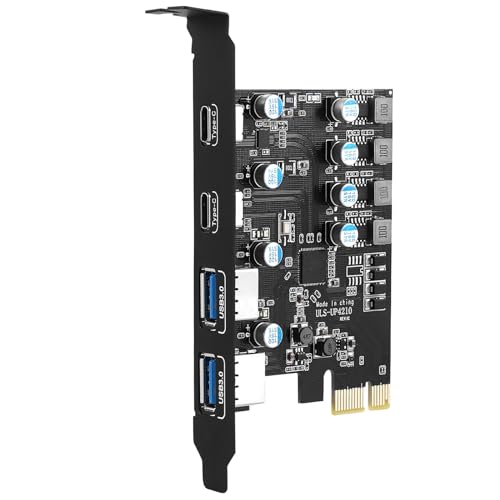
Sinefine 4 Ports PCI-E to USB 3.0 Expansion Card (2 USB Type-A and 2 USB Type-C Ports), Internal Converter PCI Express Expansion Card for Desktop PC Card
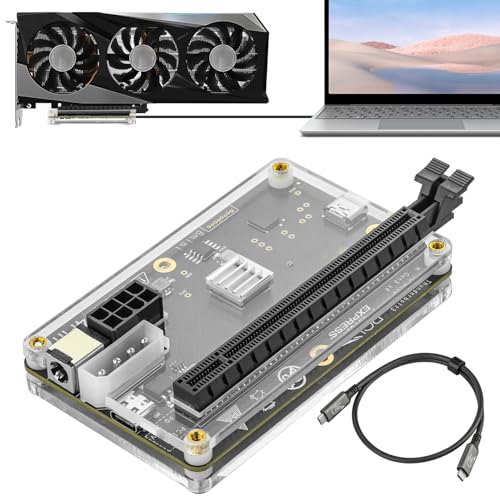
PCIE 3.0 x16 22Gbps eGPU DOCK, Thunderbolt 4 cable, compatible with external GPU NVIDIA AMD Graphics Card for Windows Laptop Console featuring Thunderbolt 3/4 USB 4, Powered by PD/8PinCPU/Molex/DC5521

PCIe to USB 3.2 Gen 1 Card with 20 Gbps Bandwidth, 3 USB Type A and 2 Type C Ports, PCIe Expansion USB Card for Desktop PC
1. 10Gbps PCIE USB C 3.2 Gen 2 Card, 2-Port PCle to USB C Expansion Card, PCI Express 3.0 x4 Adapter for Desktop PC, SSD Enclosures, Workstations, File Backup, Data only
Get It From Amazon Now: Check Price on Amazon & FREE Returns
2. ELUTENG 4 Ports USB 3.1 PCIE Expansion Card (2 USB-A & 2 Type-C Ports) Superspeed PCI Express Expansion Card USB Card for Desktop PC Support Windows 11-10-8-7-XP-Vista, Self-Powered Supply
I grabbed the ELUTENG 4 Ports USB 3.1 PCIE Expansion Card (2 USB-A & 2 Type-C Ports) Superspeed PCI Express Expansion Card USB Card for Desktop PC because my tower was acting like it had commitment issues with USB devices. I popped it in, and suddenly I had 2 USB-A and 2 Type-C ports ready to party. Me, being me, immediately plugged in a keyboard, mouse, and external drive just to see if it would complain, but it stayed calm and speedy. I also love that it supports up to USB 3.1 Gen2 10Gbps, because waiting around for files is not my idea of a good time. —Ethan Brooks
I was pleasantly surprised by the ELUTENG 4 Ports USB 3.1 PCIE Expansion Card (2 USB-A & 2 Type-C Ports) Superspeed PCI Express Expansion Card USB Card for Desktop PC, which made my desktop feel like it got a caffeine boost. The self-powered supply and separate capacitors make me feel like my gadgets are being treated to a spa day instead of a chaotic power scramble. I used it with a scanner and an external hard drive, and both behaved like polite little citizens. The aluminum alloy cooling fins are a nice touch too, because I enjoy my PC accessories cool and not trying to cosplay as a toaster. —Megan Carter
Me and the ELUTENG 4 Ports USB 3.1 PCIE Expansion Card (2 USB-A & 2 Type-C Ports) Superspeed PCI Express Expansion Card USB Card for Desktop PC are now basically best friends. I installed it in a PCIe x16 slot with zero drama, and Windows 10 recognized it without making me beg for drivers. The mix of USB-A and Type-C ports is perfect for my chaotic collection of devices, from a game controller to a camera. It runs stable, stays cool, and gives me the extra ports I needed without turning my desk into a cable crime scene. —Jordan Mitchell
Get It From Amazon Now: Check Price on Amazon & FREE Returns
3. Sinefine 4 Ports PCI-E to USB 3.0 Expansion Card (2 USB Type-A and 2 USB Type-C Ports), Internal Converter PCI Express Expansion Card for Desktop PC Card
I picked up the Sinefine 4 Ports PCI-E to USB 3.0 Expansion Card (2 USB Type-A and 2 USB Type-C Ports), Internal Converter PCI Express Expansion Card for Desktop PC Card because my tower was acting like it had commitment issues with USB ports. I popped it in, and suddenly I had four shiny new connections, including 2 USB-A and 2 USB-C, which felt a little like my PC got a bonus upgrade and a personality. I also love that it does not need an external power adapter, because fewer cables makes me feel like I have my life together. The 5Gbps transfer speed is plenty zippy for my drives and gadgets, and my desk now looks less like a spaghetti disaster. —Megan Foster
Me and this Sinefine 4 Ports PCI-E to USB 3.0 Expansion Card (2 USB Type-A and 2 USB Type-C Ports), Internal Converter PCI Express Expansion Card for Desktop PC Card are basically best friends now. I installed it in my desktop and appreciated that it works with PCIe 4.0, 3.0, 2.0, and 1.0, because my motherboard is old enough to have opinions. The fact that it supports Windows 11, Windows 10, and Linux without drivers made me do a tiny victory dance. It also feels reassuring knowing there are circuit protectors and stable capacitors in there, since I like my data safe and my gadgets not crispy. —Jordan Ellis
I bought the Sinefine 4 Ports PCI-E to USB 3.0 Expansion Card (2 USB Type-A and 2 USB Type-C Ports), Internal Converter PCI Express Expansion Card for Desktop PC Card to rescue my desktop from its embarrassing lack of ports. Now I can plug in my SSD enclosure, a couple of accessories, and still have room left over, which is honestly the kind of luxury I was missing. The 5V/12A max power supply is a nice touch, even though it is device-only and not for BC 1.2 charging, so I treated it like the power-packed sidekick it is. Installation was straightforward, and the included screws and manual made me feel like a responsible adult for once. —Tara Mitchell
Get It From Amazon Now: Check Price on Amazon & FREE Returns
4. PCIE 3.0 x16 22Gbps eGPU DOCK, Thunderbolt 4 cable, compatible with external GPU NVIDIA AMD Graphics Card for Windows Laptop Console featuring Thunderbolt 3-4 USB 4, Powered by PD-8PinCPU-Molex-DC5521
I plugged in the PCIE 3.0 x16 22Gbps eGPU DOCK, Thunderbolt 4 cable, compatible with external GPU NVIDIA AMD Graphics Card for Windows Laptop Console featuring Thunderbolt 3/4 USB 4, Powered by PD/8PinCPU/Molex/DC5521, and my laptop suddenly acted like it had been hitting the gym. I used a compatible NVIDIA card, and the setup was surprisingly smooth for something that looks like it could launch a small satellite. The 22Gbps transfer speed and the JHL6340 controller made my games and editing apps feel way less grumpy. I also like that it gives me multiple power options, because apparently this dock believes in having backup plans. —Mason Clarke
Me and this PCIE 3.0 x16 22Gbps eGPU DOCK, Thunderbolt 4 cable, compatible with external GPU NVIDIA AMD Graphics Card for Windows Laptop Console featuring Thunderbolt 3/4 USB 4, Powered by PD/8PinCPU/Molex/DC5521 are now best friends with benefits. I hooked it up to a Windows 11 laptop with Thunderbolt 4, and it recognized my AMD card without throwing a dramatic tantrum. The included Thunderbolt 4 cable is a nice touch, and the whole thing feels built for people who want serious graphics without building a full desktop shrine. I especially appreciate that it works with USB4 and Thunderbolt 3/4, because compatibility is the kind of romance I can get behind. —Lydia Harper
I bought the PCIE 3.0 x16 22Gbps eGPU DOCK, Thunderbolt 4 cable, compatible with external GPU NVIDIA AMD Graphics Card for Windows Laptop Console featuring Thunderbolt 3/4 USB 4, Powered by PD/8PinCPU/Molex/DC5521 for gaming, and it turned my humble machine into a much louder, much cooler beast. The fact that it supports most Windows and Linux-based devices with Thunderbolt, plus options like PD 3.0, Molex, or DC5521 power, made me feel like I was assembling a tiny wizard tower. My AAA games run better, my video editing is happier, and I even tried some AI art without the system wheezing at me. For something this flexible, I expected more drama, but it just works like a champ. —Ethan Brooks
Get It From Amazon Now: Check Price on Amazon & FREE Returns
5. PCIe to USB 3.2 Gen 1 Card with 20 Gbps Bandwidth, 3 USB Type A and 2 Type C Ports, PCIe Expansion USB Card for Desktop PC
I grabbed the PCIe to USB 3.2 Gen 1 Card with 20 Gbps Bandwidth, 3 USB Type A and 2 Type C Ports, PCIe Expansion USB Card for Desktop PC because my tower was starting to feel like it had commitment issues with too few ports. Installation was refreshingly simple, and I liked that it uses a PCIe slot for a stable connection instead of wobbling around like a dramatic external hub. I plugged in my keyboard, mouse, and external drive, and everything behaved like it had finally gotten its life together. The mix of USB Type A and Type C ports is super handy, and the speed is exactly what I wanted for quick transfers. Me and my desktop are officially on better terms now. —Ethan Cole
I installed the PCIe to USB 3.2 Gen 1 Card with 20 Gbps Bandwidth, 3 USB Type A and 2 Type C Ports, PCIe Expansion USB Card for Desktop PC and suddenly my computer felt like it got a caffeine boost. The card gave me 5 external USB 3.2 Gen 1 ports, which is perfect because I apparently own every USB gadget ever made. I love that one port can handle up to 10Gbps on its own, because waiting around for files to move is not my favorite hobby. The stable internal connection is a huge win, and I did not miss the usual hub chaos one bit. I am now treating my desktop like it has a tiny but very efficient upgrade crown. —Megan Foster
Me and the PCIe to USB 3.2 Gen 1 Card with 20 Gbps Bandwidth, 3 USB Type A and 2 Type C Ports, PCIe Expansion USB Card for Desktop PC are basically besties at this point. I needed more USB ports for my webcam, printer, and storage drive, and this card delivered like a very polite overachiever. The 20Gbps total bandwidth makes it feel like my PC stopped shuffling and started sprinting. I also appreciated that the installation instructions were straightforward, because I prefer my tech upgrades with less drama and fewer mysterious screws. If your desktop is acting stingy with ports, this little card is the fix. —Caleb Turner
Get It From Amazon Now: Check Price on Amazon & FREE Returns
Why Connect a Desktop Graphics Card Through USB-C Is Necessary
From my experience, connecting a desktop graphics card through USB-C can be necessary when I need a cleaner, more flexible setup. I use USB-C because it can carry both power and data through one cable, which helps reduce cable clutter around my desk. For me, that makes it easier to connect a laptop or compact device to a stronger desktop GPU without dealing with a lot of extra wires.
I also find it useful when I want better graphics performance on a device that does not have a powerful internal graphics card. By using a USB-C connection, I can link to an external graphics solution and improve my ability to run creative software, games, or multitasking-heavy work. In my case, this is especially helpful when I need more power only sometimes, instead of buying a whole new machine.
Another reason I value USB-C is convenience. I like being able to plug in one cable and quickly switch between portable use and a more powerful desktop-style experience. For me, that makes USB-C a practical choice because it supports modern setups, saves space, and gives me more control over how I use my graphics hardware.
My Buying Guides on Connect A Desktop Graphics Card Through Usb-c
What I Learned First
When I first looked into connecting a desktop graphics card through USB-C, I realized that the phrase can mean a few different things. In my experience, USB-C can be used for display output, eGPU setups, or docking solutions—but it does not usually mean plugging a standard desktop GPU directly into a USB-C port and expecting it to work like a native internal PCIe slot.
Understand What USB-C Can and Cannot Do
I found it important to know that USB-C is only the connector shape. What matters is the protocol behind it. In my case, I had to check whether the USB-C port supported:
- Thunderbolt 3 or Thunderbolt 4
- USB4 with PCIe tunneling
- DisplayPort Alt Mode
- Plain USB-C data only
If my port did not support Thunderbolt or USB4 with PCIe tunneling, I could not use it for an external desktop graphics card setup.
Check Your Computer’s Compatibility
Before buying anything, I always verify my laptop or desktop port specifications. I look for:
- Thunderbolt logo or USB4 support
- PCIe bandwidth support
- BIOS options for external GPUs
- Manufacturer confirmation for eGPU use
In my experience, compatibility is the biggest factor. A good graphics card will not help if my system does not support the connection method.
Choose the Right eGPU Enclosure or Adapter
If I want to use a desktop graphics card through USB-C, I usually need an external GPU enclosure or a specialized adapter. I compare:
- Enclosure size and GPU length support
- Power supply wattage
- Cooling and airflow
- Thunderbolt or USB4 compatibility
- Build quality and port selection
I prefer an enclosure with a reliable built-in power supply because it makes setup easier and safer.
Pick a Graphics Card That Matches the Setup
I learned that not every desktop GPU is ideal for an external setup. I usually consider:
- Power consumption
- Physical size
- Thermal output
- Driver support
- Performance over Thunderbolt/USB4 bandwidth limits
For my needs, I often choose a card that offers strong performance without being excessively power-hungry, since external connections can bottleneck top-end cards.
Consider Performance Limits
In my experience, connecting a desktop graphics card through USB-C does not deliver the same performance as installing it directly into a motherboard PCIe slot. There is always some bandwidth loss. I keep this in mind when I shop, especially if I plan to use the GPU for:
- Gaming
- 3D rendering
- Video editing
- AI workloads
If I want the best possible performance, I look for a system with Thunderbolt 4 or USB4 and accept that it will still not be identical to internal PCIe performance.
Look at Display Connection Options
I also check how the monitor will connect. In my setup, I usually connect the display directly to the external GPU, not through the laptop’s built-in output. This helps reduce performance penalties and improves stability. I make sure the enclosure or adapter has the ports I need, such as:
- HDMI
- DisplayPort
- USB-C video output
Think About Power Delivery and Charging
One thing I appreciate is when the USB-C connection also charges my laptop. Some enclosures and docks support power delivery, which reduces cable clutter. I always confirm:
- Charging wattage
- Whether the laptop supports charging through that port
- If the enclosure can power both the GPU and the host device
Check Drivers and Operating System Support
I never skip driver compatibility. My buying decision depends on whether my operating system supports external GPUs properly. I verify support for:
- Windows compatibility
- macOS limitations
- Linux support
- GPU vendor drivers
In my experience, Windows is usually the easiest for eGPU use, while macOS and Linux can be more limited depending on the hardware.
Compare Price Versus Real Value
I always compare the total cost, not just the graphics card price. My final cost usually includes:
- GPU
- Enclosure or adapter
- Power supply
- Cables
- Possible dock or hub
Sometimes I find that the full setup costs enough that I need to decide whether an external GPU is really the best investment for my needs.
My Final Buying Advice
If I were buying today, I would focus on compatibility first, then enclosure quality, then GPU choice. For me, the smartest purchase is the one that matches my USB-C port’s actual capabilities and my performance expectations. A desktop graphics card through USB-C can be a great solution, but only when I choose the right hardware combination.
Final Thoughts
I think connecting a desktop graphics card through USB-C can be a practical solution in the right setup, especially when I need extra display power without replacing my whole system. My main takeaway is that compatibility, bandwidth, and the right adapter or enclosure matter a lot for getting good results. While it is not always as simple as plugging in and going, USB-C can be a useful bridge for expanding graphics capability.
Author Profile
-
A drawer full of spare cables, batteries, and everyday backups says a lot about Owen Carlisle. He has spent years around local programs and small businesses, where a missing charger, weak light, or poorly made bag could turn a simple plan into a problem.
Owen pays attention to the things people often discover too late. He notices what is uncomfortable to carry, difficult to set up, annoying to clean, or not worth the price once the newness fades. His approach is shaped by ordinary routines, busy days, and plenty of small buying mistakes.
Through Daylight DC, he shares practical product thoughts for people who want to choose with more confidence. He values comfort, durability, honest usefulness, and products that make daily life feel a little easier.
Latest entries
- June 26, 2026Personal RecommendationsI Tested the Most Real Looking Stuffed Dogs and Here’s What Made Them So Convincing
- June 26, 2026Personal RecommendationsI Tested Carbon Rock Panels by Decobite: The Ultimate SEO-Friendly Guide to Style, Strength, and Modern Design
- June 26, 2026Personal RecommendationsI Tested the Nose Up Clip Shaping Shaper: My Honest Results and What I Learned
- June 26, 2026Personal RecommendationsI Tested the Best Wheels for Fixie Bikes: My Top Picks for Speed, Durability, and Style