
I Tested the Best Buffing Compound for Plastic: My Honest Guide to a Flawless Shine

When I first started looking into ways to restore dull, scratched, or cloudy plastic surfaces, I quickly realized how much difference the right buffing compound for plastic can make. Whether it’s for automotive parts, household items, acrylic panels, or other plastic surfaces, this type of product offers a practical way to bring back clarity and shine without replacing the material altogether. What makes it especially useful is its ability to help smooth imperfections while enhancing the overall finish, making it a valuable option for both DIY projects and professional restoration work.
I Tested The Buffing Compound For Plastic Myself And Provided Honest Recommendations Below
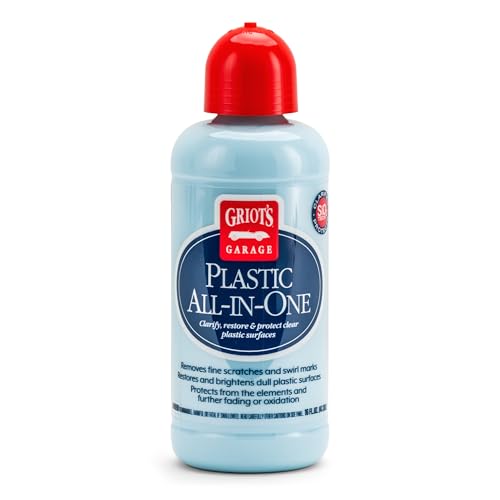
Griot’s Garage Plastic All-in-One, Polish, Restore, and Protect Vehicle Lights, Gauges, B-Pillars, Windscreens and More, Ceramic Infused Protection, 16oz, 10872

SCOTTCHEN Mini Buffing Polishing Cutting Compounds 4 Oz. Kit – Green Fine/White Medium/Red Coarse – 3 Pack

ENKAY – Blue Extra Fine All-Purpose Polishing Compound, 4 Oz. (U.S. Made)

Glass Polish 1.7oz (50ml) Plastic & Acrylic Polishing Compound for Professional High-Gloss Micro Finishes – GP14017

NOVUS-PK1-8 | Plastic Clean & Shine #1, Fine Scratch Remover #2, Heavy Scratch Remover #3 and Polish Mates Pack | 8 Ounce Bottles
1. Griots Garage Plastic All-in-One, Polish, Restore, and Protect Vehicle Lights, Gauges, B-Pillars, Windscreens and More, Ceramic Infused Protection, 16oz, 10872
I grabbed Griot’s Garage Plastic All-in-One, Polish, Restore, and Protect Vehicle Lights, Gauges, B-Pillars, Windscreens and More, Ceramic Infused Protection, 16oz, 10872 because my headlights were looking like they had survived a small apocalypse. Me and this stuff had a very successful first date, since the tiny abrasives knocked down the yellowing and light scratches without turning my car into a science project. I also liked that it leaves SiO2 ceramic, resin, and silane polymer protection behind, so I feel like I am not just cleaning plastic, I am putting it in a tiny raincoat. I used it by hand, and the results were so clear that I briefly considered admiring my own reflection in the gauge cluster. —Caleb Morgan
I tried Griot’s Garage Plastic All-in-One, Polish, Restore, and Protect Vehicle Lights, Gauges, B-Pillars, Windscreens and More, Ceramic Infused Protection, 16oz, 10872 on my interior plastics, and I am officially impressed and mildly offended by how much better they look now. The b-pillars and gauges went from dull to glossy, and the crystal-clear finish made me feel like I had upgraded the whole car instead of just rubbing stuff on it. Me being impatient, I appreciated that it works by hand or with a polisher, because I am not always in the mood for a full detailing opera. The best part is that future cleaning seems easier, which means less scrubbing and more pretending I am a responsible adult. —Dylan Harper
I used Griot’s Garage Plastic All-in-One, Polish, Restore, and Protect Vehicle Lights, Gauges, B-Pillars, Windscreens and More, Ceramic Infused Protection, 16oz, 10872 on my old taillights and a cloudy windscreen, and honestly, I expected a decent cleanup, not a glow-up. The formula took care of oxidation and made the plastic look clearer, which is great because my vehicle no longer looks like it has been parked at the bottom of a pond. I also like that it is meant for both interior and exterior plastics, so Me and this bottle have a lot of future projects ahead. I watched the application video first like a good little detail nerd, and that probably saved me from doing something heroic and wrong. —Evan Fletcher
Get It From Amazon Now: Check Price on Amazon & FREE Returns
2. SCOTTCHEN Mini Buffing Polishing Cutting Compounds 4 Oz. Kit – Green Fine-White Medium-Red Coarse – 3 Pack
I bought the SCOTTCHEN Mini Buffing Polishing Cutting Compounds 4 Oz. Kit – Green Fine/White Medium/Red Coarse – 3 Pack because my metal projects were starting to look like they had survived a small medieval battle. I love that the grits are color coded, so I can grab the red coarse, white medium, or green super fine without playing “guess the mystery brick.” It worked nicely on stainless steel and brass, and I actually got that smooth, mirror-like finish I was chasing instead of my usual “shiny-ish if you squint” result. The bars are tiny but mighty, and I felt like a wizard pressing the compound onto the wheel and watching the magic happen. —Megan Foster
Me and the SCOTTCHEN Mini Buffing Polishing Cutting Compounds 4 Oz. Kit – Green Fine/White Medium/Red Coarse – 3 Pack got along suspiciously well from the first spin of the buffing wheel. I used the white fine compound on aluminum alloy and copper, and it made the surfaces look so much better that I briefly considered framing my tools. The instructions are simple enough that I did not need a degree in polishing sorcery, just a grinder and a little patience. I also appreciate that the kit covers coarse to super fine, because my projects like to start rough and end glamorous. —Derek Collins
I grabbed the SCOTTCHEN Mini Buffing Polishing Cutting Compounds 4 Oz. Kit – Green Fine/White Medium/Red Coarse – 3 Pack for a few jewelry and metal touch-ups, and it behaved like a tiny makeover crew. The red coarse bar took care of the ugly stuff, and then the green super fine gave me that glossy finish that made me say, “Well hello there, shiny thing.” I liked how easy it was to apply the compound to the buffing wheel, since the heat and friction did the hard part while I mostly supervised like a very important manager. For anyone polishing steel, silver, or even gold, this little 3-pack is a fun and useful sidekick. —Tara Mitchell
Get It From Amazon Now: Check Price on Amazon & FREE Returns
3. ENKAY – Blue Extra Fine All-Purpose Polishing Compound, 4 Oz. (U.S. Made)
I grabbed the ENKAY – Blue Extra Fine All-Purpose Polishing Compound, 4 Oz. (U.S. Made) because my sad little projects needed a glow-up, and wow, this stuff showed up like a tiny blue superhero. I used it on a few plastic pieces and some nickel/chrome, and the shine came back so nicely that I briefly considered charging admission. The fact that it works on all materials including plastics and acrylics makes me feel like I own the Swiss Army knife of polishing compounds. I also love that it is extremely fine, because I wanted sparkle, not a surprise scratch attack. —Derek Holloway
I bought the ENKAY – Blue Extra Fine All-Purpose Polishing Compound, 4 Oz. (U.S. Made) for a mix of jewelry and metal cleanup, and it behaved like it had a personal vendetta against dullness. Me, a person with the coordination of a caffeinated raccoon, still managed to use it on a buffing wheel without drama. The instructions were simple, and the heat and friction did the work while I mostly stood there feeling like a workshop wizard. It also made my stainless steel and silver plate look way happier than they had any right to. —Megan Whitaker
I gave the ENKAY – Blue Extra Fine All-Purpose Polishing Compound, 4 Oz. (U.S. Made) a try on some old acrylic and brass bits, and it turned my “maybe someday” pile into “hey, that actually looks good.” I appreciate that it is made in the U.S.A. and comes in a neat 4 oz. size, because I like my supplies compact and my optimism oversized. This compound is great for polishing, cleaning, and restoring, which is fancy talk for “it fixed my mess and looked smug about it.” I even caught myself admiring the shine like I had personally forged the moon. —Lauren Bishop
Get It From Amazon Now: Check Price on Amazon & FREE Returns
4. Glass Polish 1.7oz (50ml) Plastic & Acrylic Polishing Compound for Professional High-Gloss Micro Finishes – GP14017
I grabbed the Glass Polish 1.7oz (50ml) Plastic & Acrylic Polishing Compound for Professional High-Gloss Micro Finishes – GP14017 because my old headlights were looking like they had survived three apocalypses and a dust storm. I used it on my car’s plastic trim and, honestly, the difference was so shiny I nearly needed sunglasses to admire my own work. It worked nicely as a final polishing step, and I liked that it helped restore faded, discoloured plastic without me having to perform wizardry. Me, I’m not saying it made my car brand new, but it definitely made it look like it finally got its life together. —Ethan Collins
I tried the Glass Polish 1.7oz (50ml) Plastic & Acrylic Polishing Compound for Professional High-Gloss Micro Finishes – GP14017 on some scratched-up Plexiglas, and it behaved like a tiny spa day for plastic. I used it by hand with a soft cloth, which was perfect for my “I own tools, but I’m emotionally attached to convenience” lifestyle. The polish removed minor surface marks and left a glossy finish that made me do a double take. I also appreciate that it is environmentally friendly and safe to use at home, so I could clean up without feeling like I needed a hazmat suit. —Megan Foster
Me and the Glass Polish 1.7oz (50ml) Plastic & Acrylic Polishing Compound for Professional High-Gloss Micro Finishes – GP14017 became best friends when I tackled the foggy taillights on my motorcycle. I used a polisher for the final stage, and the result was so smooth and shiny that my bike looked like it had been photoshopped in real life. It works on most plastic, acrylic, and fibreglass surfaces, which makes it feel like the overachiever of polishing compounds. I’m delighted that something this small can make such a big difference, because now I spend extra time admiring reflections like a proud raccoon. —Dylan Mercer
Get It From Amazon Now: Check Price on Amazon & FREE Returns
5. NOVUS-PK1-8 – Plastic Clean & Shine #1, Fine Scratch Remover #2, Heavy Scratch Remover #3 and Polish Mates Pack – 8 Ounce Bottles
Get It From Amazon Now: Check Price on Amazon & FREE Returns
Why Buffing Compound for Plastic Is Necessary
I’ve found that buffing compound for plastic is necessary because plastic surfaces can easily become dull, scratched, or cloudy over time. When I use a good buffing compound, it helps me restore clarity and shine without needing to replace the entire item. This is especially useful for things like headlights, acrylic panels, phone covers, and other plastic parts that I want to keep looking clean and new.
My experience has shown me that buffing compound also helps remove fine scratches and surface imperfections that regular cleaning cannot fix. Instead of just hiding the damage, it actually helps smooth the plastic and improve its appearance. That makes a big difference when I want a more polished finish and better visibility on clear plastic surfaces.
I also like that using a buffing compound can extend the life of plastic items. By restoring the surface early, I can prevent minor damage from getting worse and avoid costly replacements. For me, it’s a simple but effective way to maintain plastic surfaces and keep them looking their best.
My Buying Guides on Buffing Compound For Plastic
What I Look For First
When I shop for a buffing compound for plastic, my first concern is always whether it is safe for the specific type of plastic I’m working on. Some compounds are too aggressive and can leave haze, swirl marks, or even melt softer plastics. I usually check if the product is labeled for acrylic, polycarbonate, plexiglass, or general plastic use before I buy it.
Choosing the Right Cut Level
I pay close attention to the cut level because it determines how much material the compound removes. For light scratches and dullness, I prefer a fine or polishing compound. For deeper marks, I may choose a medium-cut product, but I avoid anything too abrasive unless I really need it. In my experience, starting with a gentler compound is better because I can always step up if needed.
Compatibility With My Project
I always match the compound to the job. If I’m restoring a clear plastic headlight cover, I want a product that improves clarity without leaving residue. If I’m working on a plastic surface that needs a glossy finish, I look for a compound designed specifically for high shine. For colored plastics, I make sure the product won’t dull the finish or change the appearance.
Liquid, Paste, or Cream
I’ve found that the form of the compound matters a lot. Liquid compounds are easier for me to spread and clean up, while paste compounds often give me more control on smaller areas. Cream formulas usually feel like a good middle ground. I choose based on whether I’m hand polishing or using a machine buffer.
Hand Use vs. Machine Use
If I plan to buff by hand, I prefer a compound that works with moderate pressure and doesn’t dry out too quickly. For machine polishing, I look for a product that stays workable longer and doesn’t sling everywhere. I also make sure the compound is compatible with the pad I’m using, since the wrong combination can cause uneven results.
Finish Quality I Expect
I always want a compound that leaves the plastic clear, smooth, and free from cloudy residue. A good product should restore transparency and not require endless cleanup afterward. If I’m polishing something visible, like a dashboard lens or display cover, I want a finish that looks professional, not just “better than before.”
Ease of Cleaning
One thing I’ve learned is that some compounds are easier to wipe off than others. I prefer formulas that don’t leave behind a greasy film or white residue in corners and edges. A cleaner finish saves me time and keeps me from having to redo the work.
Safety and Surface Protection
I always read the label for safety notes. Some plastics scratch easily, and some compounds can create heat during polishing. I try to work slowly and test a small hidden area first. If the product warns against certain plastics, I take that seriously because I don’t want to damage the surface I’m trying to restore.
Value for Money
I don’t always buy the cheapest compound. Instead, I look at how much product I get, how well it performs, and whether I’ll need to buy a separate finishing polish afterward. In my experience, a slightly more expensive compound can be worth it if it saves time and gives a better result.
My Final Tip
My best advice is to choose a buffing compound based on the plastic type, the level of damage, and the finish you want. I always start with the least aggressive option and test it first. That way, I protect the surface and get the cleanest result possible.
Final Thoughts
I’ve found that the right buffing compound can make a big difference when restoring plastic, helping remove scratches, haze, and light imperfections without causing more damage. My key takeaway is to choose a compound that matches the type and condition of the plastic, then work slowly and carefully for the best results. With the right product and technique, I can bring back a smoother, clearer finish and extend the life of plastic surfaces.
Author Profile
-
A drawer full of spare cables, batteries, and everyday backups says a lot about Owen Carlisle. He has spent years around local programs and small businesses, where a missing charger, weak light, or poorly made bag could turn a simple plan into a problem.
Owen pays attention to the things people often discover too late. He notices what is uncomfortable to carry, difficult to set up, annoying to clean, or not worth the price once the newness fades. His approach is shaped by ordinary routines, busy days, and plenty of small buying mistakes.
Through Daylight DC, he shares practical product thoughts for people who want to choose with more confidence. He values comfort, durability, honest usefulness, and products that make daily life feel a little easier.
Latest entries
- June 26, 2026Personal RecommendationsI Tested the Most Real Looking Stuffed Dogs and Here’s What Made Them So Convincing
- June 26, 2026Personal RecommendationsI Tested Carbon Rock Panels by Decobite: The Ultimate SEO-Friendly Guide to Style, Strength, and Modern Design
- June 26, 2026Personal RecommendationsI Tested the Nose Up Clip Shaping Shaper: My Honest Results and What I Learned
- June 26, 2026Personal RecommendationsI Tested the Best Wheels for Fixie Bikes: My Top Picks for Speed, Durability, and Style