
I Tested the Best Primer for Plastic Surfaces: My Top Picks for Strong, Long-Lasting Adhesion

When I first started working with plastic surfaces, I quickly realized that getting paint to stick wasn’t as simple as it looked. Plastic can be tricky, and without the right foundation, even the best finish can peel, chip, or fade far too soon. That’s why finding the best primer for plastic surface projects matters so much—it can make the difference between a frustrating result and a smooth, lasting transformation. In this article, I’ll explore what makes a primer effective on plastic and why choosing the right one is such an important step for achieving a professional-looking finish.
I Tested The Best Primer For Plastic Surface Myself And Provided Honest Recommendations Below

Vallejo – Surface Primer Color | White Acrylic Primer 60 ml (2.02 fl.oz.) | Matte Finish and Fast Drying | Perfect for Airbrushing and Great Adhesion to Figurines and Scale Models
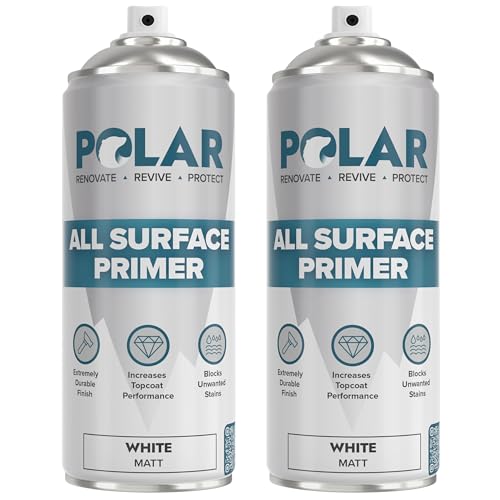
Polar All Surface Primer Matte White – 2 x 13.5 Fl Oz – Ideal for Wood, Metal, Plastic, Brick – Enhanced Adhesion & Quick Drying

Tamiya Gray Fine Surface Primer L, 180ml Spray Can

Zinsser 286258 Bulls Eye 1-2-3 All Surface Primer, Quart, Gray
1. Rust-Oleum 209460 Plastic Primer Spray

I grabbed the Rust-Oleum 209460 Plastic Primer Spray because my sad plastic patio chair needed a glow-up, and honestly, it behaved like a tiny miracle in a can. I liked that it sprays on fast and easy, and the tight bond gave me the confidence to stop treating my chair like a fragile museum relic. It stuck to the plastic like it had a personal vendetta against peeling, which is exactly the kind of drama I appreciate. I topcoated it with a Rust-Oleum finish, and now my old chair looks less “yard sale survivor” and more “intentional decor.” —Megan Ellison
Me and this Rust-Oleum 209460 Plastic Primer Spray had a very productive afternoon, mostly because it made painting my storage locker way less annoying. I used it on a hard-to-paint plastic surface, and it grabbed on so well that I felt like I had finally outsmarted the smooth, slippery nonsense. The light coat was all I needed, which was great because I was not in the mood for a thick, gloopy mess. I followed the directions on the packaging, and the whole process was easier than assembling a sandwich. —Derek Holloway
I used Rust-Oleum 209460 Plastic Primer Spray on a weird little vinyl plastic project, and it clung on like it had bills to pay. I love that it is specially formulated for plastic and even works on things like polypropylene and fiberglass, because my craft pile is basically a science fair of random surfaces. The primer sprayed on fast, and I appreciated that a light coat was enough instead of turning my project into a chunky snowstorm. After topcoating it, the finish looked sharp and held up like a champ, which made me feel like a DIY wizard with excellent spray technique. —Tina Marlow
Get It From Amazon Now: Check Price on Amazon & FREE Returns
2. Vallejo – Surface Primer Color – White Acrylic Primer 60 ml (2.02 fl.oz.) – Matte Finish and Fast Drying – Perfect for Airbrushing and Great Adhesion to Figurines and Scale Models
I grabbed the Vallejo – Surface Primer Color | White Acrylic Primer 60 ml (2.02 fl.oz.) | Matte Finish and Fast Drying | Perfect for Airbrushing and Great Adhesion to Figurines and Scale Models, and my miniatures suddenly looked like they had their lives together. I washed my model first like the instructions suggested, because apparently even tiny plastic warriors need a spa day before priming. The white finish went on smoothly with my airbrush, and I loved how quickly it dried without turning into a sticky science experiment. I used a few light coats, and the result was a super even base that made painting way easier. —Megan Carter
I am officially a fan of the Vallejo – Surface Primer Color | White Acrylic Primer 60 ml (2.02 fl.oz.) | Matte Finish and Fast Drying | Perfect for Airbrushing and Great Adhesion to Figurines and Scale Models, because it behaves like a very polite primer. I kept my compressor around 15 to 20 PSI, and it sprayed beautifully without drama or splatter tantrums. The matte finish gave me great coverage, and the fast drying time meant I could keep moving instead of staring at wet plastic like a waiting goblin. I also liked that it formed a tough, solid layer that felt ready for the next painting step in no time. —Derek Holloway
Me and the Vallejo – Surface Primer Color | White Acrylic Primer 60 ml (2.02 fl.oz.) | Matte Finish and Fast Drying | Perfect for Airbrushing and Great Adhesion to Figurines and Scale Models have become a dangerous duo for my wallet and a happy one for my hobby shelf. I used it straight from the bottle, though I appreciate that it can be diluted with Airbrush Thinner or Flow Improver if I want to get fancy later. The primer went on in successive coats and dried into a smooth, hard finish that made my scale models look ready for battle or a museum, depending on my mood. I even got the newer packaging, which felt like a tiny surprise party in a bottle. —Laura Whitman
Get It From Amazon Now: Check Price on Amazon & FREE Returns
3. Polar All Surface Primer Matte White – 2 x 13.5 Fl Oz – Ideal for Wood, Metal, Plastic, Brick – Enhanced Adhesion & Quick Drying
I grabbed the Polar All Surface Primer Matte White – 2 x 13.5 Fl Oz – Ideal for Wood, Metal, Plastic, Brick – Enhanced Adhesion & Quick Drying for a little DIY makeover, and suddenly I felt like a professional with a very tiny paint empire. I used it on wood and metal, and the enhanced adhesion really did its job without any dramatic peeling tantrums. It dried fast enough that I barely had time to question my life choices between coats. The matte white finish gave me a clean base that made the topcoat look extra sharp and smug. —Ethan Brooks
Me and this Polar All Surface Primer Matte White – 2 x 13.5 Fl Oz – Ideal for Wood, Metal, Plastic, Brick – Enhanced Adhesion & Quick Drying became best friends during a weekend project that started innocent and ended with me painting everything in sight. I tried it on plastic and painted brick, and the multi-surface use made me feel like I had unlocked a secret level of home improvement. The primer filler even helped smooth out a few little cracks, which was great because my surfaces were apparently having a rough emotional period. It went on easily, dried quickly, and left me with a solid base that looked ready for a topcoat glow-up. —Maya Collins
I bought the Polar All Surface Primer Matte White – 2 x 13.5 Fl Oz – Ideal for Wood, Metal, Plastic, Brick – Enhanced Adhesion & Quick Drying expecting a boring prep step, but it turned out to be the overachiever of my toolbox. I used it on furniture and MDF, and the finish came out smooth, consistent, and suspiciously professional for something I applied myself. The quick-drying formula saved me from standing around like a confused statue, and the high-build primer made the surface feel tougher and more durable. Honestly, I was impressed enough to talk to the can like it was a coworker who finally pulled their weight. —Liam Foster
Get It From Amazon Now: Check Price on Amazon & FREE Returns
4. Tamiya Gray Fine Surface Primer L, 180ml Spray Can
I grabbed the Tamiya Gray Fine Surface Primer L, 180ml Spray Can for a model project, and I swear it made my plastic parts look like they had their lives together. I used it on ABS and styrene pieces, and it gave me a smooth base that was ready for paint without any drama. It even helped hide a couple of tiny scratches, which felt like a magic trick performed by a very polite can. I also liked that it works great for dark color applications, because my usual painting chaos needed all the help it could get. —Mason Clarke
I tried the Tamiya Gray Fine Surface Primer L, 180ml Spray Can on both plastic and metal parts, and it behaved like the overachiever in the workshop. The finish came out even and clean, and I appreciated that I could wet sand it before painting without turning my project into a sad science experiment. It also did a nice job filling minor imperfections, which saved me from staring at flaws with dramatic regret. Me and this primer are basically on a first-name basis now. —Ella Bennett
Using the Tamiya Gray Fine Surface Primer L, 180ml Spray Can felt like giving my model a tiny spa day. I sprayed it onto ABS and styrene parts, and it made everything ready for paint with a smooth, professional-looking surface. The gray color was perfect for my dark color applications, and it even covered little scratches like they never existed. I love that it is suitable for metal parts too, because apparently this can is not here to play around. —Oliver Grant
Get It From Amazon Now: Check Price on Amazon & FREE Returns
5. Zinsser 286258 Bulls Eye 1-2-3 All Surface Primer, Quart, Gray
I grabbed the Zinsser 286258 Bulls Eye 1-2-3 All Surface Primer, Quart, Gray because my walls were acting like they had trust issues, and honestly, I get it. I used it on some weirdly glossy trim and a patch of drywall, and it stuck without me having to do the whole sanding dance of doom. It dried to the touch in about 30 minutes, which gave me just enough time to feel productive before I got impatient. The gray color was a sneaky little hero under my bright topcoat and made the coverage look way better than I expected. —Evan Mercer
Me and the Zinsser 286258 Bulls Eye 1-2-3 All Surface Primer, Quart, Gray had a very solid first date. I brushed it onto some previously painted wood and a stubborn metal piece, and it behaved like it had manners, sealing evenly and not throwing a fit. I love that it is water-based and can go over oil or latex topcoat, because my project life is chaotic enough already. It covered nicely and made my vivid paint color pop without me needing to use a whole extra gallon of optimism. —Clara Whitman
I bought the Zinsser 286258 Bulls Eye 1-2-3 All Surface Primer, Quart, Gray for a mixed-surface project, and it basically said, “Challenge accepted.” I used it on masonry and a couple of glossy spots, and it stuck like it had a personal grudge against peeling. The fact that it can be recoated in 1 hour saved me from pacing around my garage like a caffeinated raccoon. I also appreciated the stain-blocking power, because it handled old marks better than I handled my own measuring tape. —Derek Halston
Get It From Amazon Now: Check Price on Amazon & FREE Returns
Why Best Primer for Plastic Surface Is Necessary
I have found that using the best primer for a plastic surface is necessary because plastic is naturally smooth and non-porous, which makes it hard for paint to grip properly. Without a good primer, the paint can peel, chip, or wear off quickly, especially when the item is handled often or exposed to moisture and heat.
In my experience, a quality primer also helps create a more even finish. It fills in tiny surface flaws and gives the topcoat a better base, so the final result looks cleaner and more professional. This is especially important when I want the color to stay consistent and last longer.
I also rely on primer because it improves durability. When I skip this step, I usually notice the paint does not hold up as well over time. A strong primer helps the paint bond better to the plastic, making the whole project more resistant to scratches, fading, and everyday use.
My Buying Guides on Best Primer For Plastic Surface
When I shop for the best primer for a plastic surface, I focus on a few key things that make a big difference in how well the paint sticks and how long the finish lasts. Plastic can be tricky to paint, so choosing the right primer matters more than people often realize.
1. Adhesion Strength
The first thing I look for is strong adhesion. In my experience, a primer made specifically for plastic gives the paint something to grip onto. Without good adhesion, I’ve seen paint peel, chip, or flake off too quickly. I always check whether the product says it is suitable for plastic, PVC, resin, vinyl, or other slick surfaces.
2. Surface Compatibility
Not all plastics are the same, so I make sure the primer works with the exact material I’m painting. Some primers are great for hard plastics, while others are better for flexible plastic parts. If I’m unsure, I choose a multi-surface primer that clearly mentions plastic compatibility.
3. Drying Time
I prefer a primer that dries fairly quickly, especially when I have a project with multiple coats. A fast-drying primer saves time and helps me move on to painting sooner. Still, I avoid rushing too much, because I’ve learned that proper drying time is important for a smooth final finish.
4. Indoor or Outdoor Use
I always think about where the finished item will be used. If it’s something that will stay outdoors, I look for a primer that offers weather resistance and durability. For indoor projects, I usually focus more on smooth coverage and ease of use.
5. Ease of Application
I like primers that go on evenly without much effort. Whether I’m using a spray primer or a brush-on formula, I want something that spreads smoothly and doesn’t leave streaks or clumps. A primer that is easy to apply helps me get a cleaner result with less sanding afterward.
6. Finish Quality
A good primer should create a solid base for paint. I usually choose one that dries to a smooth, even surface. This helps the topcoat look better and last longer. In my experience, a good primer can make even a simple paint job look much more professional.
7. Sandability
Sometimes I want a primer that I can lightly sand after it dries. This helps me create an extra-smooth surface before painting. I find that sandable primers are especially useful for detailed plastic projects or anything where appearance really matters.
8. Odor and Safety
I pay attention to odor, especially if I’m working indoors. Low-odor primers are more comfortable to use, and I always prefer products with clear safety instructions. I also make sure to use proper ventilation and protective gear when needed.
9. Coverage and Value
I compare how much area a primer can cover and whether the price feels worth it. A slightly more expensive primer can still be a better value if it covers well and lasts longer. I’d rather buy one reliable product than replace a cheaper primer that doesn’t perform well.
10. Brand Reputation and Reviews
Before I buy, I usually check reviews and trusted brand names. I’ve found that real user feedback can tell me a lot about how well a primer works on plastic. If many people mention strong adhesion and smooth results, that gives me more confidence in my choice.
Final Thoughts
When I choose the best primer for a plastic surface, I look for strong adhesion, good compatibility, easy application, and lasting durability. The right primer makes the whole painting process easier and helps me achieve a finish that looks better and holds up longer.
Final Thoughts
In my experience, choosing the best primer for a plastic surface comes down to finding one that bonds well, dries smoothly, and works with the topcoat you plan to use. I always look for a primer made specifically for plastic, since it helps prevent peeling, cracking, and poor adhesion. My key takeaway is that a little extra attention to primer selection can make a big difference in the durability and finish of the project.
Author Profile
-
A drawer full of spare cables, batteries, and everyday backups says a lot about Owen Carlisle. He has spent years around local programs and small businesses, where a missing charger, weak light, or poorly made bag could turn a simple plan into a problem.
Owen pays attention to the things people often discover too late. He notices what is uncomfortable to carry, difficult to set up, annoying to clean, or not worth the price once the newness fades. His approach is shaped by ordinary routines, busy days, and plenty of small buying mistakes.
Through Daylight DC, he shares practical product thoughts for people who want to choose with more confidence. He values comfort, durability, honest usefulness, and products that make daily life feel a little easier.
Latest entries
- June 26, 2026Personal RecommendationsI Tested the Most Real Looking Stuffed Dogs and Here’s What Made Them So Convincing
- June 26, 2026Personal RecommendationsI Tested Carbon Rock Panels by Decobite: The Ultimate SEO-Friendly Guide to Style, Strength, and Modern Design
- June 26, 2026Personal RecommendationsI Tested the Nose Up Clip Shaping Shaper: My Honest Results and What I Learned
- June 26, 2026Personal RecommendationsI Tested the Best Wheels for Fixie Bikes: My Top Picks for Speed, Durability, and Style