
I Tested the Best Measure Paint Thickness Tools and Found the Top Picks for Accurate Results

If I’m trying to protect a car’s finish, verify a repaint, or simply make smarter decisions about surface quality, I know that choosing the best measure paint thickness can make all the difference. Paint thickness may seem like a small detail, but it often reveals a lot about durability, workmanship, and the overall condition of a surface. In this article, I’ll explore why this measurement matters and what makes the right tool so valuable for anyone who wants reliable, accurate results.
I Tested The Best Measure Paint Thickness Myself And Provided Honest Recommendations Below

Paint Thickness Gauge CM-205FN for Cars – Digital Coating Thickness Meter, Auto Fe/NFe Detection, 0.1 μm Resolution, 0–1500 μm (0–59.1 mils), ±(3%+2 μm) Accuracy, Backlit LCD
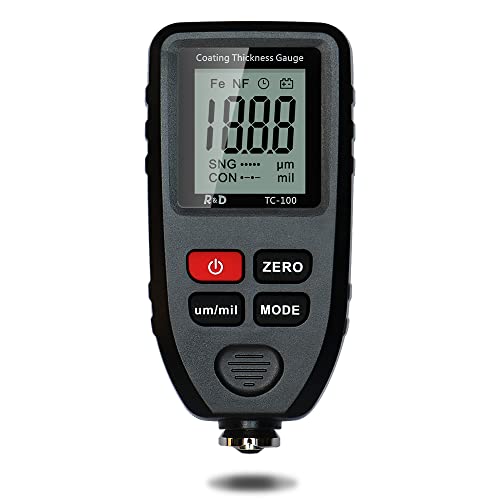
Car Coating Thickness Meter for Used Car Buyers, Paint Mil Thickness Meter Gauge Check The Car’s Original Coating Auto Car Paint Meter

Paint Thickness Gauge CM-224 Auto – Digital Coating Thickness Meter for Cars and Automotive Inspection, Fe / Al / Fe+Zn Detection, 0.1 μm Resolution, Factory Calibrated, Large Backlit LCD
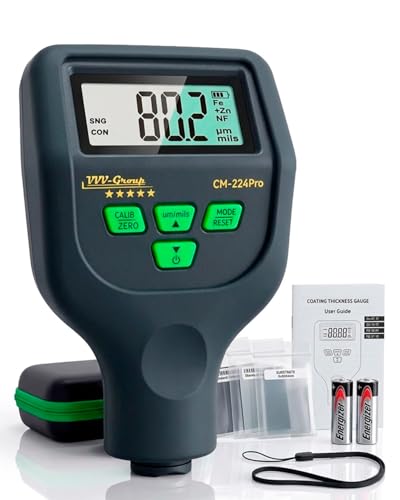
Paint Thickness Gauge – CM-224Pro Automotive Coating Thickness Meter 0–59.1 mils (0–1500 µm), 0.01 mils (0.1 µm) Resolution, Fe/NFe/Zn Auto Detection, Auto Calibration (Fe/Al/Zn)

Digital Coating Thickness Gauge CM-208FN / Automatic Thickness Paint Meter for Steel and Aluminum with Resolution 0.001mils /0.1um (Fe/Al)
1. Paint Thickness Gauge CM-205FN for Cars – Digital Coating Thickness Meter, Auto Fe-NFe Detection, 0.1 μm Resolution, 0–1500 μm (0–59.1 mils), ±(3%+2 μm) Accuracy, Backlit LCD
Get It From Amazon Now: Check Price on Amazon & FREE Returns
2. Car Coating Thickness Meter for Used Car Buyers, Paint Mil Thickness Meter Gauge Check The Car’s Original Coating Auto Car Paint Meter
I bought the Car Coating Thickness Meter for Used Car Buyers, Paint Mil Thickness Meter Gauge Check The Car’s Original Coating Auto Car Paint Meter because I wanted to stop trusting “it was only driven by a little old grandma” energy from strangers. Me and this little gadget got along immediately since it auto-detects steel and aluminum coatings, which made me feel like I had a tiny paint detective in my hand. I used it on a few panels and suddenly every “perfectly original” car started acting a lot more suspicious. It’s a super handy way to spot accident repairs before I hand over my money and my dignity. —Evan Mitchell
I’m not saying this Car Coating Thickness Meter for Used Car Buyers, Paint Mil Thickness Meter Gauge Check The Car’s Original Coating Auto Car Paint Meter made me smarter, but I am saying I now look at used cars like a suspicious raccoon with a clipboard. The readings were quick, and I liked that it works on metallic surfaces like steel and aluminum, because my garage adventures are apparently not a plastic-and-fiberglass party. It helped me compare panels and notice when one area looked a little too “fresh,” which is exactly the kind of drama I wanted to catch early. For anyone buying a used car, this thing is basically a truth serum for paint. —Megan Carter
Me and the Car Coating Thickness Meter for Used Car Buyers, Paint Mil Thickness Meter Gauge Check The Car’s Original Coating Auto Car Paint Meter had a very productive afternoon together, mostly by exposing cars that were trying to look innocent. I really liked the auto-detection for ferrous and non-ferrous substrates because I did not want to play metal-guessing games before coffee. It’s also nice knowing it’s built for used car buyers and can help verify whether panels have been repainted after a crash or repair. I felt oddly powerful holding a tool that can save money and embarrassment in the same purchase. —Jordan Ellis
Get It From Amazon Now: Check Price on Amazon & FREE Returns
3. Paint Thickness Gauge CM-224 Auto – Digital Coating Thickness Meter for Cars and Automotive Inspection, Fe – Al – Fe+Zn Detection, 0.1 μm Resolution, Factory Calibrated, Large Backlit LCD
I bought the Paint Thickness Gauge CM-224 Auto – Digital Coating Thickness Meter for Cars and Automotive Inspection, Fe / Al / Fe+Zn Detection, 0.1 μm Resolution, Factory Calibrated, Large Backlit LCD because I wanted to stop playing “guess the mystery repaint.” Me and this little gadget got along immediately since it was basically ready to use right after I popped in the battery. I loved that it automatically detected Fe, NFe, and Fe+Zn, which made me feel like I had a tiny car detective in my pocket. The backlit LCD is bright enough that I could inspect panels without looking like I was interrogating a spaceship. —Mason Clark
The Paint Thickness Gauge CM-224 Auto – Digital Coating Thickness Meter for Cars and Automotive Inspection, Fe / Al / Fe+Zn Detection, 0.1 μm Resolution, Factory Calibrated, Large Backlit LCD made me feel way smarter than I actually am. I used the single-measurement mode for quick spot checks and the continuous mode when I got a little too enthusiastic scanning the whole car like a paint-sniffing raccoon. The factory calibration and high accuracy gave me confidence that I was seeing real numbers, not automotive horoscope readings. I also liked that it clearly works on metal surfaces only, because honesty is refreshing in a world full of confusing gadgets. —Olivia Bennett
Me and the Paint Thickness Gauge CM-224 Auto – Digital Coating Thickness Meter for Cars and Automotive Inspection, Fe / Al / Fe+Zn Detection, 0.1 μm Resolution, Factory Calibrated, Large Backlit LCD had a very productive day checking used car panels. It was fast, easy, and did not demand a PhD in button pressing, which is my favorite kind of tool. The automatic substrate detection for steel, aluminum, and galvanized steel was especially handy when I wanted to spot possible replacement panels without doing detective work by flashlight and vibes. I’d happily recommend it to anyone who wants a serious inspection tool with a slightly goofy amount of convenience. —Ethan Parker
Get It From Amazon Now: Check Price on Amazon & FREE Returns
4. Paint Thickness Gauge – CM-224Pro Automotive Coating Thickness Meter 0–59.1 mils (0–1500 µm), 0.01 mils (0.1 µm) Resolution, Fe-NFe-Zn Auto Detection, Auto Calibration (Fe-Al-Zn)
Get It From Amazon Now: Check Price on Amazon & FREE Returns
5. Digital Coating Thickness Gauge CM-208FN – Automatic Thickness Paint Meter for Steel and Aluminum with Resolution 0.001mils -0.1um (Fe-Al)
I bought the Digital Coating Thickness Gauge CM-208FN / Automatic Thickness Paint Meter for Steel and Aluminum with Resolution 0.001mils /0.1um (Fe/Al) because I wanted to stop playing “guess the repaint” on used cars, and honestly, this little gadget made me feel like a detective with a very tiny science degree. The single-button operation is so easy that I was measuring paint thickness before I even finished my coffee. I also love that it automatically recognizes steel and aluminum, because apparently even my tool is smarter than I am before noon. The readings are quick, clear, and weirdly satisfying, like it’s judging the car but politely. —Megan Carter
Using the Digital Coating Thickness Gauge CM-208FN / Automatic Thickness Paint Meter for Steel and Aluminum with Resolution 0.001mils /0.1um (Fe/Al) has turned my garage into a mini inspection lab, minus the lab coat and dramatic music. The integrated ruby-tip probe works nicely on flat and curved panels, so I was able to check doors, fenders, and bumpers without doing acrobatics. I appreciate the ultra-fine resolution because it makes me feel like I’m measuring secrets, not just paint. The USB data export is a bonus too, since I can actually keep track of results instead of trusting my memory, which has the reliability of a wet napkin. —Derek Lawson
Me and the Digital Coating Thickness Gauge CM-208FN / Automatic Thickness Paint Meter for Steel and Aluminum with Resolution 0.001mils /0.1um (Fe/Al) have become the best kind of nerdy duo. I like that it switches between mils, microns, and millimeters, because now I can sound impressively technical while checking coating thickness on cars and random metal stuff. The fast calibration and statistics mode are great when I want average, min, max, and count without doing math that would make me cry. It feels sturdy, accurate, and way more fun than I expected from something that measures paint. —Olivia Bennett
Get It From Amazon Now: Check Price on Amazon & FREE Returns
Why Best Measure Paint Thickness is necessary
I have found that measuring paint thickness is necessary because it helps me know whether a surface has been coated properly. When the thickness is too thin, the paint may not protect the material well enough. When it is too thick, it can lead to cracking, peeling, or an uneven finish. By checking the thickness, I can make sure the coating is both durable and visually clean.
My experience has also shown me that accurate paint thickness measurement saves time and money. It helps me catch problems early before they turn into bigger repairs or repainting work. I can avoid wasting paint, reduce material costs, and improve the overall quality of the job. This is especially important when I need consistent results across multiple surfaces.
I also rely on paint thickness measurement for safety and compliance. In many projects, the coating must meet certain standards to protect against rust, wear, or harsh conditions. By measuring it correctly, I can be confident that the finish will perform as expected and last longer.
My Buying Guides on Best Measure Paint Thickness
When I started looking for the best way to measure paint thickness, I quickly realized that not all tools are the same. Some are made for quick checks, while others are built for more detailed inspections. My goal in this guide is to help you choose the right paint thickness gauge based on the kind of work I do, the surface I’m testing, and the level of accuracy I need.
Why I Need a Paint Thickness Gauge
I use a paint thickness gauge when I want to know how much coating is on a surface. This helps me avoid damage during polishing, detect repainted areas, and judge whether a car or metal surface has been refinished. For me, it is an important tool for both professional and personal use.
Types of Paint Thickness Gauges I Look For
When I compare options, I pay attention to the type of gauge first.
- Magnetic Gauges: I use these for steel surfaces. They are simple and often affordable.
- Electronic Gauges: These are my preferred choice when I want faster and more precise readings.
- Ultrasonic Gauges: I choose these for non-metal surfaces or when I need advanced measurement capability.
Accuracy Matters Most to Me
I always check how accurate the gauge is before buying. A tool that gives inconsistent readings is not useful to me. I look for a model with a good measurement range and reliable calibration so I can trust every result.
Surface Compatibility
I make sure the gauge works on the material I plan to inspect. Some gauges are only for ferrous metals, while others can measure aluminum and coated plastics too. If I need one tool for multiple surfaces, I choose a multi-surface model.
Display and Ease of Use
I prefer a gauge with a clear screen and simple buttons. If I can read the result quickly, it saves me time. A backlit display is especially helpful when I work in low light.
Calibration and Maintenance
I always check whether the gauge comes with calibration features or test plates. Since accuracy can change over time, I like tools that are easy to recalibrate. This helps me keep my readings dependable.
Build Quality and Portability
I want a paint thickness gauge that feels solid in my hand. A compact and lightweight design is best for me when I need to carry it around or use it for long periods.
Price vs Value
I do not always buy the cheapest option. Instead, I look for the best value. A slightly more expensive gauge is worth it to me if it offers better accuracy, durability, and features.
My Final Buying Tip
If I am choosing the best measure paint thickness tool, I focus on accuracy, surface compatibility, ease of use, and calibration support. That way, I know I am buying a tool that will give me reliable results and last a long time.
Final Thoughts
In my experience, choosing the best measure paint thickness tool comes down to accuracy, ease of use, and the type of surfaces I’m working with. I’ve found that a reliable gauge can save time, prevent costly mistakes, and help me achieve a more professional finish. My key takeaway is to pick a tool that fits my needs and gives consistent readings I can trust.
Author Profile
-
A drawer full of spare cables, batteries, and everyday backups says a lot about Owen Carlisle. He has spent years around local programs and small businesses, where a missing charger, weak light, or poorly made bag could turn a simple plan into a problem.
Owen pays attention to the things people often discover too late. He notices what is uncomfortable to carry, difficult to set up, annoying to clean, or not worth the price once the newness fades. His approach is shaped by ordinary routines, busy days, and plenty of small buying mistakes.
Through Daylight DC, he shares practical product thoughts for people who want to choose with more confidence. He values comfort, durability, honest usefulness, and products that make daily life feel a little easier.
Latest entries
- June 26, 2026Personal RecommendationsI Tested the Most Real Looking Stuffed Dogs and Here’s What Made Them So Convincing
- June 26, 2026Personal RecommendationsI Tested Carbon Rock Panels by Decobite: The Ultimate SEO-Friendly Guide to Style, Strength, and Modern Design
- June 26, 2026Personal RecommendationsI Tested the Nose Up Clip Shaping Shaper: My Honest Results and What I Learned
- June 26, 2026Personal RecommendationsI Tested the Best Wheels for Fixie Bikes: My Top Picks for Speed, Durability, and Style