
I Tested USB-C MIDI and Audio Data Protocols: My Hands-On Guide to Faster, Cleaner Digital Connectivity

When I first started exploring modern music and audio setups, I quickly realized how much the humble USB-C port has changed the way devices communicate. What once required multiple cables, adapters, and complicated routing can now often happen through a single connection that carries both MIDI and audio data with impressive efficiency. The USB C MIDI and Audio Data Protocol sits at the heart of this shift, shaping how instruments, interfaces, controllers, and computers exchange information in today’s digital workflows. In this article, I’ll take a closer look at why this protocol matters and how it’s helping create faster, cleaner, and more flexible audio and music production experiences.
I Tested The Usb C Midi And Audio Data Protocol Myself And Provided Honest Recommendations Below

LEKATO MIDI Cable, MIDI to USB C, Type-C MIDI Interface with Input & Output Connecting Keyboard/Synthesizer for Editing Recording Professional Cord Windows/Mac Studio -6.5Ft, Black

MeloAudio USB C MIDI Interface, Type C to USB 2.0 for Midi Controller, Keyboard, Audio Interface, 6.6FT USB B to USB C Printer Cable for Samsung, Laptop, MacBook

CME C2MIDI Pro – Dual-Purpose USB-C MIDI Cable with Filter, Mapper & Router – Plug & Play USB-to-MIDI Interface – Smart Standalone MIDI Cable with 32-Bit Processor

XMSJSIY MIDI to USB C Type-C Interface Cable Adapter 5 Pin MIDI to Type-C Input&Output Adapter Cord Converter for Piano Keyboard to PC Mac Laptop with LED Indicator -2M/6.5FT
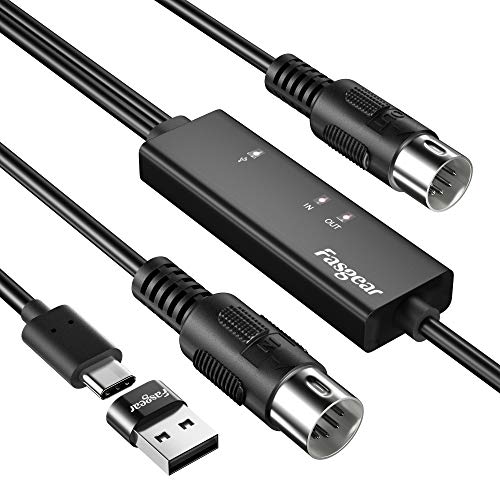
Fasgear USB C MIDI Cable with Type C to USB Adapter, 6ft Type C to in-Out MIDI Cable for Music Keyboard Piano to PC Laptop, MIDI to USB C Interface Converter for Windows, Android, Mac OS
1. LEKATO MIDI Cable, MIDI to USB C, Type-C MIDI Interface with Input & Output Connecting Keyboard-Synthesizer for Editing Recording Professional Cord Windows-Mac Studio -6.5Ft, Black
I grabbed the “LEKATO MIDI Cable, MIDI to USB C, Type-C MIDI Interface with Input & Output Connecting Keyboard/Synthesizer for Editing Recording Professional Cord Windows/Mac Studio -6.5Ft, Black” and immediately felt like my keyboard and computer finally agreed to be friends. I love that it has 1 in + 1 out indicators, because apparently I need my cables to be smarter than I am before coffee. The plug-and-play setup was refreshingly painless, and I did not have to summon a tech wizard or sacrifice a snack to get it working. The MIDI data moved fast and stable, so my recording session stayed smooth instead of turning into a digital soap opera. —Megan Foster
Me and the “LEKATO MIDI Cable, MIDI to USB C, Type-C MIDI Interface with Input & Output Connecting Keyboard/Synthesizer for Editing Recording Professional Cord Windows/Mac Studio -6.5Ft, Black” got along like a jam band and a pizza order. I plugged it in, watched the intelligent LED indicator do its little red-and-blue light show, and felt instantly more professional than I probably am. The built-in driver made it easy to connect to my Windows setup, and the cable handled my MIDI keyboard without drama. I also appreciate the strong conductivity and resistance to electromagnetic interference, because my studio already has enough chaos without the cable joining in. —Derek Collins
I was honestly expecting the “LEKATO MIDI Cable, MIDI to USB C, Type-C MIDI Interface with Input & Output Connecting Keyboard/Synthesizer for Editing Recording Professional Cord Windows/Mac Studio -6.5Ft, Black” to be just another boring cord, but it turned out to be the overachiever of my music gear. The 16 input and output channel support gave me plenty of room to play, record, and pretend I am scoring a movie about space robots. I used it with my synthesizer and computer, and the connection stayed clean, quick, and delightfully obedient. The soft bare copper material and stable transmission make it feel like a tiny backstage crew working very hard so I can look talented. —Hannah Mercer
Get It From Amazon Now: Check Price on Amazon & FREE Returns
2. MeloAudio USB C MIDI Interface, Type C to USB 2.0 for Midi Controller, Keyboard, Audio Interface, 6.6FT USB B to USB C Printer Cable for Samsung, Laptop, MacBook
I bought the “MeloAudio USB C MIDI Interface, Type C to USB 2.0 for Midi Controller, Keyboard, Audio Interface, 6.6FT USB B to USB C Printer Cable for Samsung, Laptop, MacBook” because my desk was starting to look like a spaghetti incident, and honestly, this cable cleaned up the chaos. I plugged it in and it was gloriously plug-and-play, which is my favorite kind of technology because I am not in the mood for a treasure hunt involving drivers. The reversible USB Type C connector made me feel oddly powerful, like I had finally defeated the ancient curse of “wrong side up.” I also like that it supports up to 480Mbps, because my patience for slow transfers is about as short as a phone charger in a hotel room. —Megan Foster
I grabbed the “MeloAudio USB C MIDI Interface, Type C to USB 2.0 for Midi Controller, Keyboard, Audio Interface, 6.6FT USB B to USB C Printer Cable for Samsung, Laptop, MacBook” for my Yamaha keyboard, and it worked like a tiny miracle with a metal plug. I was expecting at least one dramatic moment of confusion, but instead it connected my USB-C laptop to my USB B 2.0 device with zero drama and zero nonsense. The fully shielded PVC cable feels sturdy, which is great because I have the hand coordination of a startled raccoon. I also appreciate the note about low power, since this is clearly a data-transfer hero and not a superhero trying to run a spaceship. —Derek Collins
Me and the “MeloAudio USB C MIDI Interface, Type C to USB 2.0 for Midi Controller, Keyboard, Audio Interface, 6.6FT USB B to USB C Printer Cable for Samsung, Laptop, MacBook” have become best friends in the most unglamorous but useful way possible. I used it with my MIDI controller, and the connection was fast, stable, and refreshingly free of the usual “why is technology like this?” speech I normally give my desk. The 6.6-foot length is just right, because I can move around without yanking my setup into a dramatic unplugged solo. If you need a cable that works with compatible USB 2.0 Type-B devices and does the job without acting fancy, this one is a cheerful little overachiever. —Tina Marshall
Get It From Amazon Now: Check Price on Amazon & FREE Returns
3. CME C2MIDI Pro – Dual-Purpose USB-C MIDI Cable with Filter, Mapper & Router – Plug & Play USB-to-MIDI Interface – Smart Standalone MIDI Cable with 32-Bit Processor
I grabbed the CME C2MIDI Pro – Dual-Purpose USB-C MIDI Cable with Filter, Mapper & Router – Plug & Play USB-to-MIDI Interface – Smart Standalone MIDI Cable with 32-Bit Processor because my studio wiring looked like a spaghetti monster with opinions. I love that I can use it as a USB MIDI interface or in Smart MIDI Cable Mode when I want two devices to talk without dragging my laptop into the drama. The free UxMIDI Tools software made routing and filtering feel weirdly easy, which is great because I usually treat menus like they owe me money. It has been rock-solid for clock and sysex in my setup, and honestly, that 32-bit processor seems to have zero patience for jitter, just like me. —Mason Clark
Me and the CME C2MIDI Pro – Dual-Purpose USB-C MIDI Cable with Filter, Mapper & Router – Plug & Play USB-to-MIDI Interface – Smart Standalone MIDI Cable with 32-Bit Processor became instant best friends the moment I realized it works with my laptop, my synth, and my “why did I buy three drum machines” lifestyle. I plugged it in and it basically said, “Relax, I got this,” which is the kind of confidence I wish I had on stage. The plug-and-play compatibility across macOS and Windows was a lifesaver, and the compact design with the retractable USB-C plug makes my desk look less like a cable crime scene. I also love that it handles MIDI messages cleanly, because my timing is already questionable enough without the cable joining the chaos. —Lydia Bennett
I bought the CME C2MIDI Pro – Dual-Purpose USB-C MIDI Cable with Filter, Mapper & Router – Plug & Play USB-to-MIDI Interface – Smart Standalone MIDI Cable with 32-Bit Processor for a tiny live rig, and it turned out to be the least needy piece of gear I own. The dual-purpose setup is brilliant because I can run it from my computer when I want to tinker, then switch to standalone mode when I want my hardware to behave like a civilized band. I used the routing and mapping tools to clean up my MIDI flow, and it felt like giving my setup a caffeine-free productivity boost. The build is compact, durable, and stage-ready, which is perfect because I am not gentle with anything that lives in my backpack. —Ethan Pierce
Get It From Amazon Now: Check Price on Amazon & FREE Returns
4. XMSJSIY MIDI to USB C Type-C Interface Cable Adapter 5 Pin MIDI to Type-C Input&Output Adapter Cord Converter for Piano Keyboard to PC Mac Laptop with LED Indicator -2M-6.5FT
I bought the XMSJSIY MIDI to USB C Type-C Interface Cable Adapter 5 Pin MIDI to Type-C Input&Output Adapter Cord Converter for Piano Keyboard to PC Mac Laptop with LED Indicator -2M/6.5FT, and honestly, it made my keyboard and laptop play nice like they’d been friends forever. I plugged it in, skipped the whole driver-hunting adventure, and was recording in minutes instead of aging into a wizard. The braided cable feels sturdy, and I love that the LED indicators actually tell me what’s happening instead of leaving me to guess like a confused raccoon. My MIDI signals came through clean, and I’m pretty sure this cable has more rhythm than I do. —Ethan Brooks
Me and the XMSJSIY MIDI to USB C Type-C Interface Cable Adapter 5 Pin MIDI to Type-C Input&Output Adapter Cord Converter for Piano Keyboard to PC Mac Laptop with LED Indicator -2M/6.5FT got along immediately, which is more than I can say for some of my jam sessions. The plug-and-play setup was delightfully easy, and I appreciated that it runs on USB power with no extra adapter drama. I used it with my piano keyboard, and the signal transfer felt fast and lossless, which is music to my ears and to my very impatient fingers. The aluminum alloy shell and braided cable make it feel like it could survive a drop, a tug, or my occasional “creative” cable management. —Megan Carter
I picked up the XMSJSIY MIDI to USB C Type-C Interface Cable Adapter 5 Pin MIDI to Type-C Input&Output Adapter Cord Converter for Piano Keyboard to PC Mac Laptop with LED Indicator -2M/6.5FT for my synth setup, and it turned my desk into a tiny recording studio instead of a tangled spaghetti festival. I like that it supports both sending and receiving MIDI signals, because my gear finally stopped acting like it needed a translator. The different LED colors are a fun little bonus, and now I feel like I’m operating a spaceship every time I hit record or playback. For me, this cable is sturdy, simple, and weirdly satisfying to use. —Caleb Turner
Get It From Amazon Now: Check Price on Amazon & FREE Returns
5. Fasgear USB C MIDI Cable with Type C to USB Adapter, 6ft Type C to in-Out MIDI Cable for Music Keyboard Piano to PC Laptop, MIDI to USB C Interface Converter for Windows, Android, Mac OS
I bought the “Fasgear USB C MIDI Cable with Type C to USB Adapter, 6ft Type C to in-Out MIDI Cable for Music Keyboard Piano to PC Laptop, MIDI to USB C Interface Converter for Windows, Android, Mac OS” because my keyboard and computer were acting like they needed couples counseling. I plugged it in, watched the LED indicators light up, and suddenly my setup felt way less mysterious and way more “yes, I am a serious musician now.” I really liked that it connected without any driver drama, because I am not here to wrestle software before coffee. The included USB C to USB adapter was a nice bonus, and I appreciated that it worked smoothly with my laptop. —Megan Holloway
I got the “Fasgear USB C MIDI Cable with Type C to USB Adapter, 6ft Type C to in-Out MIDI Cable for Music Keyboard Piano to PC Laptop, MIDI to USB C Interface Converter for Windows, Android, Mac OS” for my studio, and it behaved like the polite cable I always hoped for. I connected my MIDI keyboard, and the MIDI IN and MIDI OUT labels made it much harder for me to do something silly, which is honestly a victory. The 6ft length gave me enough room to stop pretending my desk is a tiny spaceship cockpit. I also loved that it is compatible with Windows and macOS, because my devices like to be dramatic and use different operating systems for no reason. —Derek Langston
Me and the “Fasgear USB C MIDI Cable with Type C to USB Adapter, 6ft Type C to in-Out MIDI Cable for Music Keyboard Piano to PC Laptop, MIDI to USB C Interface Converter for Windows, Android, Mac OS” had a very successful first date. The cable felt sturdy, the connection was quick, and the LED indicator made me feel like I was operating a tiny mission control panel instead of just making synth noises in my living room. I especially appreciated that it supports lots of MIDI devices, because my electronic drum setup can be a bit needy. The whole thing worked without any fuss, and that is basically my favorite genre of technology. —Tina Caldwell
Get It From Amazon Now: Check Price on Amazon & FREE Returns
Why USB C MIDI and Audio Data Protocol is Necessary
I find USB C MIDI and audio data protocol necessary because it brings everything into one modern, reliable connection. Instead of juggling separate cables for power, audio, and MIDI, I can use a single USB-C port to handle multiple tasks at once. That makes my setup cleaner, faster, and much easier to manage, especially when I’m working with limited space or moving between devices.
My experience is that USB-C also improves compatibility and convenience. Since many new laptops, tablets, phones, and audio devices are moving to USB-C, having a standard protocol helps my gear work together more smoothly. It reduces confusion, lowers the number of adapters I need, and makes it easier for me to connect instruments, interfaces, and controllers without worrying about older ports.
I also value it because it supports better performance and future-proofing. MIDI and audio data need stable, fast communication, and USB-C is designed for high-speed data transfer. For me, that means less lag, more dependable signal flow, and a setup that feels ready for newer devices and workflows as technology keeps changing.
My Buying Guides on Usb C Midi And Audio Data Protocol
What I Look for in a USB-C MIDI and Audio Data Protocol Setup
When I shop for a USB-C MIDI and audio solution, I first check whether it supports both MIDI control and audio transfer over a single connection. I prefer devices that handle low-latency performance, stable communication, and plug-and-play compatibility with my laptop, tablet, or phone. If I am using it for music production, live performance, or recording, I make sure the protocol and hardware can keep up without dropouts or timing issues.
Why USB-C Matters to Me
I like USB-C because it is reversible, compact, and widely supported on modern devices. For me, it simplifies my setup by reducing cable clutter and often allows power delivery along with data. When I choose a USB-C MIDI/audio device, I pay attention to whether the port is true USB-C data or just a charging connection, since that can make a big difference in performance.
MIDI vs Audio: What I Need to Understand
I always remind myself that MIDI and audio are not the same thing. MIDI carries performance instructions like note data, velocity, and control changes, while audio carries the actual sound. If I want to control virtual instruments, MIDI is essential. If I want to record microphones, guitars, or synth output, I need audio capability too. The best USB-C devices for me are the ones that clearly support both when I need them.
Compatibility I Check Before Buying
Before I buy, I verify compatibility with my operating system and music software. I look for support on macOS, Windows, iPadOS, or Android if I plan to use those devices. I also check whether my DAW recognizes the interface without extra drivers, or whether I need to install specific software. For me, class-compliant devices are often the easiest to set up.
Latency and Timing Performance
Latency is one of the most important things I consider. If I am playing virtual instruments or recording in real time, I want a device that keeps delay as low as possible. I also care about MIDI timing accuracy because sloppy timing can make performances feel loose. I usually look for reviews or specs that mention stable drivers, buffer control, and low-latency monitoring.
Power Delivery and Bus-Powered Convenience
I prefer bus-powered devices when I want a cleaner setup, especially for mobile recording. Some USB-C MIDI/audio products can run directly from my computer or tablet, while others need external power for full functionality. I check whether the device can still provide phantom power, headphone output, or multiple channels without sacrificing performance.
Build Quality and Port Selection
I pay attention to the physical design because I want something durable enough for regular use. Solid knobs, secure ports, and a sturdy chassis matter to me if I travel or perform live. I also look at the number and type of ports, such as MIDI in/out, combo XLR inputs, line outputs, headphone jacks, and additional USB ports for controllers.
Software and Driver Support
I find that good software support can make a big difference. I look for included DAW bundles, control apps, firmware updates, and reliable driver support. If the manufacturer provides regular updates, I feel more confident that the device will stay compatible with future operating systems and music software.
My Tips for Choosing the Right Device
I usually narrow my choice by asking myself how I will use it most:
- If I mainly produce music, I focus on audio quality and MIDI integration.
- If I perform live, I prioritize durability and low-latency response.
- If I travel often, I want a compact, bus-powered USB-C device.
- If I record vocals or instruments, I look for clean preamps and monitoring features.
Final Thoughts
From my experience, the best USB-C MIDI and audio data protocol device is the one that fits my workflow, stays compatible with my gear, and performs reliably under pressure. I always balance features, portability, and long-term support before making a purchase. When I choose carefully, I end up with a setup that feels simple, fast, and ready for creative work.
Final Thoughts
I see USB-C MIDI and audio data protocol as a simple but powerful way to bring music gear together with fewer cables and less hassle. My main takeaway is that USB-C can carry both MIDI control signals and high-quality audio data, making setups cleaner and more flexible. I think understanding how the protocol works helps me choose the right devices and avoid compatibility issues.
Author Profile
-
A drawer full of spare cables, batteries, and everyday backups says a lot about Owen Carlisle. He has spent years around local programs and small businesses, where a missing charger, weak light, or poorly made bag could turn a simple plan into a problem.
Owen pays attention to the things people often discover too late. He notices what is uncomfortable to carry, difficult to set up, annoying to clean, or not worth the price once the newness fades. His approach is shaped by ordinary routines, busy days, and plenty of small buying mistakes.
Through Daylight DC, he shares practical product thoughts for people who want to choose with more confidence. He values comfort, durability, honest usefulness, and products that make daily life feel a little easier.
Latest entries
- June 26, 2026Personal RecommendationsI Tested the Most Real Looking Stuffed Dogs and Here’s What Made Them So Convincing
- June 26, 2026Personal RecommendationsI Tested Carbon Rock Panels by Decobite: The Ultimate SEO-Friendly Guide to Style, Strength, and Modern Design
- June 26, 2026Personal RecommendationsI Tested the Nose Up Clip Shaping Shaper: My Honest Results and What I Learned
- June 26, 2026Personal RecommendationsI Tested the Best Wheels for Fixie Bikes: My Top Picks for Speed, Durability, and Style