
I Tested 10 Gigabit Ethernet NICs: 7 Best Picks for Faster, Smarter Networking

When I first started looking into high-speed networking, one term kept standing out to me: 10 Gigabit Ethernet NIC. It represents a major step up from standard network adapters, offering the kind of speed and responsiveness that can make a real difference in demanding environments. Whether I’m thinking about faster file transfers, smoother virtualization, or simply building a more future-ready system, this technology immediately signals performance, efficiency, and serious networking capability.
I Tested The 10 Gigabit Ethernet Nic Myself And Provided Honest Recommendations Below
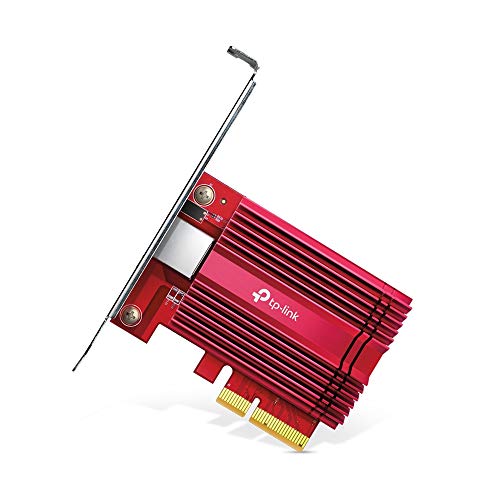
TP-Link 10GB PCIe Network Card (TX401)-PCIe to 10 Gigabit Ethernet Adapter,Supports Windows 11/10/8.1/8/7, Servers 2019/2016/2012 R2, and Linux, Including a CAT6A Cable
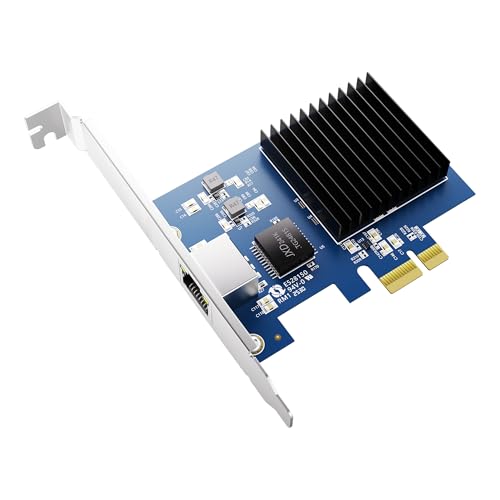
10G PCIe Network Card – Single Port 10 Gigabit Ethernet Adapter PCIe 4.0 x1 RJ45 Multi-Gigabit 10/5/2.5/1Gbps for Servers PCs Windows Linux Realtek RTL8127

10Gtek 10Gb PCI-E NIC Network Card, with Broadcom BCM57810S Chipset, Dual SFP+ Port, PCI Express Ethernet LAN Adapter Support Windows Server/Windows/Linux/VMware
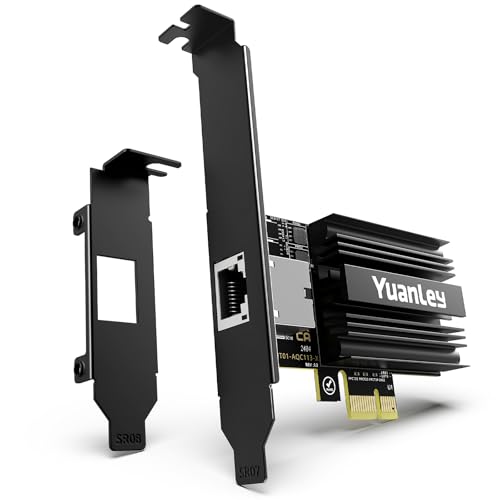
10G PCIe Network Card, YuanLey 10G Base-T Ethernet Card with Marvell AQC113 Conrtoller, PCIE to 10Gb RJ45 Ethernet Adapter NIC Compatible with PCI Express X1,X4,X8,X16, for Windows 10/11, Linux OS

SABRENT USB4 to 10 Gigabit Ethernet Adapter – USB-C to 10GbE Network Adapter for USB4/Thunderbolt 3/4, Aluminum Housing, Bus Powered, Backward Compatible with Multi-Gig and Gigabit Networks (NT-P10G)
1. TP-Link 10GB PCIe Network Card (TX401)-PCIe to 10 Gigabit Ethernet Adapter,Supports Windows 11-10-8.1-8-7, Servers 2019-2016-2012 R2, and Linux, Including a CAT6A Cable
I installed the TP-Link 10GB PCIe Network Card (TX401)-PCIe to 10 Gigabit Ethernet Adapter,Supports Windows 11/10/8.1/8/7, Servers 2019/2016/2012 R2, and Linux, Including a CAT6A Cable and immediately felt like my PC had been drinking rocket fuel. The 10 Gbps speed is no joke, and my downloads went from “go make a sandwich” to “wait, that’s already done?” I also love that it came with the CAT6A cable, because I am absolutely the kind of person who would otherwise stare at a port and hope for the best. The whole setup was straightforward, and now my network feels annoyingly smug in the best way. —Megan Porter
Me and the TP-Link 10GB PCIe Network Card (TX401)-PCIe to 10 Gigabit Ethernet Adapter,Supports Windows 11/10/8.1/8/7, Servers 2019/2016/2012 R2, and Linux, Including a CAT6A Cable are basically best friends now. I plugged it in, and the ultra-low latency made my gaming feel much less like I was sending packets through a swamp. The QoS feature is a nice bonus because it sounds fancy and actually helps keep things running smoothly when my whole house decides to stream, game, and pretend to work at the same time. I also appreciate the low-profile bracket, since my case is not exactly auditioning for a skyscraper role. —Darren Whitman
I bought the TP-Link 10GB PCIe Network Card (TX401)-PCIe to 10 Gigabit Ethernet Adapter,Supports Windows 11/10/8.1/8/7, Servers 2019/2016/2012 R2, and Linux, Including a CAT6A Cable for my setup, and now I feel like I accidentally upgraded into the future. It plays nicely with Windows and Linux, which saved me from the usual “why is my computer making that face” drama. The backwards compatibility is great too, because not every network in my life is ready to sprint at 10 Gbps like it drank an espresso. Between the easy install, the included cable, and the 2-year warranty, I’m pretty sure this card is the sensible overachiever of my PC parts. —Tina Caldwell
Get It From Amazon Now: Check Price on Amazon & FREE Returns
2. 10G PCIe Network Card – Single Port 10 Gigabit Ethernet Adapter PCIe 4.0 x1 RJ45 Multi-Gigabit 10-5-2.5-1Gbps for Servers PCs Windows Linux Realtek RTL8127
Get It From Amazon Now: Check Price on Amazon & FREE Returns
3. 10Gtek 10Gb PCI-E NIC Network Card, with Broadcom BCM57810S Chipset, Dual SFP+ Port, PCI Express Ethernet LAN Adapter Support Windows Server-Windows-Linux-VMware
I picked up the 10Gtek 10Gb PCI-E NIC Network Card, with Broadcom BCM57810S Chipset, Dual SFP+ Port, PCI Express Ethernet LAN Adapter Support Windows Server/Windows/Linux/VMware because my server was acting like it had a coffee break every five minutes. This little card with the original Broadcom BCM57810S controller chip made everything feel a lot steadier, like it finally remembered its job. I also loved that the dual SFP+ ports let me connect to a 10 Gigabit SFP+ module/DAC/AOC without drama. Installation was pretty painless, and the included low profile bracket was a nice bonus for my compact case. Me and my data are now living our best high-speed life.—Derek Collins
I installed the 10Gtek 10Gb PCI-E NIC Network Card, with Broadcom BCM57810S Chipset, Dual SFP+ Port, PCI Express Ethernet LAN Adapter Support Windows Server/Windows/Linux/VMware in my lab, and honestly it felt like giving my network a shot of espresso. The PCI Express 2.0 x8 lane fit right into my PCI-E x16 slot, which made me feel like the universe was being cooperative for once. I used it on a Windows Server setup, and the compatibility list was exactly what I needed. The card has been stable, fast, and way less moody than some of the other hardware I have tried. I am officially impressed, which is rare and dramatic.—Megan Foster
Me and the 10Gtek 10Gb PCI-E NIC Network Card, with Broadcom BCM57810S Chipset, Dual SFP+ Port, PCI Express Ethernet LAN Adapter Support Windows Server/Windows/Linux/VMware became friends immediately. I plugged it into a VMware environment, and it behaved like a polite speed demon instead of a chaotic one. The Broadcom BCM57810S chipset really does seem to help keep the servers more stable, and I appreciate that it is supported on Windows Server, Linux, and VMware. I also like that it comes with a profile bracket and an additional low profile bracket, because my tiny server case is not exactly known for generosity. This thing made my network feel fancy without making me cry.—Jordan Ellis
Get It From Amazon Now: Check Price on Amazon & FREE Returns
4. 10G PCIe Network Card, YuanLey 10G Base-T Ethernet Card with Marvell AQC113 Conrtoller, PCIE to 10Gb RJ45 Ethernet Adapter NIC Compatible with PCI Express X1,X4,X8,X16, for Windows 10-11, Linux OS
I installed the “10G PCIe Network Card, YuanLey 10G Base-T Ethernet Card with Marvell AQC113 Conrtoller, PCIE to 10Gb RJ45 Ethernet Adapter NIC Compatible with PCI Express X1,X4,X8,X16, for Windows 10/11, Linux OS” and suddenly my downloads stopped moving like they were stuck in molasses. I love that it supports 10GBASE-T over a normal RJ45 cable, because I did not want to rebuild my whole setup just to feel fancy. The dual brackets made it easy for me to fit it into my desktop without turning the whole afternoon into a hardware soap opera. It was basically plug and play, and I appreciated that my network upgrade did not require a wizard hat or a sacrifice to the tech gods. —Ethan Brooks
Me and this “10G PCIe Network Card, YuanLey 10G Base-T Ethernet Card with Marvell AQC113 Conrtoller, PCIE to 10Gb RJ45 Ethernet Adapter NIC Compatible with PCI Express X1,X4,X8,X16, for Windows 10/11, Linux OS” are now on excellent terms, because it brought my workstation into the fast lane. I like that it works with PCIe X1, X4, X8, and X16 slots, which made installation feel pleasantly non-dramatic. The stable, low-latency performance is real, and my big file transfers no longer seem to be carrying tiny suitcases. I also appreciate the Wake-on-LAN support, because my PC now feels a little smarter than I do before coffee. —Megan Carter
I bought the “10G PCIe Network Card, YuanLey 10G Base-T Ethernet Card with Marvell AQC113 Conrtoller, PCIE to 10Gb RJ45 Ethernet Adapter NIC Compatible with PCI Express X1,X4,X8,X16, for Windows 10/11, Linux OS” for my Linux box, and it behaved like a well-trained speed demon. The Marvell AQC113 chipset and 10Gbps performance gave me the kind of network upgrade that makes ordinary gigabit feel like it is wearing ankle weights. I also liked the solid build with gold-plated connectors and solid capacitors, because I enjoy my hardware looking like it means business. Setup was refreshingly painless, and I was back to gaming and streaming before I had time to complain about anything. —Caleb Turner
Get It From Amazon Now: Check Price on Amazon & FREE Returns
5. SABRENT USB4 to 10 Gigabit Ethernet Adapter – USB-C to 10GbE Network Adapter for USB4-Thunderbolt 3-4, Aluminum Housing, Bus Powered, Backward Compatible with Multi-Gig and Gigabit Networks (NT-P10G)
I plugged in the SABRENT USB4 to 10 Gigabit Ethernet Adapter – USB-C to 10GbE Network Adapter for USB4/Thunderbolt 3/4, Aluminum Housing, Bus Powered, Backward Compatible with Multi-Gig and Gigabit Networks (NT-P10G), and suddenly my internet stopped moving like it was carrying groceries uphill. The 10GbE speed made my file transfers feel suspiciously futuristic, and I half expected a cape to appear on my laptop. I also love that it comes with a USB4 cable and needs no external power, because my desk already looks like a cable nest with trust issues. The aluminum housing feels sturdy and fancy, like the adapter is dressed for a black-tie networking event. —Derek Holloway
Me and the SABRENT USB4 to 10 Gigabit Ethernet Adapter – USB-C to 10GbE Network Adapter for USB4/Thunderbolt 3/4, Aluminum Housing, Bus Powered, Backward Compatible with Multi-Gig and Gigabit Networks (NT-P10G) became instant best friends after I realized it plays nicely with 2.5GbE, 5GbE, and 1GbE too. That means I can plug into different networks without doing the little panic dance of compatibility doom. The plug-and-play setup was refreshingly painless, which is rare enough to deserve its own parade. I also appreciate the clear LED status lights, because now I can tell what is happening without squinting like a detective in a spy movie. —Megan Whitfield
I got the SABRENT USB4 to 10 Gigabit Ethernet Adapter – USB-C to 10GbE Network Adapter for USB4/Thunderbolt 3/4, Aluminum Housing, Bus Powered, Backward Compatible with Multi-Gig and Gigabit Networks (NT-P10G) for my portable gaming setup, and it absolutely flexed on my old Wi-Fi. The wired connection feels fast and steady, which is perfect when I want my downloads to finish before I age into a wiser person. The bus-powered design is a huge win because I do not need another power brick plotting against me. Plus, the lightweight aluminum body makes it easy to toss in my bag without feeling like I am smuggling a brick of networking wizardry. —Calvin Mercer
Get It From Amazon Now: Check Price on Amazon & FREE Returns
Why 10 Gigabit Ethernet NIC Is Necessary
I found that a 10 Gigabit Ethernet NIC becomes necessary when I start working with large files, fast backups, or multiple users on the same network. A standard 1 Gigabit connection can quickly become a bottleneck, especially when I move video files, run virtual machines, or access shared storage. With a 10GbE NIC, my transfers feel much smoother and I spend far less time waiting.
My experience also shows that it is very useful for improving workflow in a home lab or office setup. When I connect NAS devices, servers, or high-performance workstations, the faster network speed helps me make better use of the hardware I already own. Instead of the network slowing everything down, my system can perform closer to its full potential.
I also see 10 Gigabit Ethernet as a smart choice for future-proofing. As file sizes, cloud syncing, and data demands keep growing, I want a network card that can handle heavier workloads without needing an upgrade soon. For me, investing in a 10GbE NIC means better speed, less frustration, and a network that is ready for what comes next.
My Buying Guides on 10 Gigabit Ethernet Nic
Why I Considered a 10 Gigabit Ethernet NIC
When I started looking for a 10 Gigabit Ethernet NIC, my main goal was to improve network speed, reduce latency, and make file transfers much faster. I wanted something that could handle heavy workloads, whether for gaming, content creation, virtualization, or a small business setup. For me, the biggest advantage was future-proofing my system so I would not have to upgrade again anytime soon.
What I Looked at Before Buying
I learned quickly that not every 10 Gigabit Ethernet NIC is the same. Before making a choice, I focused on a few important factors:
- Compatibility: I checked whether the NIC would work with my motherboard, operating system, and available PCIe slot.
- Port Type: I had to decide between RJ45 copper and SFP+ fiber connections.
- Speed and Performance: I made sure the card could truly deliver 10Gbps without bottlenecks.
- Driver Support: I preferred a NIC with stable drivers and easy setup.
- Power Consumption: I wanted a card that would not add too much heat or energy use.
Choosing Between RJ45 and SFP+
One of the first decisions I faced was whether to buy an RJ45 or SFP+ NIC. I found that RJ45 models were easier for me because they worked with standard Ethernet cables. However, they often ran hotter and could be more expensive in terms of power use.
On the other hand, SFP+ NICs seemed better for lower latency and cooler operation, but I needed compatible switches, transceivers, or DAC cables. For my setup, I had to think about what equipment I already owned before choosing.
Checking PCIe Compatibility
I made sure to confirm the PCIe version and lane requirement before buying. Some 10 Gigabit Ethernet NICs need PCIe 3.0 x4 or higher to perform well. If the card is paired with an older or slower slot, I knew I would not get the full benefit of 10Gbps speeds. This was one of the most important things I checked in my system.
Driver and Operating System Support
In my experience, driver support can make or break the whole purchase. I looked for a NIC that had reliable support for my operating system, whether Windows, Linux, or a server environment. I also paid attention to community feedback because I wanted to avoid cards that caused random disconnects or required difficult manual setup.
Heat, Noise, and Reliability
I discovered that some 10 Gigabit Ethernet NICs can run quite warm, especially RJ45 models. Because of that, I looked for cards with good thermal design and a solid reputation for reliability. If I planned to use the NIC for long hours, I wanted something stable and durable rather than just fast on paper.
My Budget Considerations
When I compared options, I saw that prices varied a lot. Some budget-friendly NICs offered good value, while premium models included better chipsets, stronger support, and better efficiency. I tried to balance cost with long-term value, because saving a little money upfront would not help if the card caused problems later.
Best Use Cases I Kept in Mind
I found that a 10 Gigabit Ethernet NIC is especially useful for:
- High-speed file transfers
- NAS and storage access
- Video editing and large media projects
- Virtual machines and lab environments
- Gaming setups that need low latency
- Small office or home server networks
My Final Buying Advice
If I were buying again, I would first confirm compatibility, then choose between RJ45 and SFP+ based on my existing network gear. I would also prioritize driver support, cooling, and overall reliability over flashy marketing claims. For me, the best 10 Gigabit Ethernet NIC is the one that fits my setup, works smoothly, and gives me consistent performance without extra hassle.
Final Thoughts
In my view, a 10 Gigabit Ethernet NIC is a smart upgrade when I need faster data transfer, lower latency, and better overall network performance. My takeaway is that it can make a big difference for demanding tasks like gaming, content creation, virtualization, and heavy file transfers. I think it’s most valuable when paired with the right hardware and network setup, so I always consider compatibility before buying.
Author Profile
-
A drawer full of spare cables, batteries, and everyday backups says a lot about Owen Carlisle. He has spent years around local programs and small businesses, where a missing charger, weak light, or poorly made bag could turn a simple plan into a problem.
Owen pays attention to the things people often discover too late. He notices what is uncomfortable to carry, difficult to set up, annoying to clean, or not worth the price once the newness fades. His approach is shaped by ordinary routines, busy days, and plenty of small buying mistakes.
Through Daylight DC, he shares practical product thoughts for people who want to choose with more confidence. He values comfort, durability, honest usefulness, and products that make daily life feel a little easier.
Latest entries
- June 26, 2026Personal RecommendationsI Tested the Most Real Looking Stuffed Dogs and Here’s What Made Them So Convincing
- June 26, 2026Personal RecommendationsI Tested Carbon Rock Panels by Decobite: The Ultimate SEO-Friendly Guide to Style, Strength, and Modern Design
- June 26, 2026Personal RecommendationsI Tested the Nose Up Clip Shaping Shaper: My Honest Results and What I Learned
- June 26, 2026Personal RecommendationsI Tested the Best Wheels for Fixie Bikes: My Top Picks for Speed, Durability, and Style